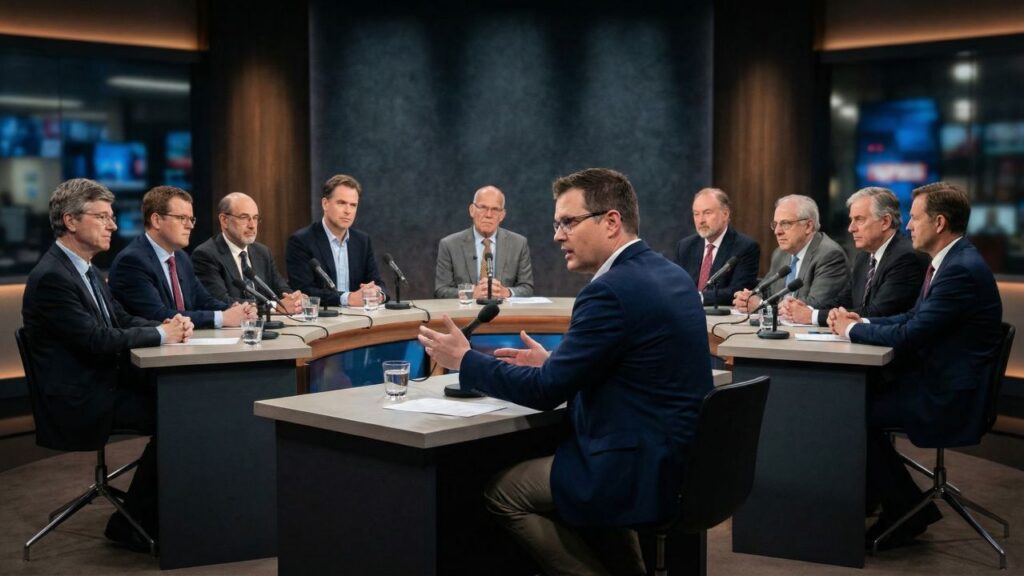
How a Norwegian professor creates space for the world’s leading scholars to think aloud about the most consequential geopolitical questions of our time
In an age of cable news shouting matches and podcast hosts who can’t resist the sound of their own voice, Glenn Diesen does something revolutionary: he shuts up and listens. The Norwegian professor of international relations has mastered the lost art of the interview, asking sophisticated questions, then stepping back to let some of the world’s most knowledgeable scholars work through the most pressing geopolitical crises of our era without interruption.
No gotcha moments. No performative outrage. No host jumping in to demonstrate their own cleverness or redirect the conversation back to talking points. Just deep, uninterrupted engagement with the questions that will determine whether we stumble into World War III or navigate the transition from American hegemony to a multipolar order without catastrophe.
What We Learn When Experts Can Speak
The cumulative effect of Diesen’s interview catalog is devastating to establishment narratives while being constructive toward actual understanding. Patterns emerge across dozens of conversations with some of the world’s most credentialed scholars:
NATO expansion was the proximate cause of the Ukraine war. Every serious scholar Diesen interviews (regardless of their political orientation, from Marxist economist Richard Wolff to CIA veteran George Beebe) acknowledges this. The February 1990 assurances are documented. The 2008 Bucharest summit’s provocativeness is undeniable. The Russian warnings were explicit and consistent.
The conflict is fundamentally about European security architecture, not Ukraine per se. Richard Sakwa’s four-layer analytical framework illuminates why simplistic solutions fail. The conflict has four interwoven dimensions: the internal Ukrainian struggle (between monist and pluralist visions of statehood), the Russo-Ukrainian mimetic rivalry (where similar entities compete for the same objects of desire, escalating mutual antagonism), the question of post-Cold War European security architecture, and US-Russian great power competition. Settlement requires addressing all four layers, no resolution of one dimension succeeds while ignoring others.
Current Western policy is strategically insolvent. The objective (Ukraine’s total victory, Russia’s defeat, NATO expansion to its borders) exceeds available capabilities and risks catastrophic escalation. This isn’t defeatism, it’s realism. Richard Wolff explains why China’s economic rise created American “strategic insolvency”, a condition where objectives exceed capabilities, forcing America to extract from allies rather than protect them. George Beebe details the strategic constraints. Gilbert Doctorow maps the military realities. All point toward the same necessity: policies must align with achievable objectives or fail catastrophically.
European leaders are pursuing paths manifestly contrary to European interests. The destruction of Nord Stream, the sanctions that harm Europe more than Russia, the commitment to military spending that will eviscerate social programs, the obstruction of diplomacy that could end the war, these policies don’t serve European publics. Max Otte explains German elite capture by “transatlantic circles,” Sakwa analyzes EU institutional dysfunction, and Doctorow identifies the political incentives that make leaders prefer disaster to admitting error.
Avoiding great power war requires understanding adversary reasoning. You don’t have to agree with Russian positions to understand them. Doctorow explains the strategic logic behind Russian actions, including Russia’s November 2025 deployment of the Oreshnik intermediate-range hypersonic missile system against Ukrainian targets, which followed Ukrainian strikes on Russian early-warning radar stations and strategic bomber bases. These facilities, critical to nuclear command and control, would have been considered untouchable during the Cold War; attacks on them would have triggered nuclear escalation. Sakwa contextualizes Russian actions within centuries of European security competition. Jeffrey Sachs details the specific grievances stemming from broken promises. This isn’t sympathizing with Russia, it’s the basic work of statecraft. You can’t negotiate a settlement or manage competition with adversaries you’ve demonized beyond comprehension.
These insights shape everything that follows. They’re what make Diesen’s platform essential.
The Guests Who Know
Diesen’s roster reads like a who’s who of scholars and analysts systematically excluded from mainstream platforms precisely because they refuse to validate the establishment narrative. These aren’t fringe figures, they’re among the most credentialed and experienced voices in their fields:
Richard SakwaProfessor of Politics at the University of Kent, perhaps the West’s most respected Russia scholar, author of definitive works on Russian politics and the Ukraine conflict. When Sakwa speaks for thirty minutes about mimetic rivalry (René Girard’s concept of conflicts arising when similar entities compete for the same objects of desire, leading to escalating mutual antagonism) between Russia and Ukraine, the failure of the post-Cold War European security architecture to replace Cold War divisions with inclusive arrangements accommodating Russian interests, and how NATO expansion revived the very divisions it claimed to overcome, you’re hearing analysis that should be shaping policy but instead is relegated to alternative media because it contradicts the “unprovoked invasion” narrative.
Jeffrey SachsFormer advisor to governments worldwide, Columbia University economist, and one of the few Western public intellectuals willing to state plainly what the documentary record proves: that NATO expansion violated explicit promises, that the 2014 Maidan was a US-backed coup, that the Minsk agreements were sabotaged by the West. Sachs doesn’t speculate, he was in the room. He had the phone calls. He knows where the bodies are buried. Diesen gives him space to explain exactly how we arrived at disaster.
Richard WolffMarxist economist and one of capitalism’s most sophisticated critics. Wolff’s analysis of why the West is fragmenting, that China’s unprecedented economic rise shattered the “unipolar moment” and created what he terms strategic insolvency, provides a framework that mainstream economics carefully avoids. When Wolff takes ten minutes to trace the pattern from British Empire through Cold War to present crisis, explaining why Europe has become a “dead weight” on American strategic calculations, a consumer of American resources rather than a force multiplier, unable to contribute meaningfully to American competition with China while demanding continued security subsidization, Diesen never interrupts with defensive “but what about democracy” platitudes.
George BeebeFormer CIA Director for Russia Analysis, now head of Grand Strategy at the Quincy Institute. Beebe brings the establishment perspective, but with remarkable candor about what it actually entails when stripped of propaganda. His acknowledgment that Europe is “trapped in its own paradigm” of comparing everything to Nazi Germany, that “you’re not going to drive a nuclear power to unconditional surrender,” and that current Western policy leads toward “disaster not victory”, these are admissions that would never survive a CNN interview’s interruptions and redirects. Diesen’s silence creates space for honesty.
Gilbert DoctorowHistorian and Russia analyst who provides real-time assessment of Russian strategic thinking. When Doctorow explains why Russia’s deployment of the Oreshnik missile system in November 2025, striking Ukrainian military-industrial targets with a hypersonic intermediate-range weapon capable of carrying nuclear warheads (represented a fundamental shift in Russian restraint, or why European leaders like Ursula von der Leyen are “equivalent to Netanyahu) destroying the region to hold power,” he’s offering analysis you won’t find anywhere in establishment media. Diesen lets these provocative judgments stand, allowing viewers to evaluate them rather than rushing to discredit them.
Max OtteGerman economist and author who explains how post-war “re-education” means Germany literally cannot think in terms of national interest, how Joschka Fischer’s opportunism transformed the Green Party from peace advocates to the most militaristic force in German politics, and why Nord Stream’s destruction produced no serious investigation. This is an insider analysis of German elite capture, someone who knows the system from within, explaining its pathologies. When Otte explains that Nord Stream’s destruction produced no serious German investigation because the political class fears truth more than energy insecurity, Diesen lets the indictment stand without rushing to qualify or defend. The pattern is clear: Germany’s transatlantic elite would rather bear economic pain than acknowledge American culpability.
The Questions That Matter
What unites Diesen’s conversations isn’t ideology but seriousness about the questions that will determine our collective future. While mainstream media cycles through the outrage of the day, Diesen focuses on structural issues:
How did NATO expansion become inevitable? This isn’t historical trivia, it’s the proximate cause of the Ukraine war. Diesen’s conversations with Sachs and Sakwa establish that in February 1990, German and American officials assured Soviet leadership that NATO would not expand eastward. The documentary evidence is substantial, though debate continues about whether verbal assurances constitute binding commitments and whether assurances about East Germany apply to other Eastern European states. Yet establishment discourse treats this history as either Russian propaganda or irrelevant. By giving scholars uninterrupted time to work through the archives, the broken promises, and the strategic consequences, Diesen makes the suppressed history accessible.
Why is the West fragmenting after 80 years of unity? This is the question Wolff answers in detail through his concept of strategic insolvency. Wolff characterizes American response to China’s rise as psychological rather than purely strategic, “hysteria,” in his framing, driven by an empire’s inability to accept that its hegemonic moment has passed. When an actor’s objectives exceed capabilities, desperation follows. Trump’s Greenland gambit, the demands for European defense spending, the trade war threats, these aren’t policy failures but recognition that the hegemonic model is finished. What Wolff calls “hysteria” is the flailing of a power that built institutional arrangements assuming permanent dominance, now confronting an adversary it cannot contain. When he diagnoses the result as a president whose “bizarreness really is a reaction to everything I’ve just said,” Diesen doesn’t leap to Trump’s defense. He asks: “How does China fit into the wider thing?”, extending rather than disputing Wolff’s framework. Wolff gets forty-five minutes to trace economic and security dynamics over two centuries without interruption. The result is understanding rather than sound bites.
How do we avoid a catastrophic great power war? Beebe’s answer (that Europe must “escape from the paradigm” that treats every conflict as a WWII replay, that compromise with Russia isn’t “appeasement” but necessity, that deterrence and diplomacy must replace maximalism) represents what establishment consensus should be but isn’t. When Beebe acknowledges “you’re not going to drive a nuclear power to unconditional surrender,” he’s stating the obvious. But obvious truths require space to be articulated when they contradict official policy. Diesen provides that space.
What is Russia’s actual strategy? Western media presents Russian actions, from the 2022 invasion through the Oreshnik strikes, as inexplicable aggression. Doctorow, drawing on decades of Russia analysis, explains the strategic logic: the invasion followed Ukrainian attacks on Donbas, NATO expansion toward Ukrainian membership, and systematic refusal to implement Minsk agreements. The Oreshnik strikes came after Ukrainian attacks on Russian early-warning radar stations at Armavir and Orsk, plus strikes on strategic bomber bases housing nuclear-capable aircraft, infrastructure that during the Cold War would have been considered inviolable, attacks on which would have prompted a nuclear response. This isn’t justification; it’s explanation. Understanding adversary reasoning is a prerequisite for successful diplomacy. Diesen lets these explanations unfold without editorializing.
Why do European leaders pursue policies manifestly contrary to European interests? Otte’s answer about the German elite’s capture by “transatlantic circles,” Sakwa’s analysis of EU institutional dysfunction, and Doctorow’s observation that leaders like Friedrich Merz and von der Leyen would rather destroy Europe than admit error, these analyses explain the otherwise inexplicable. Why did Germany acquiesce to Nord Stream’s destruction? Why does Chancellor-candidate Merz advocate war rather than diplomacy despite Germany bearing significant responsibility for NATO expansion? Because, as these scholars explain in a long, uninterrupted analysis, the political class is “quite detached from everyday life” and has internalized ideological commitments that preclude acknowledging reality.
The Discipline of Silence
What makes Diesen’s interviews exceptional isn’t just whom he talks to or what they discuss, it’s his iron discipline in letting them complete their thoughts. This sounds simple, but requires extraordinary restraint.
When Sakwa spends fifteen minutes explaining mimetic rivalry theory and its application to Russo-Ukrainian relations, referencing René Girard and working through historical examples, Diesen doesn’t interrupt with “but what about Crimea?” or “our viewers might not know Girard.” He trusts both his guests’ expertise and his audience’s intelligence.
When Wolff diagnoses American foreign policy as driven by “hysteria” over China’s rise, culminating in “a clown as president” whose “bizarreness really is a reaction to everything I’ve just said,” Diesen doesn’t leap to Trump’s defense or redirect to domestic politics. He lets the analysis stand, then asks: “How does China fit into the wider thing?” That follow-up question acknowledges Wolff’s framework while asking him to develop it further, the opposite of interrupting to dispute or deflect.
When Sachs details thirty years of German choices, from the 1990 NATO assurance through the 2014 Maidan to the 2015 Minsk sabotage, building toward his devastating conclusion that “Germany cheated, and the United States cheated,” Diesen doesn’t interrupt with “but Russia invaded” or “what about Crimea.” He lets Sachs complete the indictment, then asks about the bitter irony: that Germany, whose reunification Moscow supported despite Western European fears of a “Fourth Reich,” repaid that trust by leading NATO’s eastward expansion. This deepens rather than deflects from Sachs’s argument.
When Beebe acknowledges that Europe is “trapped in a paradigm” comparing everything to WWII, that this makes compromise impossible, and that the result is heading toward disaster, Diesen asks a follow-up that extends the logic: “Is this more or less what defines competing positions on Ukraine? Because in Europe, the rhetoric is very shallow, lots of catchphrases about ‘we stand with Ukraine’ but no one contests what that actually means or how it’s supposed to achieve anything.”
This is the discipline of silence: knowing when to speak and when to let the expert develop their argument without interference. The result is something increasingly rare, genuine thinking in public, experts working through complex problems without being forced into yes/no binaries or defensive postures.
Timely, Relevant, Essential
These aren’t academic exercises. Every conversation addresses questions of immediate, pressing importance:
January 2026: As Trump signals intent to pursue a Ukraine settlement and European leaders alternate between panic and denial, Diesen’s conversation with Doctorow explains what’s actually happening, Trump attempting to neutralize European obstruction, Russia signaling its capability with Oreshnik strikes, and the West’s strategic options narrowing toward either compromise or catastrophe.
December 2025: As the Trump administration’s first National Security Strategy articulates a fundamental reorientation away from hegemony toward “prioritizing interests,” Beebe explains what this means, acknowledging multipolarity, accepting limited capabilities, recognizing that “you can’t transform other countries into versions of the United States.”
November 2025: As Germany’s Scholz government collapses and Friedrich Merz emerges as likely next chancellor, beating war drums, Sachs’s open letter explaining Germany’s responsibility for the Ukraine catastrophe becomes essential reading. Diesen gives Sachs space to work through each betrayal, each broken promise, building the case that Germany owes Russia and Europe the truth before demanding more war.
Throughout 2025: As the Ukraine conflict grinds toward its third year with no end visible, Sakwa’s explanation of the four interwoven layers of conflict provides a framework for understanding why simplistic solutions fail. No settlement will succeed that resolves only one layer while ignoring others.
These conversations aren’t recapping yesterday’s news, they’re providing an analytical framework for understanding where we’re heading and what choices we face.
Why Establishment Media Cannot Have These Conversations
When the most sophisticated analysis of contemporary geopolitics comes from a Norwegian professor’s YouTube channel rather than the New York Times or Financial Times, something has gone profoundly wrong with elite knowledge production. When former CIA directors and Ivy League economists must seek alternative platforms to state obvious truths (that NATO expansion violated assurances, that you can’t drive nuclear powers to unconditional surrender, that current Western policy leads to disaster) it reveals the intellectual bankruptcy of establishment discourse.
The questions Diesen asks and the answers his guests provide threaten core establishment narratives. The narrative that Russia invaded Ukraine without provocation collapses when scholars detail decades of NATO expansion, broken assurances, coup support, and Minsk sabotage. The narrative that “standing with Ukraine” means supporting war until total victory collapses when analysts explain that nuclear powers don’t surrender unconditionally and current policy leads toward escalation, not liberation. The narrative that American leadership protects European security collapses when economists show America is now extracting from rather than investing in allies because Chinese competition created strategic insolvency.
These aren’t comfortable truths. They suggest that policies Western leaders have pursued for decades (NATO expansion, regime change operations, sanctions maximalism, coup support) were catastrophically counterproductive even by their own stated objectives. They imply that the Ukraine catastrophe was avoidable, that current leaders bear responsibility for choices that led to war, and that the path forward requires acknowledging error rather than escalating commitment to failed policies.
Establishment media can’t platform these conversations because doing so would require reckoning with institutional complicity. Mainstream journalists didn’t warn about the risks of NATO expansion, they cheered it on. They didn’t question the Maidan coup, they celebrated it. They didn’t investigate the sabotage of the Minsk agreement, they ignored it. They didn’t raise an alarm about Ukrainian strikes on Russian early-warning radar and strategic bomber bases, they barely reported them. Having failed to do journalism, they can’t now platform scholars who explain what journalism would have revealed.
Diesen’s interviews are dangerous because they demonstrate that serious, accessible, honest foreign policy analysis remains possible. They prove that when freed from the constraints of mainstream media’s acceptable opinion parameters, even establishment figures like George Beebe acknowledge that dominant narratives are disconnected from reality. Most dangerously of all, Diesen’s work reveals that these conversations don’t require dumbing down. His audience follows hour-plus discussions of mimetic rivalry theory, strategic insolvency, institutional design pathologies, and nuclear deterrence frameworks without needing sound bites or sensationalism. This destroys the establishment’s excuse for propagandistic coverage: the claim that serious analysis is too complex for public consumption.
The Path Forward
What’s most striking about these conversations is their seriousness about consequences. Unlike establishment discourse that treats foreign policy as moral theater, opportunities to demonstrate virtue through righteous denunciation, Diesen’s guests grapple with actual stakes.
When Beebe says, “You’re not going to drive a nuclear power to unconditional surrender,” he’s not being defeatist, he’s identifying the boundary beyond which policy becomes suicidal. When Doctorow explains that Ukrainian strikes on Russian nuclear command-and-control infrastructure would have triggered nuclear war during the Cold War, he’s not excusing the Russian response, he’s explaining why restraint cannot be assumed to continue indefinitely. When Sachs demands that Chancellor-candidate Merz “tell the truth” about German responsibility before “we are dragged into disaster,” he’s not engaged in historical score-settling, he’s insisting that settlement requires honesty about how we arrived at crisis.
These scholars understand what’s at risk: not just Ukrainian territory or Russian prestige or Western credibility, but the possibility of great power war between nuclear-armed states. That prospect focuses the mind wonderfully, or should. The fact that establishment discourse treats this risk as less important than maintaining the fiction of “unprovoked invasion” reveals its fundamental unseriousness.
Diesen’s interviews matter because they demonstrate that serious people taking the risk of catastrophic war seriously reach conclusions systematically excluded from establishment platforms. They show that when experts can speak without interruption, without being forced into defensive postures, without having to navigate the minefield of acceptable versus unacceptable opinion, they converge on an analysis that contradicts official narratives but aligns with evidence.
This is the conversation Western elites don’t want you having, not because it’s radical or extreme, but because it’s informed, serious, and honest. It treats you as capable of understanding complexity, following extended analysis, and evaluating evidence rather than swallowing propaganda. It assumes that avoiding catastrophic war matters more than protecting elite credibility or validating failed policies.
In an age of civilizational crisis, when the post-Cold War order crumbles and great powers stumble toward confrontation, this conversation isn’t just refreshing, it’s essential. The question for institutional media is whether they can reform before alternative platforms render them irrelevant. Can CNN hire its own Diesen? Can the Financial Times create space for scholars who contradict official narratives? Or does the future of serious foreign policy discourse belong entirely to those willing to step outside incumbent institutions?
Glenn Diesen provides the space for essential conversations by doing something revolutionary in contemporary media: asking good questions, then maintaining the discipline to let some of the world’s most knowledgeable scholars explain what’s actually happening, why it matters, and what choices we face. That so few others do this work reveals the poverty of establishment discourse. That Diesen succeeds so thoroughly (drawing substantial audiences to hour-long conversations about European security architecture, nuclear deterrence, and great power competition) proves that appetite for serious analysis hasn’t disappeared. It’s been starved by media that treats audiences as incapable of complexity and foreign policy as moral theater rather than consequential choice.
The intellectuals you’re not supposed to hear have something to say. Glenn Diesen gives them space to say it. And that’s precisely why his work matters, and why establishment gatekeepers would prefer you never found it.
Related reading
- UPDATE: What Western Media Is Not Telling You About the Iran War
- The Architecture of Silence: Why America's Think Tanks and Media Won't Name the Forces Driving Us To War with China, Iran, and Russia
- The Western Press Won't Report It: Ukraine's Collapse and the Slaughter Underway
- The Sound of Silence: Where is the "Established" Press on Crenshaw Threats and Money Making?