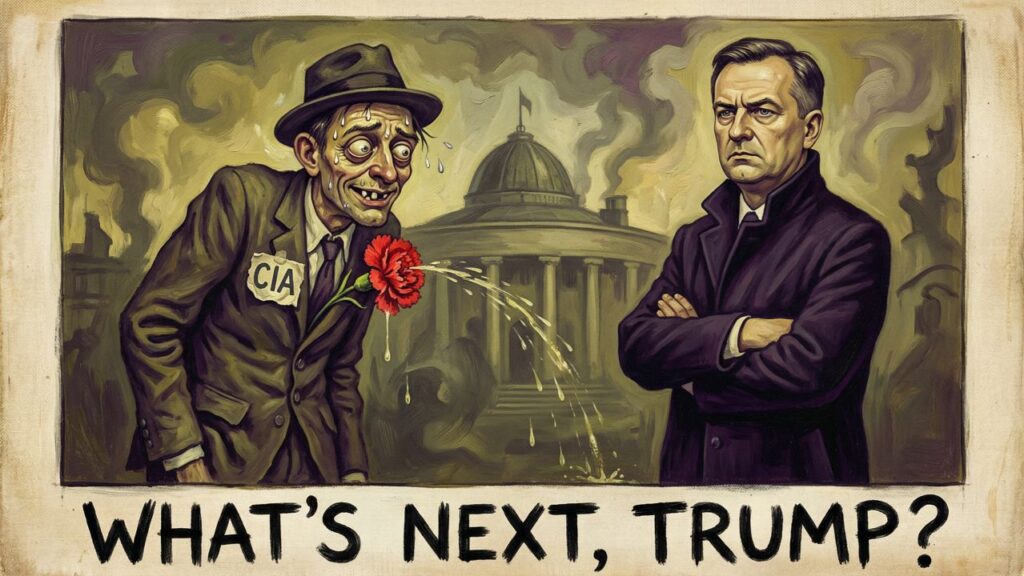
When Trump’s man in Warsaw demanded the Polish parliament speaker resign for refusing to endorse a Nobel Prize nomination, he united Poland’s entire political spectrum, against him
On Monday, February 2, 2026, Sejm Speaker Włodzimierz Czarzasty held a press conference in Warsaw and did something unremarkable in any functioning democracy: he declined to endorse a foreign leader for the Nobel Peace Prize. By Wednesday, February 5, US Ambassador Tom Rose had publicly severed all diplomatic contact with Czarzasty, accused him of “outrageous and unprovoked insults” against Donald Trump, and, when a Polish law student told him to go home, threatened on social media to withdraw American troops from one of NATO’s most loyal frontline allies. By Thursday, the backlash was total: Poland’s entire political spectrum, from the far-left to the far-right, had rallied behind Czarzasty, a Republican congressman was calling for Rose’s removal, and former US ambassadors were suggesting Poland declare Rose persona non grata. Four days. That’s all it took for one American ambassador to turn a Nobel Prize snub into the most damaging diplomatic incident in the history of US-Polish relations.
You can’t make this stuff up. But let’s walk through exactly how it happened.
What Czarzasty Actually Said
The chain of events began when US House Speaker Mike Johnson and Israeli Knesset Speaker Amir Ohana circulated a letter seeking international endorsements for Trump’s Nobel Peace Prize nomination. When the letter reached Czarzasty, he flatly refused. His reasoning was substantive, not personal:
- Trump “represents a policy of force and conducting transactional politics through the use of force”
- He cited Trump’s tariffs on European allies, threats regarding Greenland, and dismissal of NATO allies’ contributions in Afghanistan
- He argued this constituted “violations of principles, values and, in many cases, international law”
- He noted Poland’s own history as a victim of power politics, having spent 123 years under foreign rule
This was a political opinion expressed by an elected official in a democratic country, the kind of thing that happens thousands of times a day across the Western world. Czarzasty didn’t insult Trump personally. He didn’t threaten American interests. He simply declined to endorse a ceremonial honor and explained why.
Ambassador Rose’s Extraordinary Response
On February 5, Ambassador Tom Rose posted on X that “effective immediately, we will have no further dealings, contacts, or communications with Marshal of the Sejm Czarzasty, whose outrageous and unprovoked insults directed against President Trump has made himself a serious impediment to our excellent relations with Prime Minister Tusk and his government”. He added that Washington would “not permit anyone to harm US-Polish relations, nor disrespect President Donald Trump, who has done so much for Poland and the Polish people”.
Read that language carefully. A US diplomat is publicly announcing the severance of ties with the presiding officer of an allied nation’s parliament (not over a policy disagreement, not over espionage, not over a treaty violation) but because a politician said Trump doesn’t deserve a Nobel Prize.
The hubris is breathtaking. Rose framed his personal vendetta as defending “US-Polish relations,” when in reality his theatrics were harming those relations in real time.
Then Rose Threatened to Withdraw US Troops
Rose didn’t stop at the official statement. When Polish Prime Minister Donald Tusk posted that “allies should respect, not lecture, each other,” Rose fired back suggesting Tusk’s message was “sent by mistake” and was surely intended for Czarzasty. He pledged to defend Trump “without hesitation, exception or apology”.
The real escalation came when a Polish law student told Rose on X to “go home,” and Rose responded from his private account: “Should we take all our soldiers and equipment with us?”a naked threat to withdraw US military forces from Poland, a frontline NATO ally bordering Russia and Belarus. The post was later deleted, but screenshots circulated widely.
An American ambassador casually threatening to pull troops from a country on NATO’s eastern flank during an active war in Ukraine, over a Nobel Prize snub, is the kind of thing that would have been career-ending in any previous era. Instead, Rose simply deleted the tweet and carried on.
The Backlash: Cross-Spectrum and International
What happened next is the part that should terrify anyone who cares about American credibility: rather than isolating Czarzasty, Rose’s actions united Poland’s entire political spectrum behind the Sejm Speaker.
From Czarzasty Himself
“I regret the ambassador’s declaration, but I will not change my position on these fundamental issues for Poland”. He has no intention of resigning. Why would he? He’s an elected official in a sovereign democracy, not a colonial governor awaiting instructions from Washington.
From the Governing Coalition
KO lawmaker Zbigniew Konwinski accused Rose of transitioning from “an attack on the speaker of the Sejm to threats against the government,” calling it an “astonishing” form of diplomacy.
From the Far-Right Opposition
Even Confederation (Konfederacja) MP Michał Wawer, a member of Poland’s most right-wing parliamentary party, defended Czarzasty, stating: “The identity of the Sejm Marshal is determined by the Polish people, not dictated by the US ambassador.” He added that PiS politicians calling for Czarzasty’s removal simply because a foreign ambassador disapproves “reflects an unserious approach to governance”.
When a far-right Confederation MP and a left-wing Sejm Speaker are on the same side of an issue, the foreign power that engineered that unity has badly miscalculated.
From US Politicians
Republican Congressman Don Bacon, a retired general, posted bluntly: “Time for a new Ambassador”.
From Former US Diplomats
Luis Moreno, former US ambassador to Jamaica, said “the Polish government should declare our so-called ambassador persona non grata and boot his sorry behind out of the country.” Former US Ambassador to Ukraine Steven Pifer quipped that if US diplomats refused to meet anyone who wouldn’t back Trump for a Nobel Prize, “they’d have a lot of free time”. Phil Gordon, former adviser to VP Kamala Harris, noted the US-Polish alliance was hard to undermine “but this ambassador seems determined to try”.
Who Is Tom Rose?
Tom Rose is not a career diplomat. He’s a political operative, media figure, and MAGA loyalist. His trajectory tells the story of a committed ideological warrior:
Media Background: Rose worked as a CBS Radio correspondent, produced an Emmy-nominated documentary on Soviet Jews, and served as publisher and CEO of The Jerusalem Post from 1997-2005. He later became a senior contributing editor at Breitbart and co-hosted The Bauer and Rose Show on Sirius XM, described as “the most-listened-to conservative weekend radio program in the United States”.
Political Service: Rose served as Chief Strategist and Senior Advisor to Vice President Mike Pence during Trump’s first term. He is an Orthodox Jew who was a member of Pence’s inner circle and played a significant role in shaping the administration’s pro-Israel foreign policy, including the embassy move to Jerusalem.
Self-Description: On X, Rose describes himself as “a not-so-secret agent of MAGA Judeo-Christian Conspiracy”. He is a self-described “Zionist Jew and MAGA supporter”.
The Appointment Process
Trump nominated Rose as ambassador to Poland on February 7, 2025. During his Senate confirmation hearing, Senator Bill Hagerty (R-TN) introduced him as “a friend, a principled conservative, and a steadfast supporter of America First”. Rose told senators he would avoid favoring any political faction in Poland and praised the country as “the best ally America could dream of”.
The confirmation vote revealed deep partisan division: Rose passed the Senate on a narrow 51-47 party-line votea stark departure from his predecessors, who were approved by unanimous consent. Former US Ambassador Daniel Fried warned that political neutrality would be key to Rose’s success, stating: “If he’s as smart as he looks, he won’t take sides in Polish politics”.
Rose took office in Warsaw on November 6, 2025. Less than three months later, he’s triggered a diplomatic crisis.
What This Really Represents
This episode is a distillation of the transactional, fealty-based approach to diplomacy that has become the hallmark of the current administration’s foreign policy posture. The message is unmistakable: allied nations are expected not merely to cooperate on shared strategic interests but to demonstrate personal loyalty to the US president, including performative gestures like endorsing him for a Nobel Prize.
The irony is profound: Poland is one of Washington’s most loyal NATO allies, consistently meeting or exceeding the 2% GDP defense spending target, hosting US troops and military infrastructure on its territory, and positioning itself as the strategic anchor of NATO’s eastern flank. Rose’s theatrics accomplished something Polish politics rarely achieves, near-total cross-party consensus, in this case, the consensus that Poland is nobody’s vassal state.
Czarzasty’s refusal to buckle, and the breadth of support he received from across the political spectrum, including from parties ideologically opposed to everything he stands for, is a healthy democratic reflex. It suggests that even America’s closest allies have limits to how much vassalage they’ll tolerate.
Winners and Losers
Winners
Włodzimierz Czarzasty: The Sejm Speaker emerged as a symbol of democratic sovereignty and Polish independence. By refusing to resign, he demonstrated that elected officials in allied democracies answer to their voters, not to foreign ambassadors.
Polish Democracy: Rose’s ham-fisted intervention united Poland’s fractious political landscape around a core principle: sovereignty matters. From the far-left to the far-right, Polish politicians rallied behind the idea that Washington doesn’t get to dictate who holds office in Warsaw.
European Skeptics of American Leadership: Every European politician who worries that Trump’s “America First” rhetoric means “allies must grovel” just received confirmation. Rose’s behavior will be cited for years as evidence that the current administration views alliances as hierarchies requiring personal tribute.
Losers
Tom Rose: The ambassador has been publicly rebuked by US congressmen, former diplomats, and the entire Polish political spectrum. His credibility as a diplomatic representative is in tatters. Even if he remains in post, his effectiveness has been crippled.
US-Polish Relations: Rose claimed to be defending these relations. In reality, he damaged them. Poland’s political class, across all ideologies, now views the US ambassador as a political enforcer rather than a diplomatic partner. That perception will shape interactions for years.
American Credibility in NATO: Every NATO ally is watching. If the US ambassador to Poland can threaten to withdraw troops over a Nobel Prize snub, what does that say about American reliability? Rose’s deleted tweet about pulling soldiers out will haunt conversations in Brussels, Vilnius, and Tallinn for months.
The “America First” Brand: Rose was supposed to represent a nationalist foreign policy grounded in American interests. Instead, he embodied something else entirely: personal vindictiveness masquerading as diplomacy. That doesn’t strengthen America’s position, it weakens it.
The Deeper Problem
Rose’s behavior in Poland isn’t an aberration, it’s a symptom. The Trump administration has increasingly treated foreign policy as an extension of domestic partisan politics, where loyalty to the president personally is the paramount virtue. Ambassadors are selected not for diplomatic skill but for ideological purity and media presence. The result is predictable: confrontations that undermine American interests while satisfying short-term political impulses.
Poland deserves better. NATO deserves better. And frankly, American credibility deserves better than an ambassador who threatens to withdraw troops because a foreign politician won’t endorse his boss for a prize.
Rose’s fiasco in Poland is a case study in what happens when vassalage diplomacy meets democratic sovereignty. The lesson is clear: allies aren’t subjects, and fealty isn’t policy.
Poland isn’t backing down. The question now is whether Washington will.
Related reading
- Кто боится большого злого Александра Вольфа?
- Wer hat Angst vor dem bösen Alexander Wolf?
- Who’s Afraid of the Big Bad Alexander Wolf?
- Russophobia and the Unjust War the West Will Not Win