The Man They Cannot Dismiss
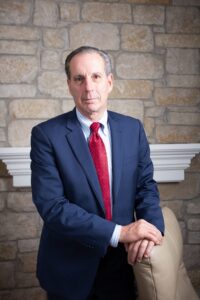
General Harald Kujat held the highest military position in both Germany and NATO. As Chief of Staff of the Bundeswehr from 2000 to 2002 and Chairman of NATO’s Military Committee from 2002 to 2005, he simultaneously chaired the NATO-Russia Council and the NATO-Ukraine Commission of Chiefs of Defense, the precise institutional intersection where the relationships that eventually collapsed into this war were managed. He is not a podcaster. He is not a Substack commentator. He is not a retired colonel monetizing hindsight on YouTube. He is the former supreme military representative of the very alliance now prosecuting a proxy war that has produced approximately 1.5 million casualties.
And he has been saying, publicly and repeatedly, that this war was preventable, that peace was within reach, that the West sabotaged it, and that NATO’s obsession with defeating Russia is destroying Ukraine.
The Western press has ignored every word.
What Kujat Has Said, In His Own Words
Kujat’s position is not ambiguous. It is not hedged with diplomatic qualifiers or buried in think-tank circumlocution. It is the blunt assessment of a man who spent decades at the highest levels of Western military command and watched his own alliance engineer a catastrophe.
On the war’s origins: The 2008 NATO Bucharest Summit, which promised eventual membership to Ukraine and Georgia despite explicit warnings from Angela Merkel and every Russian leader since Gorbachev, represented “the political rupture” in relations, crossing Russia’s clearly articulated red line concerning buffer zones. William Burns, now CIA Director, had cabled Washington that very month under the subject line “NYET MEANS NYET: RUSSIA’S NATO ENLARGEMENT REDLINES,” warning that pushing Ukraine toward NATO would likely provoke war. Washington crossed the red line anyway.
On the Minsk deception: Kujat references the admissions by Merkel and Hollande that the Minsk Agreements served primarily to “buy time” for Ukrainian military modernization rather than as genuine conflict resolution. He calls this a “clear act of deception” that destroyed any remaining basis for Russian trust in Western diplomacy. The West used peace negotiations as a weapon of war, and then expressed shock when Russia stopped believing in negotiations.
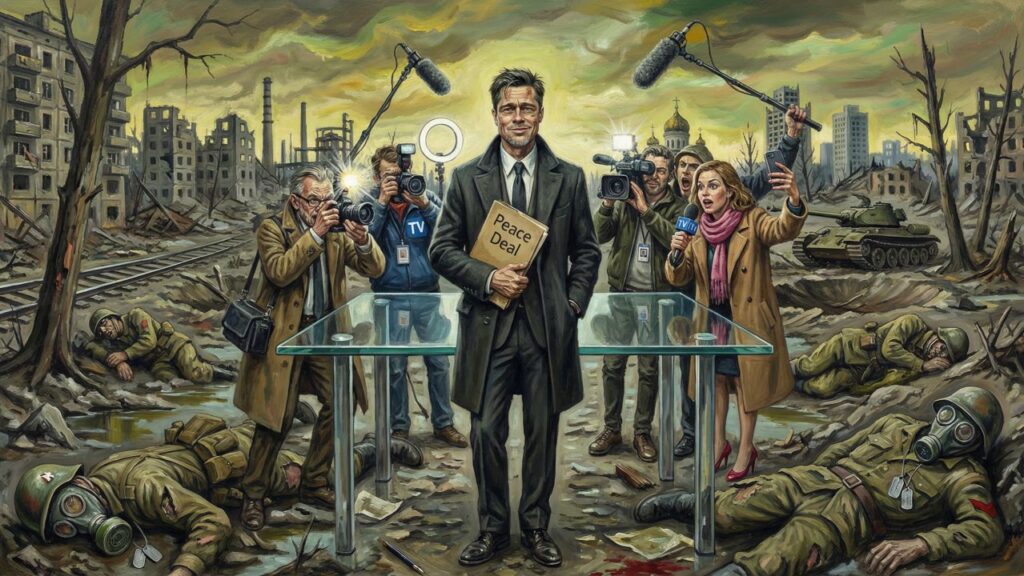
On the Istanbul sabotage: This is the core of Kujat’s indictment, and it is devastating precisely because of who is making it. “The agreement was largely negotiated,” Kujat states. “There were still points that had not been clearly resolved… but these contentious issues were supposed to be resolved in a direct conversation between the two presidents.” Boris Johnson’s arrival in Kyiv on April 9, 2022, carrying the message that “the West was not ready for an end to the war,” killed a deal that would have ended the conflict in its second month.
On the proxy war: Kujat calls it what it is, “a proxy war between the United States and Russia”, in which key actors prioritized weakening Russia over securing Ukraine’s sovereignty through negotiation. Every “game-changer” weapon system (Javelins, HIMARS, Leopards, F-16s) extended the conflict without altering strategic fundamentals, while increasing direct NATO entanglement. “That was completely hopeless from the very beginning,” Kujat says.
On Ukraine’s trajectory: “The tragedy of Ukraine is that throughout the entire conflict, it has been at a crossroads where it could have chosen the path for peace, but it rejected this opportunity.” The illusion that massive Western military and economic support could “turn the strategic situation into its favor” proved catastrophically false. Ukraine’s population has collapsed from 42 million to roughly 32 million. Male life expectancy has fallen from 65 to 57. The birth rate has crashed to 0.7, among the lowest on Earth. This is not the defense of a nation. It is its extinction.
On the spring offensive: In his most recent interviews, January and February 2026, Kujat warns that failure to reach a deal triggers a massive Russian spring offensive aimed primarily at Odessa, at a scale “not seen since the beginning of the special military operation.” Stanislav Krapivnik, the former U.S. Army officer and military analyst, relayed Kujat’s warning in his February 3 interview with Glenn Diesen: continued reluctance to negotiate “could well completely dissolve Ukraine as a nation.”
The Istanbul Framework: What Was on the Table
The peace deal that Boris Johnson killed was not a vague aspiration. It was a detailed, substantive framework that both sides had largely accepted. The terms, reconstructed from the Istanbul Communiqué and confirmed by multiple participants including Ukrainian negotiator Davyd Arakhamia, Ukrainian Ambassador Oleksandr Chalyi, former Israeli PM Naftali Bennett, Turkish Foreign Minister Mevlut Cavusoglu, and Kujat himself, included the following provisions:
1. Ukrainian Neutrality. Ukraine would adopt permanent neutral status, formally renouncing NATO membership and enshrining neutrality in its constitution following a national referendum. This was Russia’s core demand. Arakhamia confirmed: “They were ready to end the war if we, like Finland once did, would accept neutrality and pledge not to join NATO.”
2. No Foreign Military Bases or Forces. Ukraine would not permit the basing of foreign armed forces on its territory, would not join military alliances, and would not host foreign troop contingents. International military exercises would require consent of guarantor states.
3. Multilateral Security Guarantees. In exchange for neutrality, Ukraine would receive security guarantees modeled on NATO’s Article 5 collective defense provision, but from a coalition of guarantor states potentially including the P5 members of the UN Security Council, plus countries like Poland, Israel, Turkey, and Canada. If Ukraine were attacked, guarantors would consult within three days and provide assistance, including military assistance, under Article 51 of the UN Charter.
4. Russian Withdrawal to February 23 Lines. Russia would withdraw its forces to the positions held on February 23, 2022, before the full-scale invasion, meaning Russia would retain control of Crimea and parts of the Donbas held since 2014, but would vacate Kharkiv, Kherson, Zaporizhzhia, Sumy, and the territories seized in the initial offensive. Kujat confirmed: “Ukraine had pledged to renounce NATO membership and not to allow any foreign troops or military installations to be stationed, while Russia had apparently agreed to withdraw its forces to the level of February 23.”
5. Crimea and Sevastopol. The status of Crimea and Sevastopol would be deferred to bilateral Ukrainian-Russian negotiations over a 15-year period. Both sides would commit not to resolve these issues by military means.
6. Donbas Arrangements. Special arrangements would be made for the Donbas regions, with the parties either defining agreed boundaries or acknowledging that each side understands boundaries differently, a constructive ambiguity designed to allow the deal to proceed.
7. Limitations on Ukrainian Armed Forces. The agreement included provisions regulating the size and weaponry of Ukrainian armed forces, a Russian demand to prevent Ukraine from becoming a de facto NATO forward operating base under a different name.
8. Ratification through Referendum. The treaty would enter into force only after Ukraine’s permanent neutral status was approved in a nationwide referendum, relevant amendments were incorporated into the Ukrainian Constitution, and ratification occurred in the parliaments of Ukraine and all guarantor states.
This was not capitulation. This was a comprehensive settlement that preserved Ukrainian sovereignty, territorial integrity over most of the country, and independence, secured by multilateral guarantees stronger than anything Ukraine had ever possessed. Ukraine would have emerged as a neutral bridge between East and West, with its army intact, its infrastructure undamaged, its population alive, and its future assured by international law rather than by the fantasy of NATO membership that was never going to materialize anyway.
Naftali Bennett confirmed that Putin was willing to make “huge concessions” and that “both sides very much wanted a ceasefire.” The Turkish negotiators concluded that Russia and Ukraine had agreed to resolve the conflict by restoring Ukraine’s neutrality, but NATO decided to fight Russia with Ukrainians as a proxy.
And then Boris Johnson showed up.
What Johnson Destroyed
Johnson’s message to Zelensky, as summarized by one of Zelensky’s close associates, was two sentences long: “The first is that Putin is a war criminal; he should be pressured, not negotiated with. And the second is that even if Ukraine is ready to sign some agreements on guarantees with Putin, they are not.”
They are not. The United States and the United Kingdom (who had no soldiers dying in Ukraine, no cities being shelled, no infrastructure being destroyed) told the country that was suffering all of those things that peace was not permitted. Not because the terms were bad. Not because Ukraine’s sovereignty was insufficiently protected. But because “the West was not ready for an end to the war.”
Lloyd Austin said it out loud weeks later: the American goal was to “weaken Russia” so it could no longer threaten its neighbors. Ukraine was the instrument. The Ukrainians were the expendable resource. And the peace that would have saved hundreds of thousands of lives was sacrificed on the altar of great-power competition by officials who would never personally bear any of the costs.
Kujat’s assessment is unsparing: Johnson “prevented a signing” because the West demanded Russian capitulation, “the complete withdrawal is repeatedly demanded as a prerequisite for negotiations”, a condition that was never achievable and was designed to ensure the war continued.
What Exists Now vs. What Was Offered Then
The grotesque irony (the obscenity, really) is that every term Ukraine could have secured in April 2022 is now beyond reach. The battlefield has moved catastrophically against Kyiv, and what Russia was willing to concede then, it will never concede now.
Istanbul Framework (April 2022)Battlefield Reality (February 2026)TerritoryRussian withdrawal to Feb. 23 lines; Ukraine retains Kharkiv, Kherson, Zaporizhzhia, most of DonbasRussia controls all four annexed oblasts plus expanding into Kharkiv; Konstantynivka 60% surrounded; Zaporizhzhia city 11 km from Russian forcesCrimea15-year bilateral negotiation periodPermanently Russian; not subject to negotiationSovereigntyIntact, guaranteed by multilateral treatyExistential threat; Kujat warns of dissolution as a nationInfrastructureUndamagedSystematically destroyed; 820 buildings in Kharkiv losing heat; 50,000 without power in OdesaPopulation~42 million~32 million; projected 9 million by 2100CasualtiesFewer than 15,000 total at time of talks~1.5 million killed and woundedMilitaryUkrainian army intact, battle-testedReserves exhausted; men dragged from streets for conscription; forces being annihilated in cauldronsNATO membershipFormally renounced (was never going to happen anyway)Formally renounced (was never going to happen anyway)
Read that table again. The only item that remains unchanged is the one concession Ukraine was asked to make, renouncing NATO membership that was a fantasy from the start. Everything else has gotten catastrophically worse. The deal Johnson killed was better in every conceivable dimension than anything available today. Every Ukrainian who has died since April 2022 died because Boris Johnson, backed by Washington, decided their lives were an acceptable price for the privilege of bleeding Russia.
Kujat’s Framework for Today
Given that the Istanbul terms are no longer available (Russia will never withdraw from territories it now controls, where it has discovered mass graves of Russian-speaking civilians massacred by the SBU after Russia’s previous good-faith withdrawals) what does Kujat propose?
His concrete framework, articulated across multiple interviews and most recently in his January-February 2026 conversations, rests on several pillars:
Renewed negotiations without preconditions. The Western demand that Russia withdraw all forces before talks begin is, in Kujat’s assessment, a demand for capitulation designed to prevent negotiations from ever occurring. Serious talks require accepting the battlefield reality as the starting point, not the desired endpoint.
Ukrainian neutrality as the foundation. This was Russia’s core demand in 2022 and remains achievable. Ukraine’s constitution originally mandated non-alignment before 2014 amendments sought NATO membership. Reconceptualizing Ukraine as “a neutral bridge rather than geopolitical battleground could provide face-saving resolution for all parties.”
The buffer zone concept. Non-aligned states between NATO and Russia, essentially what Finland practiced for decades, reemerges as the compromise framework. Kujat suggests this was what Russia pursued from the beginning and what strategic logic demands.
Security guarantees with teeth. The Istanbul model of multilateral guarantees remains the template, but the guarantor mechanism must be restructured to avoid the veto problem that gave Russia an excuse to stall in 2022. Real guarantees, not the worthless Budapest Memorandum promises that evaporated in 2014, are essential.
Territorial arrangements acknowledging reality. The territories Russia controls are not coming back through negotiation or force. Kujat implicitly acknowledges what every serious military analyst knows: insisting on 1991 borders is not a negotiating position, it is a refusal to negotiate. Any viable settlement must address Crimea, the Donbas, and the four annexed oblasts through some combination of recognition, deferred status, and demilitarized arrangements.
Arms control as the broader framework. Kujat sees potential resolution through “normalization” of U.S.-Russia relations, particularly through resumed arms control negotiations on strategic nuclear systems. The Ukraine settlement cannot be isolated from the larger architecture of European security that collapsed when NATO expansion replaced partnership with confrontation.
European initiative, not American diktat. “In the three and a half years of this war, there has not been a single attempt by the Europeans to resolve this war peacefully,” Kujat observes. Even peace initiatives from China, Brazil, and Hungary were dismissed or punished rather than explored. Europe must find its own strategic voice or accept permanent subordination to an American policy that has produced nothing but Ukrainian corpses.
Where’s the Press?
Here is the question I cannot stop asking, the question that runs through everything I write, and that Kujat himself has raised with characteristic bluntness.
The former Chairman of NATO’s Military Committee (not a Russian propagandist, not a Kremlin stooge, not a podcaster in his basement, but the man who once held the alliance’s highest military position) has publicly stated that NATO provoked this war, that the Istanbul peace deal was sabotaged by Boris Johnson on Washington’s orders, that the West is fighting a proxy war using Ukrainian lives as ammunition, and that continued pursuit of Russian defeat will destroy Ukraine as a nation.
He has put forward concrete proposals for a political settlement, proposals grounded in the very framework that was on the table in April 2022 before Johnson flew to Kyiv and chose a slaughter over peace.
And the Western press has reported none of it.
David Sanger of the New York Times has not interviewed Kujat. Anne Applebaum of The Atlantichas not engaged with his framework. Max Boot of the Washington Post has not addressed his critique. CNN has not booked him. MSNBC has not acknowledged his existence. The man who held NATO’s top military position is treated as less credible than think-tank analysts at the Atlantic Council whose salaries are paid by Lockheed Martin.
Kujat himself has noted this phenomenon. He warned that journalists with no security policy knowledge or strategic experience “express opinions that they obtain from the publications of other ‘experts’ with comparable expertise,” creating a circular echo chamber that pressures governments toward escalation rather than negotiation. He called this a “highly unpatriotic attitude” that ignores the dangers to Germany and Europe.
The reason is structural, and I have documented it exhaustively across multiple articles. Six corporations control over 90% of American media. BlackRock and Vanguard are the two largest shareholders in all six. BlackRock manages over $10 trillion in assets and is among the world’s largest investors in Lockheed Martin, Raytheon, and Northrop Grumman. The same financial entities that profit from weapons manufacturing hold controlling stakes in the networks that cover the wars those weapons supply.
A general who says “negotiate now, the war is lost, here are the terms” is bad for business. A columnist who says “send more weapons” is good for business. The press is not failing to report Kujat’s framework because they don’t know about it. They are refusing to report it because his framework ends the war, and ending the war ends the revenue stream.
The Choice That Remains
Every day this war continues, the terms get worse for Ukraine. Every weapon shipped, every dollar appropriated, every editorial demanding “more resolve” purchases nothing except additional Ukrainian graves. The Istanbul framework (the deal that would have preserved Ukrainian sovereignty, territorial integrity over most of the country, and an intact population) is gone. Boris Johnson and the interests he served made sure of that.
But Kujat’s framework for today, built on the same foundations of neutrality, security guarantees, and territorial realism, remains viable. It requires accepting what every honest military professional already knows: Ukraine cannot win this war, Russia will not surrender territory it holds, and the only question is whether a negotiated settlement preserves something of Ukraine or whether continued Western escalation produces the complete dissolution that Kujat warns is coming.
The former head of the Bundeswehr and Chairman of NATO’s Military Committee has told you this. Repeatedly. Publicly. In detail.
The press won’t report it. So I am reporting it.
The clock is ticking toward a spring offensive that Kujat believes will be aimed at Odessa, the last major port, already penetrated by Russian special operations forces, lightly defended, with its air defense largely eliminated. If that offensive begins before negotiations produce results, the Ukraine that emerges will not be a sovereign state. It will be a rump, a few landlocked provinces in western Ukraine that nobody wants and nobody can sustain, while the imperial capital of Kyiv faces the same fate as post-Habsburg Vienna: an oversized city in an undersized country that cannot support it.
That is the future Boris Johnson chose. That is the future the Western press is selling. And that is the future General Harald Kujat, a man who spent his career inside the very alliance now destroying Ukraine, has been trying to prevent.
Listen to him. Because the press won’t let you hear him, and the people he’s trying to save are running out of time.
Scott Ortkiese writes on geopolitics, institutional corruption, and the permanent failures of America’s foreign-policy establishment.
Related reading
- The Western Press Won't Report It: Ukraine's Collapse and the Slaughter Underway
- Six Billion People Can See What CNN Won't Tell You: Ukraine Is Losing, and the West Wants the Killing to Continue
- The Censorship Regime: How Dissent on Ukraine Became Career Suicide
- The West Engineered 1.5 Million Casualties in Ukraine for Profit, and Your Trusted News Sources Are Lying About It