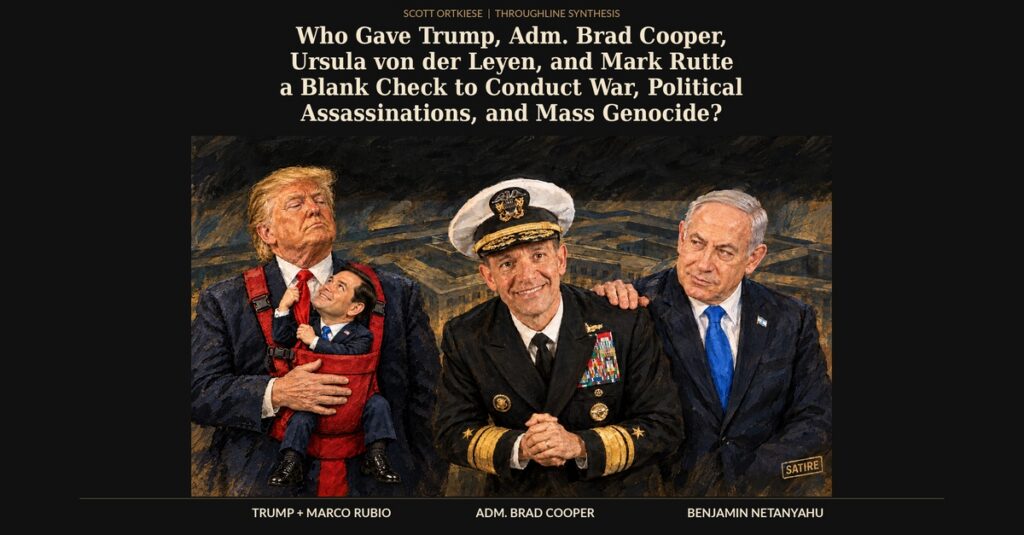
No election authorizes genocide, forever wars, or the assassination of sovereign leaders. Rubio supplies the excuses, Adm. Brad Cooper the military machinery, and Netanyahu the demands. Their own words and documented actions make the case.
Scott Ortkiese | Throughline Synthesis | Houston, October 14, 2026
Updated October 15, 2026.
On Friday, June 26, 2026, Israel and Lebanon signed a Trilateral Framework1 in Washington with full U.S. support. The State Department published the text. In it, the Government of Israel “declares that it has no territorial ambitions in Lebanon,” and both governments commit to a sequenced process “enabling the Israel Defense Forces (IDF) to progressively redeploy out of the Lebanese territory.”
That same Friday, in Israel, Israeli Defense Minister Israel Katz met Admiral Brad Cooper, the commander of U.S. Central Command. Katz told Cooper, in the words of The Jerusalem Post2, that Israel “will only partially, not fully, withdraw from any of its security zones in Lebanon, Syria, or Gaza.” On Monday, June 29, Katz went further. He claimed3 he had reached an agreement with Cooper stipulating that “there would be no withdrawal from the security zones in Lebanon, Syria and the Gaza Strip,” and added that “the Israeli army’s presence in southern Lebanon would be long-term.”
That Monday, Cooper was at Baabda Palace outside Beirut. Lebanese President Joseph Aoun told him4 that Lebanon would assert sovereignty over all of its territory, with its army deployed “right up to the Israeli border.”
So which one is American policy: the text the State Department published, or the deal an Israeli defense minister says he struck with an American admiral? The Jerusalem Post reported no response from Cooper, from Central Command, or from Washington. No public correction followed.
Nobody elected Brad Cooper. Nobody directly elected Ursula von der Leyen to lead the European Commission either; the European Parliament elected her to a second term with 401 votes on July 18, 2024 (European Parliament5). The North Atlantic Council selected Mark Rutte, the former Dutch prime minister, as NATO secretary general on June 26, 2024, not by a popular vote (NATO6). Their offices have different legal mandates and different appointment and removal mechanisms. The shared political question is what happens when the public cannot directly remove the official making the commitment. Their citizens pay with their money, their factories, and their lives.
Katherine Thompson, a senior fellow in defense and foreign policy at the Cato Institute who previously performed the duties of the assistant secretary of defense for international security affairs, made the institutional case in Responsible Statecraft7 on October 12. She wrote that regional combatant command leaders “have become accustomed to ruling over their own fiefdoms of U.S. forces positioned across every major area of the world while also waging significant influence in the halls of power at home.” She noted that Cooper had recently met Saudi Crown Prince Mohammed bin Salman, Katz, and Aoun, and that Central Command’s releases “did not indicate that a civilian counterpart of equal rank was present.” She urged Defense Secretary Pete Hegseth to use his newly announced 20% cut in general and flag officer positions to reduce these regional commands’ rank and resources.
Thompson is right about the structure. This article follows the evidence further: into what 1 admiral’s relationship with Israel’s military has produced, what he does when the cameras are off, what it has cost Americans, where his career is pointed, who is waiting for him when he takes off the uniform, and how Europe’s unelected leaders are marching their own citizens down the same road.
Nobody Voted for Him
Start with the name. He is not Bradley Cooper, the actor who played a Navy SEAL sniper. He is Charles Bradford Cooper II, born in 1967, a 1989 graduate of the U.S. Naval Academy who goes by Brad. According to his public biography8, he commanded U.S. Naval Forces Central Command and the 5th Fleet in Bahrain from May 2021 to 2024, became deputy commander of Central Command in February 2024, and took command of the entire organization on August 8, 2025. He is the first Navy officer to hold the post since Adm. William Fallon in 2008.
Central Command, or CENTCOM, is 1 of the Pentagon’s regional “combatant commands,” the headquarters that run American military operations in a defined slice of the world. CENTCOM’s slice covers the Middle East, and since 2021 it has included Israel. Its headquarters sits at MacDill Air Force Base in Tampa, Florida9.
Cooper got the job through a process voters never touch. His predecessor, Army Gen. Erik Kurilla, lobbied Trump directly10 to choose him, according to a former defense official quoted by CNN. Hegseth backed Cooper over Army Gen. James Mingus, who had initially been seen as the front-runner11. The Senate then confirmed Cooper by voice vote, a method that records no individual senator’s position, “slipped in” over a weekend while senators debated Trump’s domestic policy megabill, as Military.com12 reported. No roll call. No name attached.
That is a lawful appointment. The Constitution’s Appointments Clause13 lets the president nominate officers and the Senate confirm them. But appointment is not a mandate to make policy. The statute that defines a combatant commander’s job, 10 U.S.C. § 16414, lists his primary duties as producing war plans, taking actions “as necessary, to deter conflict,” and commanding U.S. forces “as directed by the Secretary and approved by the President.” Nothing in the statute authorizes an admiral to settle how long a foreign army may occupy its neighbor’s territory.
The law governing ambassadors includes a carve-out that turns the combatant commander into a parallel ambassador. Under 22 U.S.C. § 392715, the chief of mission in each country has “full responsibility for the direction, coordination, and supervision of all Government executive branch employees in that country,” except Voice of America correspondents and “employees under the command of a United States area military commander.” The ambassador runs the embassy. The regional commander runs everyone in uniform. When the 2 disagree, the commander controls the carriers, bases, interceptors, and arms deliveries.
In Lebanon, the gap was visible in the room. When Cooper met Aoun on June 29, the senior American diplomat present was Keith Hanigan16, the embassy’s chargé d’affaires, the officer who runs an embassy while the ambassador is away. Also present was Lt. Gen. Joseph Clearfield, the Marine officer who commands Cooper’s Marine component and chairs the ceasefire monitoring mechanism17. A 4-star admiral, his own 3-star subordinate, and an acting embassy chief: that was the American delegation that sat across from a head of state to discuss how a foreign army would leave his country.
None of this is new. In her 2003 book The Mission, Washington Post reporter Dana Priest called the regional commanders “proconsuls to the empire.”18 A proconsul was a Roman governor who ran a province far from the Senate that appointed him. What is new is the combination: a regional commander at war, a president who issues few written directives, a Congress that will not vote to stop the war, and a foreign partner whose army chief calls the commander almost every day.
The Admiral Israel Knows Best
CNN’s March 2026 profile of Cooper10 reported that he speaks with Lt. Gen. Eyal Zamir, the IDF chief of staff, almost daily and sometimes several times a day. An American liaison officer serves inside the Israeli navy, and an Israeli liaison officer serves at the U.S. naval base in Manama, Bahrain. “After five years in the region, I don’t believe there was a general in Israel who did not know him,” a current Israeli military official told CNN. A former senior Israeli military official said Cooper’s support for Israel came “from his heart.”
The same profile captured the other half of the man. A source called him “a people pleaser,” CNN reported10. Another source, quoted again by Ynet19 under the headline “The ‘politician in uniform,’” said, “He’s a politician.” Cooper “shakes hands, seems genuinely interested in what you say and remembers people’s names,” and “grasped that side of being a four-star general far better than Kurilla,” the source said (Ynet19). Under Cooper, CENTCOM’s messaging has frequently referenced Trump and echoed Hegseth’s language, the same profile reported (Ynet19). In plain English, Cooper kisses Trump’s ass on camera and Netanyahu’s in private. That is my appraisal of the political performance, not a compliment to his diplomatic skills.
“Politician in uniform” should be read in its most despicable sense. Not a statesman who happens to wear an admiral’s uniform, but a pol who uses the uniform to make ambition look like service. The stars supply the authority; the smile supplies the camouflage. I see a vain, silly sycophant, the sort of man who would sell his soul to the devil for an approving nod from the Israeli leaders and American Zionist hawks whose favor he courts. His military dignity does not excuse the groveling. It makes the groveling more offensive.
The sanctimony comes in his own words. In his February 28 letter to the troops, signed “C.B. Cooper II,” Cooper wrote, “Today, by your courage and grit, you will change the course of human history,” followed by, “You are the shield of the free world, and today, you are its sharpest sword” (Task & Purpose20). This is the register of a man already composing the inscription beneath his statue. Before explaining how the war ends, he announces its place in human history.
The Pentagon’s careerist pols wear their inflated ranks and a pose of guileless sanctimony as if neither could conceal a calculation. The solemn voice, the ribbons, and the invocation of “military intelligence” are supposed to end the argument before it begins. Cooper makes that old oxymoron useful again. Operational expertise is not political wisdom, and a gift for pleasing powerful men is not strategic judgment.
Military commanders should know their counterparts. The question is who shapes whom. On April 22, Jerusalem Post analyst Yonah Jeremy Bob published an exclusive account21 of how the war was built. His conclusion, drawn from Israeli and American sources: “In many ways, Zamir was key to convincing Caine and Cooper that such a war was feasible, such that they would support it, or at least not oppose it.” Gen. Dan Caine is the chairman of the Joint Chiefs of Staff. The Post reported that Cooper “was easier to convince than Caine” because he concentrated on designing military options, and that his input “was based on the assumption that war would take place.”
The Post described the plan Israeli Prime Minister Benjamin Netanyahu carried on an emergency flight to Washington on February 12. It had 4 steps: assassinate Supreme Leader Ali Khamenei and top officials, destroy Iran’s missile and drone forces, incite an internal uprising, and pursue regime change, possibly with a Kurdish ground attack. According to the Post, Caine and Cooper were prepared to support the first 2 steps and to “hold their noses” on the last 2. The Post wrote that Cooper’s central role was his “constant high-level friendship and contacts with Zamir,” which he used “to split Iranian targets for an anticipated war.” Israel took Iran’s top leaders and thousands of Revolutionary Guard and Basij militia command centers. The United States took southern Iran and the Iranian navy.
Diplomacy and war ran through the same man. In February, Cooper joined White House envoy Steve Witkoff and Trump’s son-in-law Jared Kushner for indirect talks with Iran in Oman, appearing in dress uniform, and the next day he hosted both men aboard the aircraft carrier USS Abraham Lincoln, CNN reported10. On February 27, he briefed Trump at the White House. On February 28, the war began. The American name was Operation Epic Fury. Operation Roaring Lion was Israel’s.
Cooper told his forces to be “relentlessly lethal,” a Hegseth phrase, according to CNN, and wrote in a letter to the troops that they would “change the course of human history20.” History changed most visibly at the Strait of Hormuz, the channel at the mouth of the Persian Gulf that carried about 20 million barrels of oil a day in 2024, about 20% of global petroleum consumption, according to the U.S. Energy Information Administration22. Iran closed it. At a May 14 Senate Armed Services Committee hearing, Sen. Mazie Hirono, Democrat of Hawaii, asked whether Cooper had considered that risk. “I think of the Strait of Hormuz virtually every day,” he answered23. Asked what plans had existed, he said, “I think it would be inappropriate to talk about what those specifically are.” In October, the strait remains contested. CENTCOM reported24 that since resuming its blockade on July 14, U.S. forces have redirected 130 commercial vessels, disabled 3, and destroyed 13.
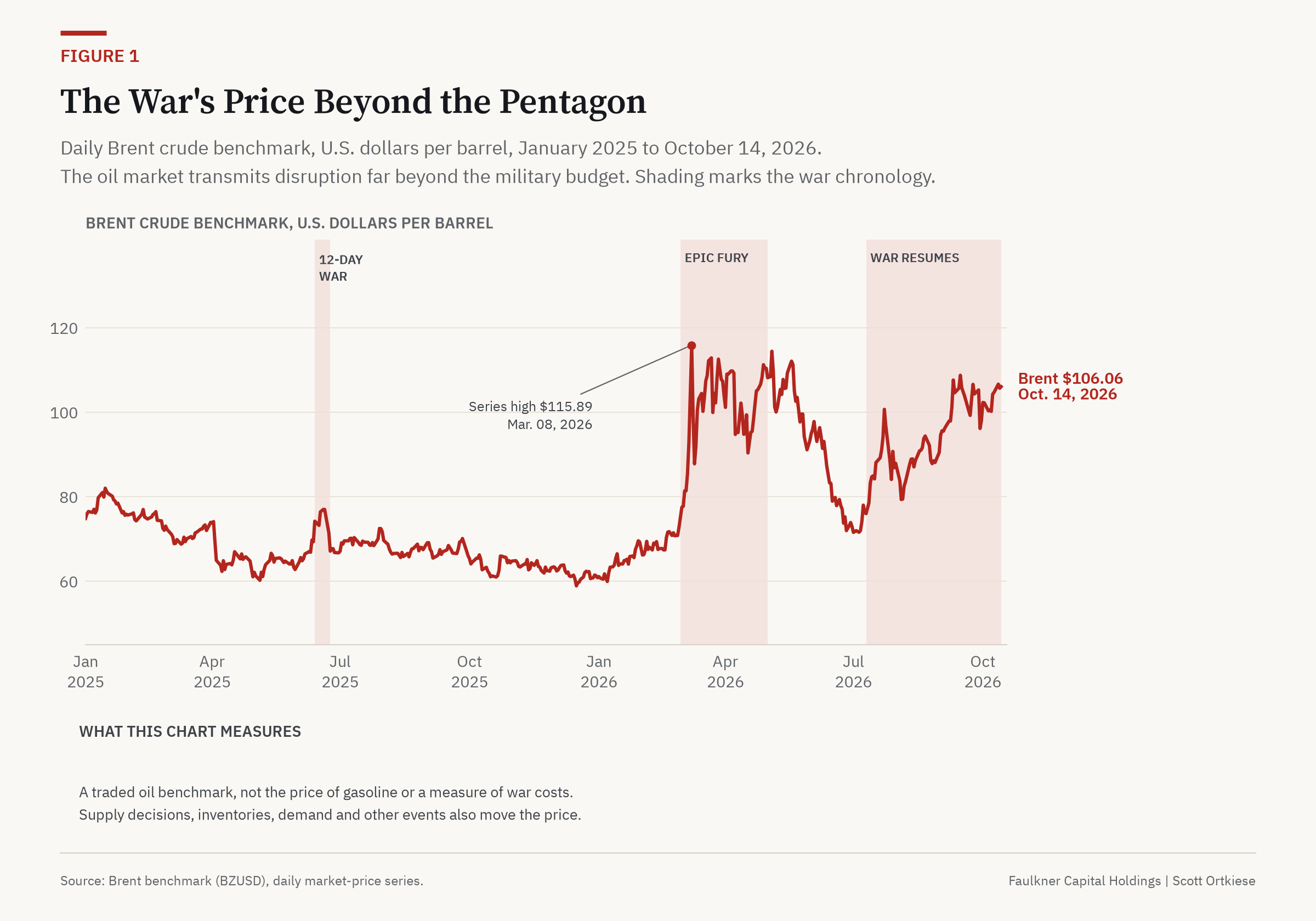
FIGURE 1. The War’s Price Beyond the Pentagon
Daily Brent crude benchmark prices, in U.S. dollars per barrel, from January 2025 through October 14, 2026, with war periods shaded. The chart shows the wider market exposure, not an estimate of the war’s fiscal cost or a claim that the war explains every price move. Source: Brent historical price series25.
“Kill Him for Us”
On October 9, The Jerusalem Post published a second account26 of Cooper’s war. Around March 19, it reported, Cooper secretly called Zamir and asked Israel to eliminate Alireza Tangsiri, commander of the Islamic Revolutionary Guard Corps Navy, the force that harasses shipping in the Gulf. Zamir approved. Israel killed Tangsiri on March 26.
The Post reported that U.S. intelligence held “varying confidence levels” about Iranian discussions of mining Hormuz, and that those discussions were not the same as orders to mine it. The Post also reported that the United States had mostly avoided targeting Iran’s leadership, focusing on Iran’s military capabilities, while Israel took on the leadership.
The Post’s account does not say that Hegseth or Trump approved the request. The public learned of it from an Israeli newspaper more than 6 months later. The United States kept leadership killings at arm’s length, and its regional commander then asked a foreign military to carry one out through a private phone channel.
That is how the relationship launders decisions. Washington keeps its own record clear of leadership assassinations. Israel does the killing and holds the favor. Every request of that kind deepens what the American commander owes his Israeli counterpart, and debts between militaries are repaid in intelligence, interceptors, and political cover.
What He Says When the Cameras Are Off
In public, Cooper says he will “defer to policymakers.” Behind the scenes, he writes the next war and sells it.
On July 30, The Wall Street Journal’s Michael R. Gordon, Lara Seligman, and Annie Linskey reported27 that Cooper had been “quietly directing the war from his Tampa, Fla., headquarters” and had prepared an option for a punishing air campaign against Iran lasting 10 to 14 days, designed to sharply escalate the war. Hegseth backed it. Cooper had long believed force could deliver “a body blow” to Iran if given enough time. When Trump was weighing the war in February, Cooper figured it would take 6 weeks or more. On March 31, he calculated he still needed about 20 more days. Trump took a ceasefire instead, after an American F-15E was shot down over Iran on April 3.
4 days earlier, Axios reported28 on July 26 that Cooper told the Pentagon, the Joint Chiefs, and the White House that 2 weeks of strikes around Hormuz had exhausted most of their designated targets, and that continuing without a decision to return to major combat made no sense. His proposed next step: resume major combat to finish “the remaining 20%” of targets the military had designated but not struck during Epic Fury. That is not a brake. That is a salesman telling the customer the cheap package has run out and the premium package is ready.
The sharpest allegation concerns what he said to Israel’s generals. On August 13, Israel’s Channel 13 reported that Cooper had attended a meeting of the IDF’s senior operational forum with Zamir and urged strikes on Iran’s oil, gas, and electricity facilities, arguing that such attacks “will change the rules of the game, will hurt the Iranians badly,” according to VIN News29. The report also claimed that he wanted fighting to resume and Israel to participate in joint strikes; CENTCOM spokesman Capt. Tim Hawkins called the account “an outright fabrication. It’s not true at all” (VIN News29). The Journal and Axios establish that Cooper developed escalation options, but they do not independently establish Channel 13’s allegation about civilian infrastructure (The Wall Street Journal27, Axios28). If the Channel 13 account is accurate, it describes more than a war on missiles. It describes a proposed attack on the systems that sustain civilian life.
The same month, an officer in CENTCOM’s intelligence branch emailed a broad group of military analysts: “We are looking for new creative and unconventional ways to pressure and punish Iran,” CNN reported30. Officials called the crowdsourcing unusual. CENTCOM’s answer was a compliment to the boss: “Admiral Cooper, in particular, reaches out to members of our great team, regardless of rank.”
Compare Caine’s position as Joint Chiefs chairman. Over the same weeks, he “privately made clear to other top Trump advisers that the US needs to find an off-ramp from the war with Iran,” because the military options to escalate were limited, CNN reported31 on August 7. The chairman was looking for the exit while Cooper developed options for renewed major combat (CNN31, The Wall Street Journal27).
Information control is part of the record too. On July 29, Reuters reported32 that Cooper had warned troops that cellphone videos could help Iran target American bases, and that some deployed personnel could be ordered to surrender their phones. On September 18, The Washington Post reported33 that 5 U.S. officials put regional military fatalities since the war began at no fewer than 22, versus 18 in the Pentagon’s public database, while noting that not all the additional deaths were directly tied to the Iran conflict. The article also cited a CENTCOM estimate of $43.6 billion in war costs through early September, including $28 billion in munitions (The Washington Post33). That reporting does not establish that Cooper personally ordered deaths concealed. It establishes a gap between internal information and public disclosure, a gap Congress should force his command and the Pentagon to explain before accepting another sales pitch for escalation.
An Occupation Agreed With an Admiral
Lebanon has the clearest paper trail of the mischief.
Hezbollah entered the war in March by firing rockets at Israel, and Israel responded with airstrikes and a ground invasion, Agence France-Presse reported4. By June, the IDF held a large zone of southern Lebanon. Katz told The Jerusalem Post2 on June 29 that nearly 100% of the villages near the border in the central and western sectors had been destroyed, along with about 73% of the 24 border villages in the eastern sector, and that roughly 200,000 Lebanese might have nothing to return to.
The framework signed in Washington promised a process: 2 initial “pilot zones” where the Lebanese Armed Forces would deploy and disarm Hezbollah, followed by phased Israeli redeployment. An analysis in Al-Ahram Weekly34 noted that the process has no clear timetable, no guarantee of Israeli compliance, and no independent assessor. Frederic C. Hof, a veteran U.S. diplomat on Syria and Lebanon, wrote in the Majalla35 that Israel is “laying waste to some 66 occupied villages” and promising continued occupation until Hezbollah is disarmed throughout Lebanon.
Katz has never hidden the destination. Israel will stay. He told Cooper in person, and then said Cooper agreed. Cooper’s written statement36 to the House Armed Services Committee describes CENTCOM’s role in Lebanon as “tactical deconfliction between parties as a trusted agent.” A trusted agent whose silence lets 1 party announce the outcome is not neutral. He is a co-signer.
The next round of Lebanese and Israeli talks is set for Tampa, the home of CENTCOM’s headquarters, Asharq Al-Awsat reported37 on October 7. Lebanese lawmaker Ashraf Rifi argued that the process is becoming military, intelligence, and security administration of the south under American supervision. Meanwhile, the United Nations peacekeeping force in southern Lebanon, UNIFIL, is preparing to withdraw, with its mandate scheduled to end on December 31, 2026, Hof noted35. When the U.N. leaves, the American military mechanism becomes the referee of an Israeli occupation whose defense minister says the American admiral agreed it would stay.
The same pattern runs through Katz’s other 2 zones. In Gaza, CENTCOM runs the Civil-Military Coordination Cell inside Israel, with more than 500 multinational personnel “under the leadership of an American general officer,” according to Cooper’s House testimony36. Cooper hosted Netanyahu at that center on October 29, 2025, CNN reported10. In Syria, Katz stood on Mount Hermon on September 9 and vowed that Israel would stay in its Syrian security zone and would strike Iran “a third time” when necessary, Israel National News reported38. That makes 3 occupation zones. In each one, American officers serve as monitors, coordinators, or trusted agents.
The Alliance Nobody Ratified
In early September, Cooper convened a meeting in Germany of the military chiefs of Israel, Saudi Arabia, the United Arab Emirates, Bahrain, Kuwait, Qatar, Jordan, and Egypt. Axios reported39 that the meeting was not announced. Zamir briefed the Arab chiefs on Israeli operations. Cooper assured the group that the United States would not withdraw its forces from the region. Participants discussed Israeli support, with CENTCOM’s help, for Saudi operations against the Houthis in Yemen. CENTCOM’s only public description was that it had held a scheduled conference that “discussed opportunities for enhancing security cooperation.”
On September 14, Crown Prince Mohammed bin Salman received Cooper in Jeddah. The Saudi Gazette40 listed the American side as “Admiral Brad Cooper and his accompanying delegation,” with no names. On October 12, at the Trends Global conference at the Ritz-Carlton in Abu Dhabi, Cooper boasted that “we transformed a concept into the most sophisticated and largest air-defence umbrella in the world,” The National reported41.
That architecture exists because of a decision made in the last week of Trump’s first term. In January 2021, the Pentagon announced42 that Israel would move from U.S. European Command into CENTCOM, citing the Abraham Accords. It made the CENTCOM commander the hinge of an Israeli and Arab military bloc. Cooper’s House testimony describes the hardware: a Middle East air defense coordination center at Al Udeid Air Base in Qatar, and teams of U.S. Army air defenders embedded inside partner Patriot units. He told the committee that CENTCOM’s security cooperation office accelerated 136,000 munitions to partners and “increased speed in delivering needed capability to partners like Israel.”
A treaty of alliance requires the consent of 2/3 of the Senate. A promise that American forces will not leave a region belongs to the President and Congress. In Germany, both were made in substance by an admiral, in an unannounced meeting, with a foreign army chief briefing the room.
Congress has a law meant to catch this. The Case-Zablocki Act43, 1 U.S.C. § 112b, requires the executive branch to report international agreements to Congress, and since 2022 it also covers “qualifying non-binding instruments.” Section (k)(5)(B) excludes instruments implemented under Defense Department, armed forces, or intelligence authorities from that nonbinding category; it does not exempt all binding military agreements from congressional reporting. Section (b)(3)(B) separately exempts specified military agreements from public posting. Those are different exceptions, and neither establishes the legal status of the arrangements Katz claimed or the assurances Cooper reportedly gave in Germany. The accountability demand is straightforward. Congress should require the administration to identify the commitments, state their legal authority and reporting status, and repudiate any promise Cooper had no authority to make.
The Admiral’s Diplomatic Calendar
When senior American civilians appear in the record at all, they are envoys without Senate confirmation or acting embassy staff.
-
February 2026, Oman, then USS Abraham Lincoln. Counterparts: Iranian negotiators, indirectly. Senior U.S. civilian reported present: Envoy Steve Witkoff and Jared Kushner, neither Senate-confirmed. Cooper joins the talks, then hosts the envoys aboard a carrier (CNN10).
-
Feb. 27, 2026, White House. Counterparts: Trump. Senior U.S. civilian reported present: Not applicable. Cooper briefs war options; war begins the next day (CNN10).
-
About Mar. 19, 2026, Phone. Counterparts: IDF Chief of Staff Lt. Gen. Eyal Zamir. Senior U.S. civilian reported present: None reported. Cooper asks Israel to kill the IRGC Navy commander (Jerusalem Post26).
-
June 26, 2026, Israel. Counterparts: Israeli Defense Minister Israel Katz. Senior U.S. civilian reported present: None reported. Katz says Israel will not fully withdraw from 3 zones, then claims an agreement with Cooper (Jerusalem Post2; Naharnet3).
-
June 29, 2026, Baabda Palace, Lebanon. Counterparts: Lebanese President Joseph Aoun. Senior U.S. civilian reported present: Chargé d’affaires Keith Hanigan. Implementation of the framework (Naharnet16).
-
July 28, 2026, Abu Dhabi, UAE. Counterparts: UAE National Security Adviser Sheikh Tahnoon bin Zayed Al Nahyan. Senior U.S. civilian reported present: None reported. CENTCOM announces Task Force Talon Synapse, a joint U.S. and UAE military AI unit (DefenseScoop44).
-
About Aug. 13, 2026, Israel. Counterparts: Zamir and the IDF’s senior operational forum. Senior U.S. civilian reported present: None reported. Channel 13 reports Cooper urged strikes on Iran’s oil, gas, and electricity; CENTCOM denies it (VIN News29).
-
Early Sept. 2026, Germany. Counterparts: Military chiefs of Israel and 7 Arab states. Senior U.S. civilian reported present: None reported. Unannounced; Cooper assures no U.S. withdrawal (Axios39).
-
Sept. 14, 2026, Jeddah, Saudi Arabia. Counterparts: Crown Prince Mohammed bin Salman and National Security Adviser Musaed Al-Aiban. Senior U.S. civilian reported present: Unnamed “accompanying delegation.” Bilateral relations and regional developments (Saudi Gazette40).
-
Oct. 12, 2026, Abu Dhabi, UAE. Counterparts: Trends Global conference. Senior U.S. civilian reported present: Not applicable. Cooper hails “the most sophisticated and largest air-defence umbrella in the world” (The National41).
The Interceptors Belong to Americans
The most expensive form of mischief is measured in missiles.
An interceptor is a missile that destroys an incoming missile. The high-end American types are THAAD, the Army’s Terminal High Altitude Area Defense system built by Lockheed Martin, and the Navy’s SM-3 and SM-6 Standard Missiles, built by RTX, Raytheon’s parent company. Israel’s equivalent is Arrow 3.
During Operation Epic Fury, the United States fired about 200 THAAD interceptors at Iranian missiles aimed at Israel, roughly 50% of the entire American THAAD inventory, and more than 100 SM-3 and SM-6 interceptors from ships in the eastern Mediterranean, according to U.S. officials cited by The Washington Post and summarized by The Jerusalem Post45. Israel fired fewer than 100 Arrow 3 interceptors. The Pentagon’s chief spokesman, Sean Parnell, responded that “both Israel and the United States carried the defensive burden equitably.” The count says otherwise: more than 300 American high-end interceptors to Israel’s fewer than 100, a ratio of more than 3 to 1.
The bill belongs to American taxpayers. The Congressional Budget Office puts the unit cost46 of a THAAD interceptor at about $12 million, an SM-6 at about $4 million, and the most advanced SM-3 at up to about $28 million. The arithmetic: 200 THAADs at $12 million each total $2.4 billion. 100 Standard Missiles at $4 million to $28 million each total $0.4 billion to $2.8 billion, depending on a mix the Pentagon has not released. Total: $2.8 billion to $5.2 billion in American interceptors spent defending Israel in this war.
Those numbers come with a warning from Israel’s own friends. John Hannah and Rena Gabber of the Jewish Institute for National Security of America, a pro-Israel defense policy institute, wrote in The Jerusalem Post47 on October 11 that the United States fired up to 150 THAAD interceptors and 80 SM-3s defending Israel in the 12-day war of June 2025, then more than 200 THAAD and 100 SM-3s this year, leaving about 80% of America’s THAAD missiles gone. They concluded that this pattern of America riding to Israel’s rescue is not sustainable.
Cooper does not care. On September 13, CBS correspondent Norah O’Donnell asked him on 60 Minutes48 about estimates that the United States had fired 45% of its Patriot interceptors and more than 50% of its THAAD interceptors. “I’m not concerned at all,” he said. “We’re well-armed and ready for any contingency.” He gave Congress the same assurance in May, telling lawmakers, “I have all the munitions necessary to both defend our forces as well as conduct a broad range of contingencies,” The Intercept reported49.
The record says he should be concerned. The CBO estimates the United States has probably used between 1/2 and 2/3 of its interceptor inventory since June 2025 and will need at least 5 years to rebuild it. In early September, Iranian attacks on a single U.S. air base in Jordan drew more than 30 Patriot interceptors, CBS News learned48. Time reported50 that a $14 billion arms package for Taiwan was placed under review in May, partly to preserve munitions for the Iran war, and that Adm. Samuel Paparo, commander of U.S. Indo-Pacific Command, objected to the continued diversion of ships to the war. Every THAAD fired over Tel Aviv is 1 fewer available to defend Guam, Okinawa, or an American carrier.
Somebody profits from the shortage, and they say so on their earnings calls. On July 23, Lockheed Martin Chairman and CEO Jim Taiclet told investors that “in late June, the Missile Defense Agency awarded a seven-year contract for $35 billion to quadruple production of THAAD interceptors,” and that “we’re being asked to triple PAC-3 MSE production, quadruple THAAD production.” Lockheed’s backlog hit a record $230 billion. “For the past several years, we’ve been increasing munitions capacity ahead of contracted demand,” Taiclet said. The same morning, RTX Chairman and CEO Chris Calio reported “over $5 billion of GEM-T Patriot effectors driven by international customers and our first domestic GEM-T production order in over 30 years,” more than $10 billion of international awards in the first half, “including over $7 billion from our European customers,” and celebrated a base defense budget request of “$1.1 trillion,” which “represents a roughly 25% increase year-over-year.” On RTX’s call, Bernstein analyst Doug Harned put it plainly: “Now we have the war in Iran and more export orders.”
The market got the message. From January 2, 2025, to October 14, 2026, RTX shares rose 61%, after peaking 94% above their starting level on August 18, 2026. The S&P 500 rose 32%. Lockheed shares stood 40% above their January 2025 level on March 2, 2026, 2 days into the war, before falling back to a gain of 8%. Cooper’s indifference to the stockpile is not a failure of arithmetic. Depletion is the order book.
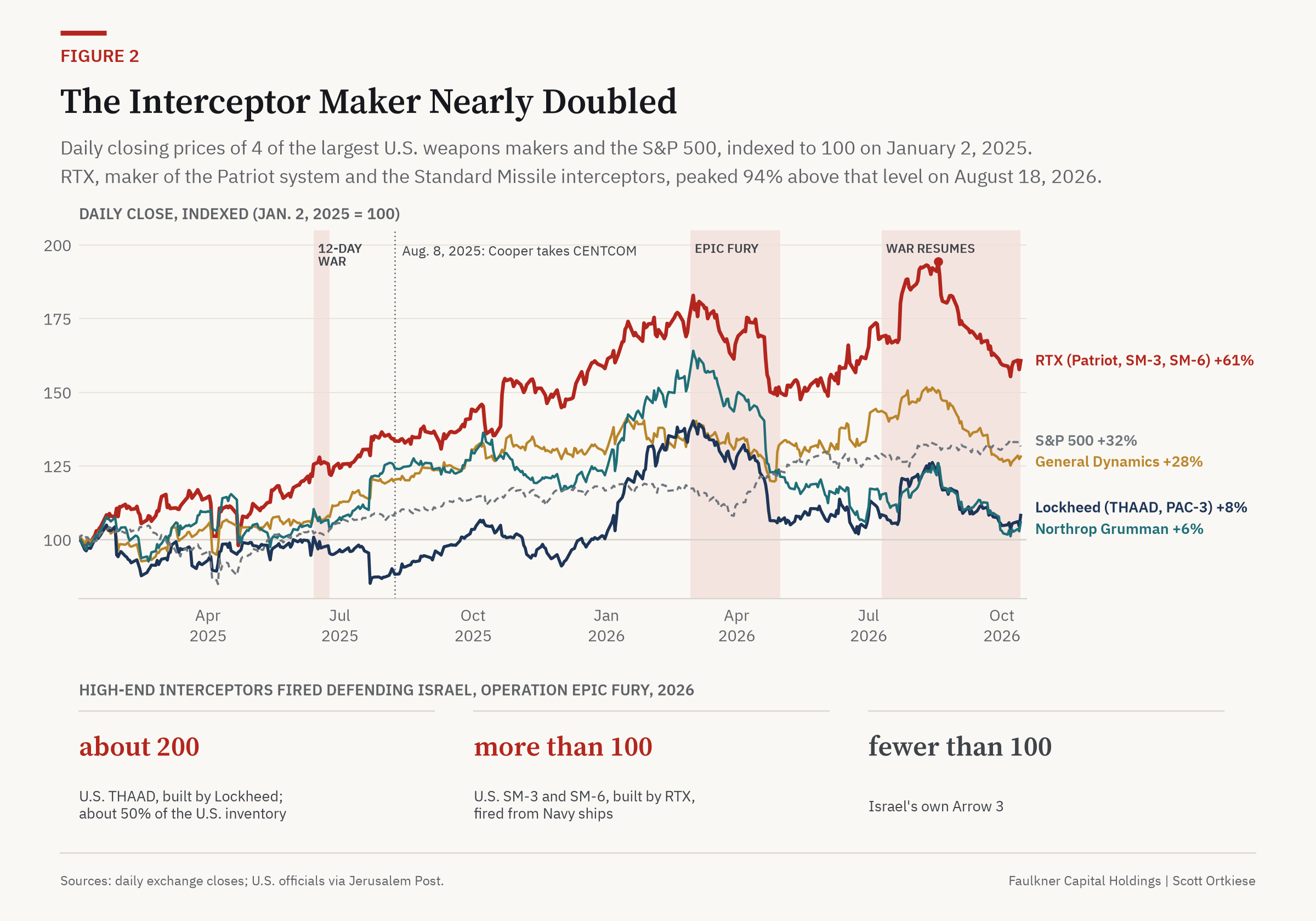
FIGURE 2. The Interceptor Maker Nearly Doubled
Daily share prices of 4 of the largest U.S. weapons makers versus the S&P 500, indexed to January 2, 2025. RTX, maker of the Patriot GEM-T and the SM-3 and SM-6, peaked 94% above its starting level in August 2026. The strip below counts the high-end interceptors, American and Israeli, fired defending Israel.
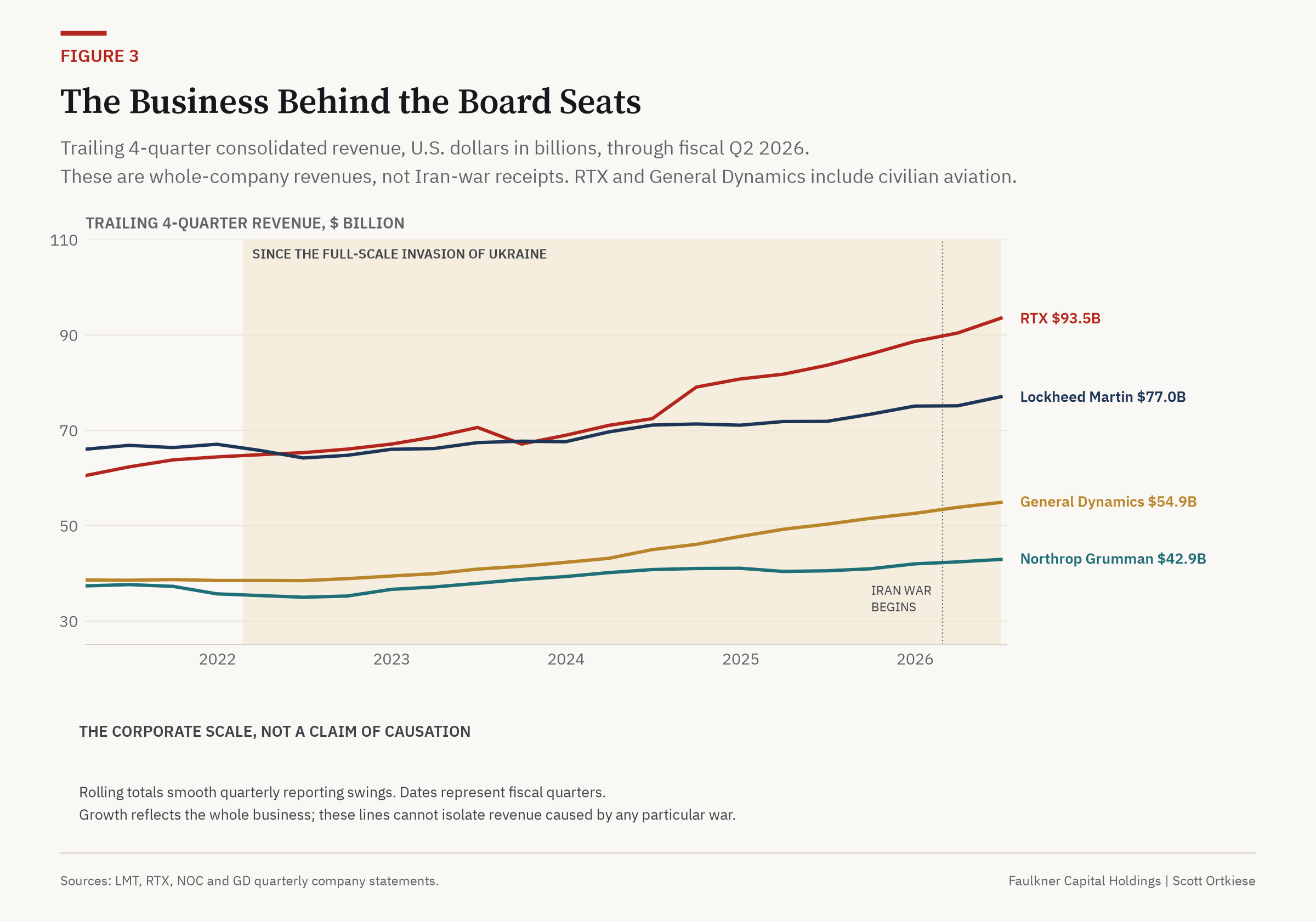
FIGURE 3. The Business Behind the Board Seats
Trailing 4-quarter consolidated revenue for Lockheed Martin, RTX, Northrop Grumman, and General Dynamics, through fiscal Q2 2026, in U.S. dollars in billions. These whole-company totals include civilian businesses and must not be read as revenue attributable to the Iran war. Sources: quarterly financial statement series for Lockheed Martin51, RTX52, Northrop Grumman53, and General Dynamics54; rolling totals calculated by the author.
The whole bill is larger. The CBO estimates $38.1 billion in added Defense Department costs from February 28 through August 1, 2026, including $21.7 billion to replace munitions, of which $13.1 billion is interceptors. CENTCOM’s own internal estimate, reported by The Washington Post, reached $43.6 billion by early September. The administration’s June 24 supplemental request totaled $87.6 billion, including $67.1 billion for the Defense Department. As of October 10, the Pentagon acknowledged 21 American service members killed and 865 wounded, The New York Times reported55. When The Washington Post reported that more Americans had died than the Pentagon acknowledged, Hegseth wrote, “This is DISGUSTING and FAKE. A complete LIE.” Then, the Pentagon raised its count.
The Report That Never Leaves Tampa
On February 28, the war’s first day, 2 American Tomahawk cruise missiles struck the Shajarah Tayyebeh Elementary School in Minab, in southern Iran. More than 150 people were killed, including at least 123 children, according to Bloomberg’s reconstruction56 of the targeting chain. A United Nations fact-finding mission found “reasonable grounds” to believe the United States carried out the strike and concluded that it constituted a war crime, Stars and Stripes reported57. Throughline Synthesis documented the strike in The War Pigs Used Ukraine as Their Proxy, and Triple-Tapped a Girls’ School in Iran58.
Bloomberg found that the Pentagon had cataloged the school site as a military facility years earlier and never updated the entry, and that targeting ran through the Maven Smart System, an artificial intelligence platform that condensed hours of work into minutes. Hegseth had cut the Pentagon’s civilian harm mitigation staff by about 90%, and CENTCOM’s team fell from 10 people to 1. CNN reported59 that senior commanders bypassed database warnings for the sake of “expediency,” and that “leadership at CENTCOM did not push back either.”
On March 11, Cooper said in a video update, “Humans will always make final decisions on what to shoot and what not to shoot, and when to shoot, but advanced AI tools can turn processes that used to take hours and sometimes even days, into seconds,” Stars and Stripes reported60. At Minab, humans made the final decision in minutes, on a target entry nobody had checked against the present.
An investigating officer delivered an initial report in April. Lawmakers said CENTCOM has held onto it since, CNN reported61 in July, adding that the Pentagon had not asked the Defense Intelligence Agency to conduct the final phase of its damage assessment, and that Hegseth and Cooper faced intense White House pressure to show the war had gone well. Asked whether he would release the findings, Trump said, “I don’t think anybody is ever going to be able to say what happened there.” When Bloomberg published its reconstruction in September, the investigation still had not been released.
Who elected the man who decides whether Americans learn how their military killed 123 children? No one. The investigation remains within his own command, and he is sitting on it for the people who promoted him.
The Admiral as the Administration’s Lawyer
The Constitution gives Congress, not the President, the power to declare war62. Congress never declared or authorized this one. The War Powers Resolution, 50 U.S.C. § 1544(b)63, requires the President to end the use of American forces in hostilities within 60 days unless Congress authorizes them. On May 1, Trump sent Congress a letter saying hostilities had ended, a claim intended to stop that clock.
On May 14, Sen. Tammy Duckworth, Democrat of Illinois, a combat veteran, asked Cooper whether the United States was still engaged in hostilities while it blockaded Iranian ports. Cooper answered23, “Consistent with the President’s letter, Epic Fury is complete.” Pressed again, he said, “We are not. We are in a ceasefire.” In the same hearing, he described the blockade as operating under international armed conflict rules.
A uniformed commander told the Senate that his forces were not in hostilities while they enforced a blockade under the laws of armed conflict. That testimony served Trump’s legal position, not the facts. On July 10, after Iranian attacks on tankers, Trump declared the ceasefire over, and the conflict intensified through July, according to the CBO46. On June 23, the Senate passed a war powers resolution for the first time, 50 to 48, on its 10th attempt, AP reported64. On September 24, the next attempt failed 49 to 5065.
Read the May transcript and notice how often Cooper says he will “defer to policymakers.” In the Senate hearing room, the admiral presents himself as an instrument of civilian authority. In Baabda Palace, in Jeddah, in Germany, in Abu Dhabi, and in the IDF’s operational forum, he is the policymaker.
Built to Survive the Purge
On September 30, at Marine Corps Base Quantico, Hegseth announced66 he would cut roughly 800 general and flag officer positions by 20%, about 160 positions, by January 1, 2027. “The ideological clowns are out. The patriotic cowboys are in,” he said, according to NPR67. Roughly 20 generals and admirals had already resigned or been fired since Hegseth took over, the BBC reported68.
Hegseth asked Adm. Alvin Holsey, the commander of U.S. Southern Command, to step down 2 years early after Holsey voiced concerns69 about the “murky” legality of strikes on alleged drug boats in the Caribbean. The commanders who raise legal questions leave. The commanders who stay say they’re “not concerned at all.”
Cooper stayed. The Jerusalem Post reported26 that he prefers to convey his views to Caine, and sometimes to Secretary of State Marco Rubio or Hegseth, rather than directly to Trump, a habit that spared him from the firings. He never puts himself in a position where Trump can blame him, and he never stops putting Trump’s name in his press releases.
In March 2008, Fallon, the last Navy officer to lead CENTCOM before Cooper, resigned after Esquire portrayed him as the lone opponent among President George W. Bush’s advisers of military action against Iran, Stars and Stripes reported70. Fallon lost his job for being a brake. Cooper kept his by assuming the war would happen and then planning the next one.
In April 1951, President Harry Truman relieved Gen. Douglas MacArthur. His order stated the principle: “It is fundamental, however, that military commanders must be governed by the policies and directives issued to them in the manner provided by our laws and Constitution,” according to the Truman Library71. Cooper is no MacArthur. MacArthur defied his president. Cooper flatters his and fills the space his president leaves empty. The Jerusalem Post reported26 that Trump and his top lieutenants gave CENTCOM “zero directives” to work toward regime change in Iran, the war’s largest question. When the man at the top gives contradictory statements and few written orders, the commander’s relationships become the orders, and the most consistent direction he receives comes from the foreign army chief who calls him almost every day.
4 Stars, Then a Board Seat
Why would an admiral behave this way? Follow the career, because American generals and admirals plan nearly every step of theirs toward the same destination: early retirement into the military-industrial establishment they spent their careers buying from.
Start with the clock. Federal law lets a 4-star officer serve until age 6472. Almost none do. They leave in their late 50s, while their contacts are still in their chairs and their names still open doors. Cooper’s predecessor shows how it works. Kurilla, born in 1966, handed CENTCOM to Cooper on August 8, 202573, at 59. 56 days later, on October 3, Lazard announced74 that he had joined its Geopolitical Advisory group as a senior adviser, where, in the words of Lazard CEO Peter Orszag, he would help clients “look around corners.” On November 20, the Washington Institute for Near East Policy named him75 a distinguished fellow. On February 26, 2026, 2 days before the war began, the Washington Institute congratulated him76 on receiving Saudi Arabia’s Order of King Abdul Aziz, Excellent Class, presented by Saudi Defense Minister Prince Khalid bin Salman.
Consider the money next. In 2026, basic pay for a 4-star officer is capped at $228,00077. One board seat pays more than that basic salary. Lockheed Martin’s 2026 proxy statement78 shows a standard director package of $340,000, half in cash and half in company stock. Retired Adm. John Aquilino, commander of U.S. Indo-Pacific Command until 2024, received $340,000. Retired Marine Gen. Joseph Dunford, former chairman of the Joint Chiefs, received $365,000; the Quincy Institute found79 he joined Lockheed’s board 5 months after leaving the Pentagon. Half the standard fee is paid in stock, so the share price in Figure 2 affects the value of the retired officer’s compensation.
This is not a few bad apples. It is the system:
-
A 2010 Boston Globe study of about 750 3-star and 4-star officers found that 80% of those who retired from 2004 to 2008 became consultants or defense executives, up from less than 50% a decade earlier, as retired Lt. Gen. Karl Eikenberry summarized80.
-
Citizens for Responsibility and Ethics in Washington found that 70%, 76 of 108, of those retiring from 2009 to 2011 did the same, The Fiscal Times reported81.
-
The Quincy Institute’s William Hartung found79 on October 4, 2023, that 26 of 32 4-star officers who retired from June 2018 to July 2023, more than 80%, went to work for the arms industry, and cited a Government Accountability Office finding that more than 1,700 senior officials went to the top 14 contractors from 2014 to 2019.
-
Sen. Elizabeth Warren, Democrat of Massachusetts, counted82 672 instances in 2021 of the top 20 contractors employing former senior officials; 91% became lobbyists.
The officers know exactly what they are doing. Retired Air Force Col. Marybeth Ulrich, a professor at the Army War College, wrote in Strategic Studies Quarterly83 that “a successful career for top senior leaders increasingly features employment in the defense industry,” and that “recruitment for postretirement positions may occur well before retirement, raising questions about the independence of such senior officers while still in uniform.” She found that “the feeder system from some commands to certain defense firms is so powerful that successive generations of commanders have been hired by the same firms or into the same field.” She quoted a retired 2-star officer: “80 percent of my peers turn around and try to sell stuff back to the military.”
Read those findings together, and the career becomes legible. An officer who wants the second act collects the assignments industry pays for: the program office, the joint staff, the command that buys or brokers the most weapons, the post that approves foreign sales. He cultivates the foreign defense ministers and princes who buy those weapons. He builds a public profile as the innovator who fields the new technology. He stays on the right side of the political boss. He retires before the law requires him to. He then collects twice: a taxpayer pension and a fee from the contractor.
The Gulf pays too. The Washington Post found84 in 2022 that more than 500 retired U.S. military personnel had worked for foreign governments since 2015, that 15 retired generals and admirals had worked as paid consultants to the Saudi Defense Ministry since 2016, and that the military approved about 95% of such requests. Israel has its own pipeline. The Jewish Institute for National Security of America’s Generals and Admirals program flies recently retired U.S. officers to meet Israel’s prime minister, defense minister, IDF chief, and Mossad chief. At least 55 of the 83 alumni from its 2019 to 2026 cohorts, about 66%, have held or hold defense-industry posts, and a $237,846 Helmsley Charitable Trust grant funded the program so participants would “return home to share publicly what they learned,” Harrison Berger reported85 in Responsible Statecraft on October 13.
The Pentagon wants the door wider still. In June, it asked Congress, in its proposals for the 2027 defense authorization bill, to eliminate the 1-year cooling-off period for 1-star and 2-star officers and to narrow the 2-year ban for 3-star and 4-star officers to the specific office they served in, warning of a “significant risk of reducing government access to the knowledge and expertise of former Defense officials,” GovCon Feed reported86. Hegseth’s 20% cut will send about 160 more generals and admirals onto that market by January 1, 2027.
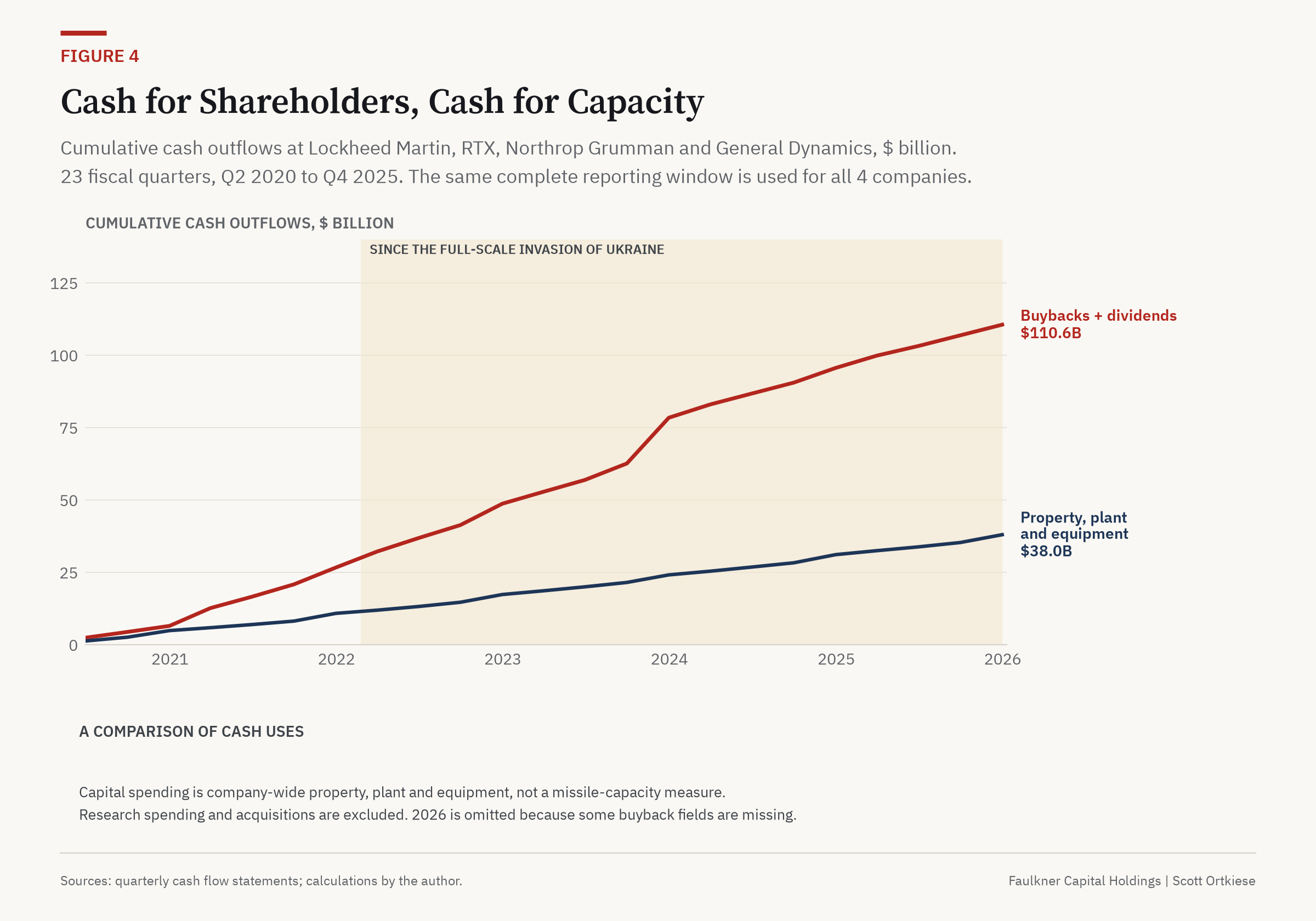
FIGURE 4. Cash for Shareholders, Cash for Capacity
Cumulative buybacks and common dividends versus purchases of property, plant, and equipment at Lockheed Martin, RTX, Northrop Grumman, and General Dynamics over 23 fiscal quarters, Q2 2020 through Q4 2025. Capital spending here is company-wide, excludes research and acquisitions, and does not measure missile production capacity; 2026 is excluded because some buyback fields are missing. Sources: quarterly cash flow statement series for Lockheed Martin51, RTX52, Northrop Grumman53, and General Dynamics54; cumulative totals calculated by the author.
The Exit Ramp From Tampa
Now, look at the chair Cooper sits in. Every CENTCOM commander of the past 15 years has followed the same road out.
-
Gen. James Mattis, Marine Corps. Left CENTCOM in 2013. General Dynamics board, August 2013 to January 2017, then Defense Secretary; rejoined the board in August 2019 (Defense News87).
-
Gen. Lloyd Austin, Army. Left CENTCOM in 2016. United Technologies board, then Raytheon Technologies after the 2020 merger; stood to collect up to $1.7 million on leaving to become Defense Secretary (The Hill88).
-
Gen. Joseph Votel, Army. Left CENTCOM in 2019. Director of AeroVironment, the drone and loitering munition maker, from November 2023; strategic adviser to Sierra Nevada Corporation (AeroVironment89).
-
Gen. Frank McKenzie, Marine Corps. Left CENTCOM in 2022. Senior adviser, Teneo Global Political Risk Advisory, March 2026; MEMRI board of advisers (Teneo via Yahoo Finance90; MEMRI91).
-
Gen. Erik Kurilla, Army. Left CENTCOM in 2025. Lazard senior adviser 56 days later; Washington Institute fellow; Saudi Order of King Abdul Aziz (Lazard74).
When Votel joined AeroVironment, he said he looked forward “to doing my part to keep this great company at the cutting edge of military capabilities in the years ahead,” and AeroVironment’s CEO praised the value of his service “most recently leading U.S. Central Command,” the company announced92. That is the product being sold: the command itself.
Now, read Cooper’s record as a résumé, because that is what it is.
-
The drone salesman. In September 2021, Cooper’s 5th Fleet launched Task Force 59, “the first U.S. Navy task force of its kind,” to integrate unmanned systems and artificial intelligence, Naval News reported93. At the Farnborough exhibition in Britain, he told nearly 800 international defense and industry leaders, “We are on a path to build the world’s first international unmanned surface vessel fleet,” the Navy reported94. As CENTCOM commander, he stood up Task Force Falcon Strike, a “multi-domain, multinational” attack drone force, in August 2026, Defense News reported95.
-
The AI broker to Abu Dhabi. In July, CENTCOM announced Task Force Talon Synapse, a bilateral U.S. and UAE military AI unit that Cooper and Sheikh Tahnoon bin Zayed Al Nahyan had discussed the year before, and that came up again in CENTCOM’s meetings “with AI industry representatives and Emirati defense officials,” DefenseScoop reported44. Cooper called it “a historic milestone.”
-
The air defense pitchman. In Abu Dhabi on October 12, he boasted of “the most sophisticated and largest air-defence umbrella in the world.” The Gulf buys that umbrella from Raytheon and Lockheed. On May 1, Rubio used an emergency declaration to skip congressional review and approve air defense sales to Bahrain, Israel, Kuwait, Qatar, and the UAE worth $25.8 billion, Bloomberg reported96, 3 times the amount first disclosed. Cooper’s command accelerated 136,000 munitions to partners.
-
The princes’ friend. Mohammed bin Salman in Jeddah. Mohammed bin Zayed in Abu Dhabi. Tahnoon on AI. Zamir every day. Katz on occupation zones. That is precisely the network Lazard told its clients Kurilla would use to “look around corners.”
-
The politician. A people pleaser who keeps Trump’s name in his releases, avoids carrying bad news to Trump personally, and survives a purge that removed the officers who asked legal questions.
The argument does not depend on an undisclosed job offer. His predecessors’ documented careers show the market for a former CENTCOM commander’s access and reputation. Read Cooper’s record as a résumé, and the appeal is obvious. Interceptors, Gulf partnerships, drone task forces, and access to princes are precisely the subjects on which a retired commander can sell advice. The indictment is that the institution rewards this trajectory, not that a future contract has already been signed.
The Chorus Waiting for Him
Cooper does not have to invent the next act. Retired officers marketed on television as “military experts” already show how rank can become a commercial credential and a license to sell the next war.
The template was exposed 18 years ago. On April 20, 2008, The New York Times’ David Barstow revealed97 that the Pentagon had cultivated more than 75 retired officers as television analysts to sell the Iraq war, many with undisclosed ties to contractors. The series won the Pulitzer Prize. The Government Accountability Office examined98 the program. Nothing changed but the war.
-
Retired Army Gen. Jack Keane, former Army vice chief of staff, chairs the Institute for the Study of War, leads the consulting firm GSI, and serves as a director of SIGA Technologies; he also formerly sat on the board of General Dynamics, according to SIGA99. Trump awarded him the Presidential Medal of Freedom100 in 2020. Media Matters counted101 at least 44 Fox News and 15 Fox Business appearances after February 28, with no apparent disclosure of his seats on the boards of defense suppliers US Antimony and REalloys. On March 2, he said, “The only thing we want to negotiate with them about is surrender.” On March 24: “We should not go to a ceasefire.” After the April 7 ceasefire: “We have to finish what we started.” Ken Klippenstein reported102 that the White House website featured Keane’s praise of the war, and that ISW has taken money from Raytheon, Palantir, and General Dynamics.
-
Retired Army Gen. David Petraeus, former CENTCOM commander and CIA director, is a partner at the private equity firm KKR and chairman of the KKR Global Institute103 and of KKR’s Middle East business. Klippenstein reported that he told viewers Trump’s objectives in Iran were “very achievable” from the air while KKR invests billions in Gulf energy and data center deals. On Ukraine, he told RBC-Ukraine104, “Ukraine is essentially fighting NATO’s war for it.” He said that out loud.
-
Retired Adm. James Stavridis, former NATO supreme allied commander and NBC’s chief international security analyst, is vice chairman of the Carlyle Group and chaired JINSA’s U.S.-Israel Security Task Force, The Intercept reported105. On March 23, he told Semafor106 that “the investment opportunities in a post conflict Iran are very high. It’s three times the size of Texas, full of oil and gas.” The bombs were still falling.
-
Retired Army Gen. Barry McCaffrey, NBC and MSNBC analyst, signed a consulting deal with the contractor Defense Solutions in June 2007 and 4 days later sent Petraeus a 15-page briefing endorsing its bid to sell Iraq thousands of armored vehicles, without disclosing his stake, The New York Times reported107. He earned at least $500,000 from Veritas Capital, owner of DynCorp.
-
Retired Army Lt. Gen. H.R. McMaster, Trump’s former national security adviser and a Hoover Institution fellow, told Politico108 that “this isn’t a new war. This is a 47-year-long war,” and that it “will continue until there is a fundamental change in the nature of the Iranian regime.” Perpetual war, as a forecast and a prescription.
-
Retired Air Force Gen. Philip Breedlove, another former NATO commander, called for NATO troops in western Ukraine while advising a DynCorp unit and a consultancy marketing missile solutions to the Pentagon, Responsible Statecraft reported109. Retired Army Gen. Wesley Clark signed a 2023 letter urging more weapons for Kyiv without disclosing his adviser role at Vaya Space, a missile and space launch firm, Eli Clifton reported110.
Behind the generals stand the think tanks that book them. The Atlantic Council’s 2025 honor roll111 lists the Embassy of the United Arab Emirates at $1 million or more; Saab at $500,000 to $999,999; Airbus, General Atomics, and Northrop Grumman at $250,000 to $499,999; Lockheed Martin, RTX, and Leonardo DRS at $100,000 to $249,999; and the Embassy of Saudi Arabia, Palantir, and Thales at $50,000 to $99,999. The Quincy Institute found112 that the top U.S. foreign policy think tanks took more than $25 million from foreign governments and $7 million from Pentagon contractors in 2024, and called the Atlantic Council a “strident supporter” of the Iran war. In the Ukraine debate, Quincy’s Ben Freeman found113 that 85% of media mentions of think tanks went to those funded by the defense industry.
This is the neocon and Atlanticist war party in uniform. Its political usefulness is to make advocacy sound like disinterested expertise. Petraeus, my General Betray-US, is the model of the military reputation repackaged for the next audience. Cooper is the serving officer in that picture, the credibility man inside the Pentagon. He provides the professional bearing that lets the political project pass as a military necessity.
Marco Rubio Says the Quiet Part Out Loud
Cooper’s civilian counterpart in this performance is Secretary of State Marco Rubio. I regard him as the most notorious Zionist toady in the cast, and his public record supplies the argument. By Zionist-first politics, I mean the subordination of American choices to the Netanyahu government’s war aims and its demand for protection from outside scrutiny. Judge their alignment by what they say and do.
On March 2, 2026, Rubio explained the timing of the Iran attack in language worth reading without an admiral’s reassuring voice in the background. “We knew that there was going to be an Israeli action, we knew that that would precipitate an attack against American forces, and we knew that if we didn’t preemptively go after them before they launched those attacks, we would suffer higher casualties,” he told reporters (Reuters114). Asked whether Israel forced Washington’s hand, Rubio denied it and insisted, “No matter what, ultimately, this operation needed to happen. That’s the question of why now” (ABC News115).
The denial does not erase the sequence he described. An anticipated Israeli attack becomes the reason Americans must attack first. Rubio treats the partner’s decision as a premise and sells its consequences as something Americans must accept. That is the political rationale for the military entanglement Cooper administers.
House Speaker Mike Johnson, Republican of Louisiana, defended the same rationale after the briefing, saying “the consequences of inaction on our part could have been devastating” (ABC News115). That gives us a named chain of responsibility. Trump chooses the war; Rubio explains why the partner’s timetable matters; Johnson supplies congressional cover; Cooper supplies the uniform. These are the political caricatures who turn “America First” into an instruction to follow Netanyahu into the next catastrophe.
Rubio’s protection extends beyond the battlefield. On December 18, 2025, he sanctioned International Criminal Court judges Gocha Lordkipanidze of Georgia and Erdenebalsuren Damdin of Mongolia, explicitly citing their participation in proceedings concerning Israeli nationals and their votes rejecting Israel’s appeal (State Department116). Earlier, on June 10, he condemned sanctions imposed by Britain, Canada, Norway, New Zealand, and Australia on 2 Israeli cabinet members and demanded their reversal, declaring that Washington “stands shoulder-to-shoulder with Israel” (State Department117). He punishes judges who challenge the favored government and rebukes allies who sanction its ministers. This is not diplomatic independence. It is service.
Standing beside Netanyahu in Jerusalem on September 15, 2025, Rubio said Gaza’s “better future cannot begin until Hamas is eliminated,” made the release of all hostages another condition, and promised “our unwavering support and commitment to see it come to fruition” (State Department transcript118). In the same appearance, he called a negotiated settlement the preferred outcome but said a military operation might be necessary (State Department transcript118). The promise of peace comes wrapped around continued support for the war. Cooper is useful because he makes that political bargain sound like a professional officer’s sober judgment.
Rubio’s Noose for Cuba, His Smile for Milei
Rubio’s treatment of the Americas is not a detour from the argument about Cooper. It reveals the same political temperament. Upward, toward the favored leader, comes flattery. Outward, toward governments expected to submit, comes coercion dressed as moral instruction.
On August 7, 2026, Rubio told Axios about Cuba, “What we’re trying to teach them is there are no escape valves,” and added, “Every time they create a new mechanism in which they try to get out of the noose, we just close it off” (Axios119). The noose is his metaphor, not mine. A secretary of state who chooses it has supplied his own character reference.
The human consequences cannot be confined to the officials Rubio says he targets. On August 21, the BBC reported that U.S. sanctions and the effective oil blockade had exacerbated existing Cuban shortages of fuel, medicine, and food, with hospitals relying on emergency generators and residents enduring repeated blackouts (BBC News120). The Cuban government’s failures do not absolve Washington of the harm its policies add. I call this a betrayal of the Cuban people in whose name Rubio claims to act, not a betrayal of a duty to preserve their government. Tightening a noose around an economy does not become liberation because its author says he loves freedom.
In Brazil, Rubio’s own July 18, 2025, statement called Supreme Federal Court Justice Alexandre de Moraes’s proceedings concerning former Brazilian President Jair Bolsonaro a “political witch hunt” and announced visa revocations for Moraes, “his allies on the court,” and their immediate families (State Department121). In Colombia, his department announced on January 26, 2025, that he had suspended visa issuance in Bogotá after then-President Gustavo Petro refused 2 repatriation flights, and authorized travel sanctions against officials and their families (U.S. Embassy Bogotá122). The instrument is the same even when the dispute differs. Washington’s displeasure becomes a penalty reaching beyond the official to the family.
On Venezuela, Rubio was more explicit about control. In his January 28, 2026, Senate testimony, he described an arrangement under which proceeds from sanctioned Venezuelan oil would enter an account under U.S. oversight and Venezuelan authorities would submit monthly budgets; he called it a temporary mechanism intended to stabilize the country and benefit its people (State Department testimony123). He said, “We will allow you to move it to market” (State Department testimony123). There is the arrogance in miniature. Another country’s resource becomes something it may sell by Washington’s permission. Promising that the arrangement is temporary does not make the claim of authority less imperial.
For Argentine President Javier Milei, Rubio’s tone changes. In his July 9, 2026, national-day statement, Rubio called Argentina under Milei “an indispensable partner,” praised its “principled leadership in defending liberty and opposing tyranny,” and promised expanded cooperation in critical minerals, civil nuclear energy, trade, and investment (State Department124). Compare the vocabulary. Cuba gets a noose. Brazil’s judges get accused of a witch hunt. Venezuela gets permission. Milei gets a certificate of virtue.
Milei and the pro-Trump political entourage around him are the targets of my contempt, not the Argentine people. I see the relationship as politically parasitic when leaders turn a country’s alignment into a mutual admiration society and call it national independence. Rubio’s praise displays the favoritism. The indictment is the public double standard.
Bring that standard back to Tampa. Rubio supplies the sanctimony; Cooper supplies the stars. The civilian sells deference as principle, and the admiral sells it as expertise. That is why the vain pol in uniform matters more than another clown on television. He commands the forces that make the flattery consequential.
The Missiles Europe Is Counting On
Europe should be watching America’s interceptor stockpile with terror, because its own security depends on it. On January 26, 2026, Rutte told the European Parliament that anyone who thinks Europe can defend itself without the United States should “keep on dreaming,” Reuters reported125. If Rutte is right, then Europe’s air defense rests on the same Patriot and THAAD stockpile an unelected American admiral has been firing over Israel, by the CBO’s estimate 1/2 to 2/3 of it gone, with no vote by any European parliament or by Congress.
NATO’s military commander is an American too. U.S. Air Force Gen. Alexus Grynkewich, NATO’s supreme allied commander in Europe, presented his “Theory of Victory” in Poland on October 12. It was built around drones, artificial intelligence, and lessons from Ukraine, Spotmedia reported126. NATO has already tested a theory of victory. It used Ukraine as its proxy and duped Kyiv into provoking Moscow. What do you do when Ukraine collapses? The paper tiger is exposed, and the self-serving bureaucrats in military uniforms write another slide deck. Drones and algorithms do not hold ground. Soldiers do.
Meanwhile, the patron is changing course without asking Europe. Trump opened a deal for Russian diesel, 300,000 metric tons now, 500,000 in November, and 1 million in December, with sanctions eased until April, the Atlantic Council reported127, and announced an energy ceasefire on October 11. Germany responded by doubling down. On October 10, German government spokesman Stefan Kornelius said, “The federal government remains committed to the decisions on sanctions against Russia.” On October 11, German Foreign Minister Johann Wadephul said, “We don’t need less pressure on Putin to force him to negotiate. We need more,” DW reported128. The protector walks toward a deal. Europe’s unelected and elected leaders are walking toward war.
Europe’s War Party
Europe’s war party has run out of arguments, so it has turned to theater. On October 6, French President Emmanuel Macron watched as the submarine Le Vigilant fired France’s upgraded M51.3 nuclear-capable ballistic missile for the first time. “This is a very important moment for our strategic credibility,” he said, Defense News reported129, during an appearance Le Monde130 described as unexpected. On October 4, German Chancellor Friedrich Merz arrived in Kyiv and promised, “You can continue to count on our support,” the German government reported131. The Baltic states cheer from the front row. Speeches, a missile test, and an empty magazine.
The industrial question matters more than the speeches. Estonia’s Foreign Intelligence Service, no Kremlin mouthpiece, estimates that Russian factories turned out roughly 7 million shells, mortar rounds, and rockets in 2025, 17 times the 2021 level, Euromaidan Press reported132. A separate RFE/RL report from 2024133 put European 155 mm shell capacity at about 580,000 annually. The dates and categories differ: broad Russian ammunition output in 2025 is not comparable to a narrower European capacity estimate from 2024. They do not establish a current production ratio. The European Defence Agency puts134 EU members’ 2025 defense spending at €418 billion, versus Russia’s €132 billion, but nominal euro totals do not measure purchasing power or ammunition delivered. Europe’s leaders owe taxpayers a comparable accounting of production, deliveries, costs, and readiness, not another spending announcement presented as military strength.
The waste has owners. Von der Leyen’s ReArm Europe plan promises to mobilize €800 billion135, including €150 billion in SAFE loans; on October 13, the Commission approved Italy’s SAFE application, Eunews reported136. On October 14, Brussels disbursed €2.86 billion more from its €90 billion Ukraine Support Loan, European Pravda reported137. From January 3, 2022, to October 14, 2026, Rheinmetall shares rose 1,058%, Leonardo 640%, BAE Systems 242%, and Thales 197%, while the STOXX Europe 600 rose 30%.
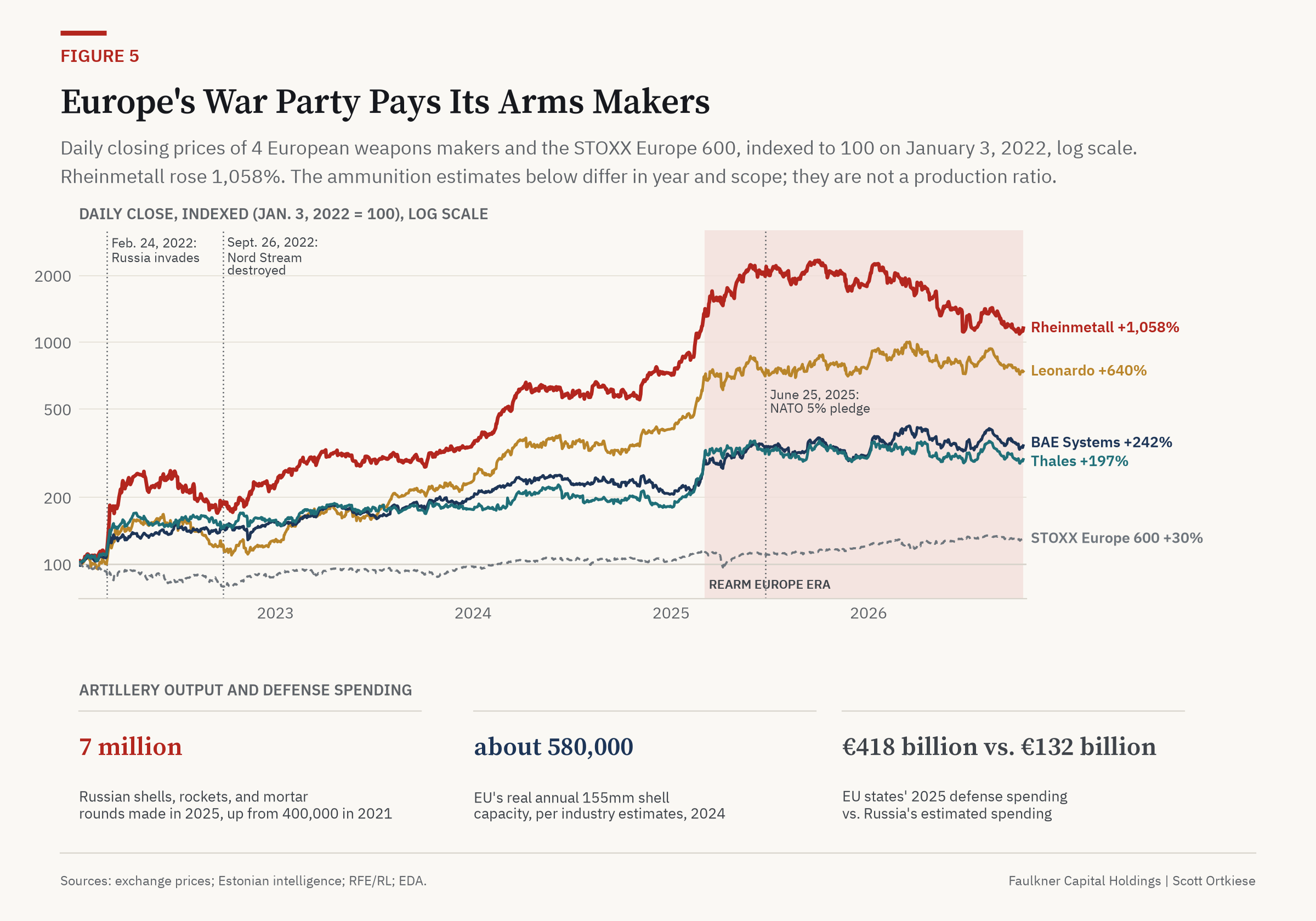
FIGURE 5. Europe’s War Party Pays Its Arms Makers
Daily share prices of Rheinmetall, Leonardo, BAE Systems, and Thales versus the STOXX Europe 600, indexed to January 3, 2022, on a logarithmic scale. Rheinmetall rose 1,058%. The secondary panel distinguishes Russia’s 2025 estimate for shells, rockets, and mortar rounds from the narrower, older EU 155 mm capacity estimate; these are not comparable production totals. Sources: exchange closing-price series; Estonian intelligence reporting132; RFE/RL reporting133; European Defence Agency134.
History is no kinder. France marched on Moscow in 1812, and Russian troops rode into Paris in 1814. Germany marched on Moscow in 1941, and Soviet troops raised their flag over Berlin in 1945. Europe has already started 2 world wars. A third European war on Russia would end the same way, in defeat and humiliation, and this time Europe would arrive with less than ever. Macron’s missile test is a confession: a leader who had the shells would not need to wave the warhead.
At home, the wreck is self-inflicted. European natural gas averaged about $4 per million British thermal units in 2019, spiked to $70 in August 2022, and still cost $18 in July 2026, according to IMF data compiled by the Federal Reserve Bank of St. Louis138. Eurostat’s production indexes, with 2021 set at 100, put German industry at 91, German chemicals at 75, and German fertilizers at 83 in August 2026, and EU basic chemicals at 67 in July. Deindustrialized and dependent, Europe has handed its security to Trump, an inept and mercurial imbecile who feigns genius and could abandon it any morning. Still, Europe’s leaders offer no convincing repair for the industrial damage shown here. Their confrontation with Russian President Vladimir Putin dares a nuclear-armed power to call the bluff.
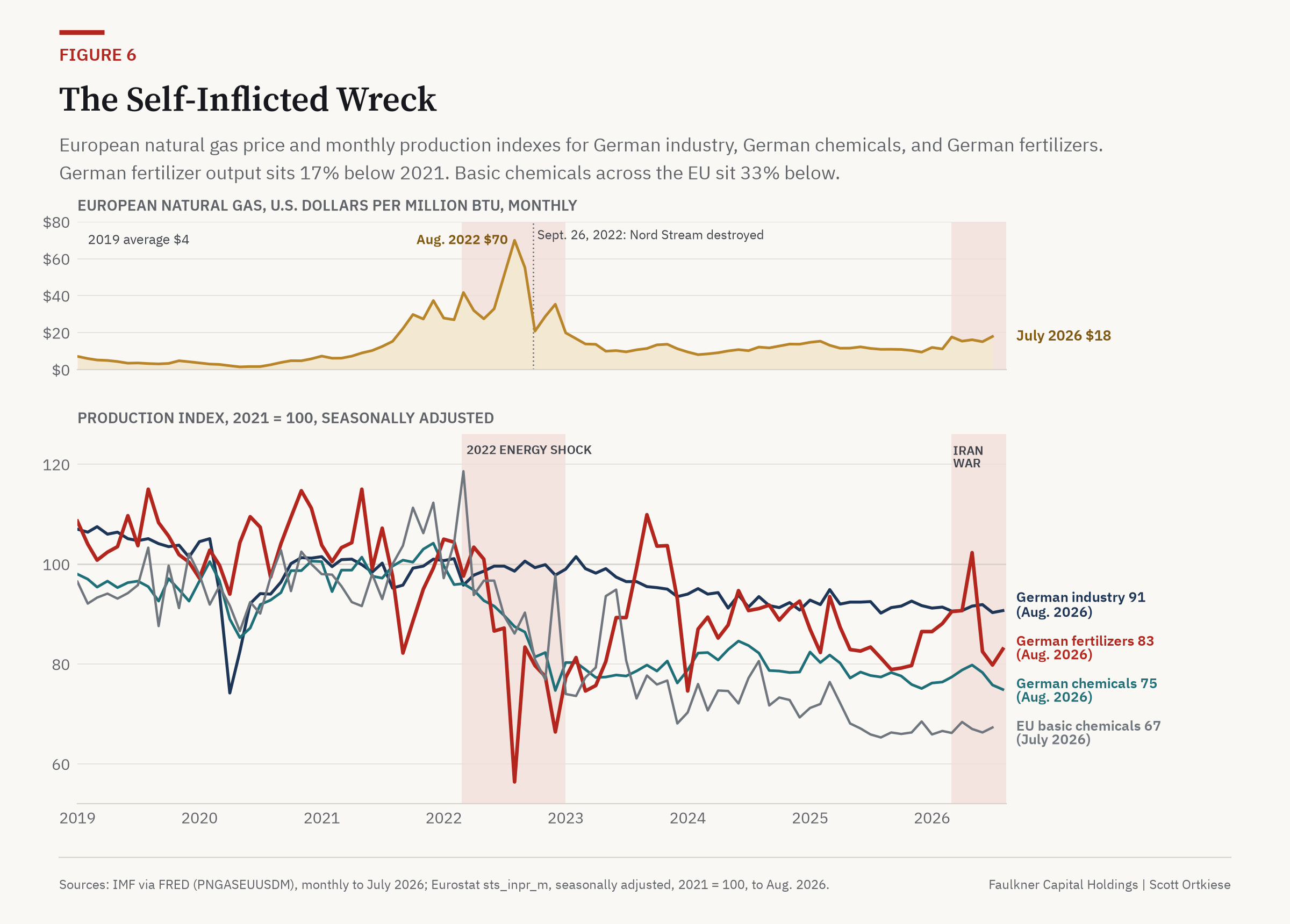
FIGURE 6. The Self-Inflicted Wreck
European natural gas prices, monthly from 2019, above Eurostat production indexes for German industry, German chemicals, German fertilizers, and EU basic chemicals, with 2021 set at 100. The price spike of 2022 and the destruction of Nord Stream on September 26, 2022, are marked. The latest observations remain below their 2021 baselines.
Their Reputations. Our Lives.
A funny thing happened on the way to the forum: NATO and the EU went all in on Ukraine, and the destruction of Nord Stream deepened Europe’s energy rupture with Russia. That sequence does not establish who ordered the sabotage. If European taxpayers must now finance its restoration while underwriting an open-ended war, what are they buying: security, or protection for their leaders’ reputations? Who is steering this ship? The anti-Russian zealots in Germany and Brussels, confusing confrontation with strategy and escalation with courage. Their citizens pay for the damage, the weapons, and the consequences. Apparently, admitting failure is unthinkable. Risking a wider war is statesmanship.
Name them. Von der Leyen, whom no voter chose, spends Europe’s borrowing capacity on rearmament and on loans to Kyiv. Merz promises Kyiv more while his chemical industry runs at 3/4 of its 2021 output. Rutte tells Europe to keep on dreaming of its own defense while its interceptors are spent over Israel. British Prime Minister Andy Burnham pledged on October 10 to keep strengthening sanctions, Downing Street reported139, and on October 14 told Ukraine, “We are behind you and that will not change,” before telling MPs his role was to “repair bridges so that the support comes back,” the BBC reported140.
During the Cold War, 35 states negotiated the 1975 Helsinki Final Act141 despite ideological conflict. They did not need to like one another to grasp the danger of refusing to negotiate. Europe’s leaders, self-serving U.S. neocons, and their insipid British Atlanticist lemmings have no excuse for treating diplomacy as moral contamination. The 2022 Istanbul talks142 produced a framework, not a finished treaty; unresolved guarantees, military limits, battlefield expectations, and Western reluctance obstructed agreement. That history demands scrutiny, not fairy tales that diplomacy was impossible or already completed. The anti-Russian disease I condemn substitutes hostility for judgment: every accommodation is weakness; every escalation is courage. Sanctimoniously condemning Russia’s invasion after Western provocation through its gullible Ukrainian proxy exposes the hypocrisy of Western “policy.” Ukrainian and Russian lives are not collateral for political reputations. European taxpayers are not an inexhaustible fund for strategic self-deception.
How Much Mischief? 6 Ways Israel Can Use the Admiral
Back to the Middle East, where the next round is being prepared. On October 2, Vice President JD Vance chaired an unannounced meeting at Camp David143 on Iran with Rubio, Hegseth, Witkoff, CIA Director John Ratcliffe, and Caine. The New York Times reported144 on October 8 that the military is preparing options to restart major combat, with 3 aircraft carriers expected in the region. Trump has said he would not attack Iran before the November 3 midterm elections. Israeli voters go to the polls on October 27, according to Hof35. In that window, here is what the Cooper channel lets Israel do.
1. Start the next round and let America finish it. Katz has directed the IDF to prepare “a blue-and-white operation in Iran,” an Israeli-led strike, and warned that “it could happen within two days,” Ynet reported145. Israel sits inside CENTCOM’s air defense network. When Iran fires back, American interceptors fire, and American bases in Jordan, Bahrain, Kuwait, and Qatar become targets. Channel 13 reported that the admiral told Israel’s generals he wanted joint strikes on Iran’s oil, gas, and electricity facilities; CENTCOM denied that account.
2. Lock in occupation under American supervision. With UNIFIL leaving at the end of 2026, a framework with no withdrawal timetable, talks moving to Tampa, and a defense minister who says the CENTCOM commander agreed there would be no withdrawal, Israel can hold southern Lebanon, southern Syria, and parts of Gaza with American officers serving as monitors.
3. Pull CENTCOM into Saudi Arabia’s war with the Houthis. The Germany meeting discussed Israeli support for Saudi operations against the Houthis, with CENTCOM’s help. Houthi attacks on Saudi Arabia have intensified, including an attack on Riyadh that killed 13 people, Iran International reported146. An American admiral brokering Israeli and Saudi military cooperation against Yemen is building a new front that no one in Congress has debated.
4. Keep drawing down American interceptors. Every Iranian salvo at Israel draws on the same stockpile the Pacific and Europe need. Every one fired is another order for Lockheed and RTX.
5. Trade killings for cover. The Tangsiri request shows the exchange works in both directions. Israel can carry out operations the United States will not do in its own name, and American commanders can ask for them off the record. When an American operation goes wrong, the investigation, like Minab’s, stays inside the command.
6. Shape the next aid agreement. The current U.S. and Israeli memorandum of understanding runs through 2028, and talks over its successor are under way, according to Hannah and Gabber47. A commander who has fired $2.8 billion to $5.2 billion in interceptors defending Israel, and who calls the drawdown no concern, is the best exhibit Israeli negotiators could ask for.
What Would Restore Civilian Control
Each of these measures is within the power of Congress, the Defense Secretary, or Europe’s national parliaments.
-
Put a civilian in the room. No combatant commander should meet a head of state, head of government, or defense minister without a Senate-confirmed civilian or the chief of mission present, with a joint readout published within 24 hours.
-
Close the military exemption in the Case-Zablocki Act. Report any understanding a combatant commander reaches with a foreign defense minister or army chief on territory, force posture, or the presence of U.S. forces to the Armed Services and foreign affairs committees within 48 hours. Katz’s claimed agreement with Cooper should be either reported or repudiated in writing.
-
Release the Minab report. Order the final Defense Intelligence Agency assessment, publish the CENTCOM investigation, and restore the civilian harm teams Hegseth cut.
-
Count the interceptors and the dead in public. Require a quarterly unclassified report of interceptors fired by type, theater, and protected country, and a casualty count that matches the internal one.
-
Bring civilians to the posture hearings. The Senate-confirmed civilian responsible for each region should testify beside the commander.
-
Review Israel’s place in CENTCOM. Congress should require the Pentagon to assess whether a firewall, or a return to European Command, would reduce the risk that Israeli decisions trigger American wars.
-
Aim Hegseth’s cut at the fiefdoms, not the dissenters. Reduce the rank and resources of the regional commands. The country needs to keep officers who raise legal questions, like Holsey.
-
Shut the revolving door. Reject the Pentagon’s request to weaken the cooling-off periods. Bar retired 4-star officers from board seats, paid advisory posts, and lobbying for any weapons maker or foreign government for 5 years, and require networks to disclose every paid tie of the “military experts” they put on air.
-
Make Europe’s leaders vote. No EU rearmament borrowing, Ukraine loan, or NATO force commitment should proceed without a recorded vote in each national parliament that pays for it.
So Who Elected Them?
Nobody directly elected these officials to the offices named in this title. Americans elected Trump and the members of Congress who are supposed to decide whether the country goes to war. The indictment of Cooper isn’t that he lacks an electoral constituency; an admiral shouldn’t have one. It is that his uniform makes a political performance look like something above politics. “Politician in uniform” is the charge, not the alibi.
Cooper is the credibility man, Rubio the civilian advocate, and Johnson the congressional defender of a rationale that treats Israel’s anticipated attack as a reason Americans must enter the war (Reuters114, ABC News115). I see the same moral failure in the admiral’s self-importance, the secretary’s sanctimony, and the politician’s excuses. They flatter upward and impose the consequences downward. The public gets the danger; the careerist gets the next line on his résumé.
Europeans directly elected none of the 3 people to the offices in this title. Von der Leyen spends their money, Rutte spends their security, and Cooper spends the interceptors they are told to rely on. The arms makers collect the contracts.
How long will we let wretchedly stupid, financially reckless, morally bankrupt leadership gamble with another world war? Their reputations and political careers are at stake. Our lives are.
Source Notes
- Trilateral Framework. Return 1
- The Jerusalem Post. Return 1 Return 2 Return 3
- claimed. Return 1 Return 2
- told him. Return 1 Return 2
- European Parliament. Return 1
- NATO. Return 1
- Responsible Statecraft. Return 1
- his public biography. Return 1
- MacDill Air Force Base in Tampa, Florida. Return 1
- lobbied Trump directly. Return 1 Return 2 Return 3 Return 4 Return 5 Return 6 Return 7
- seen as the front-runner. Return 1
- Military.com. Return 1
- Appointments Clause. Return 1
- 10 U.S.C. § 164. Return 1
- 22 U.S.C. § 3927. Return 1
- Keith Hanigan. Return 1 Return 2
- chairs the ceasefire monitoring mechanism. Return 1
- “proconsuls to the empire.”. Return 1
- Ynet. Return 1 Return 2 Return 3
- Task & Purpose. Return 1 Return 2
- exclusive account. Return 1
- U.S. Energy Information Administration. Return 1
- answered. Return 1 Return 2
- reported. Return 1
- Brent historical price series. Return 1
- second account. Return 1 Return 2 Return 3 Return 4
- reported. Return 1 Return 2 Return 3
- Axios reported. Return 1 Return 2
- VIN News. Return 1 Return 2 Return 3
- CNN reported. Return 1
- CNN reported. Return 1 Return 2
- Reuters reported. Return 1
- The Washington Post reported. Return 1 Return 2
- Al-Ahram Weekly. Return 1
- the Majalla. Return 1 Return 2 Return 3
- written statement. Return 1 Return 2
- Asharq Al-Awsat reported. Return 1
- Israel National News reported. Return 1
- Axios reported. Return 1 Return 2
- Saudi Gazette. Return 1 Return 2
- The National reported. Return 1 Return 2
- announced. Return 1
- Case-Zablocki Act. Return 1
- DefenseScoop. Return 1 Return 2
- The Jerusalem Post. Return 1
- puts the unit cost. Return 1 Return 2
- The Jerusalem Post. Return 1 Return 2
- 60 Minutes. Return 1 Return 2
- The Intercept reported. Return 1
- reported. Return 1
- Lockheed Martin. Return 1 Return 2
- RTX. Return 1 Return 2
- Northrop Grumman. Return 1 Return 2
- General Dynamics. Return 1 Return 2
- The New York Times reported. Return 1
- Bloomberg’s reconstruction. Return 1
- Stars and Stripes reported. Return 1
- The War Pigs Used Ukraine as Their Proxy, and Triple-Tapped a Girls’ School in Iran. Return 1
- reported. Return 1
- Stars and Stripes reported. Return 1
- CNN reported. Return 1
- declare war. Return 1
- 50 U.S.C. § 1544(b). Return 1
- AP reported. Return 1
- failed 49 to 50. Return 1
- announced. Return 1
- NPR. Return 1
- BBC reported. Return 1
- voiced concerns. Return 1
- Stars and Stripes reported. Return 1
- Truman Library. Return 1
- age 64. Return 1
- August 8, 2025. Return 1
- Lazard announced. Return 1 Return 2
- named him. Return 1
- congratulated him. Return 1
- $228,000. Return 1
- 2026 proxy statement. Return 1
- the Quincy Institute found. Return 1 Return 2
- summarized. Return 1
- The Fiscal Times reported. Return 1
- counted. Return 1
- Strategic Studies Quarterly. Return 1
- found. Return 1
- reported. Return 1
- GovCon Feed reported. Return 1
- Defense News. Return 1
- The Hill. Return 1
- AeroVironment. Return 1
- Teneo via Yahoo Finance. Return 1
- MEMRI. Return 1
- the company announced. Return 1
- Naval News reported. Return 1
- the Navy reported. Return 1
- Defense News reported. Return 1
- Bloomberg reported. Return 1
- revealed. Return 1
- examined. Return 1
- according to SIGA. Return 1
- Presidential Medal of Freedom. Return 1
- counted. Return 1
- reported. Return 1
- KKR Global Institute. Return 1
- RBC-Ukraine. Return 1
- The Intercept reported. Return 1
- Semafor. Return 1
- The New York Times reported. Return 1
- Politico. Return 1
- Responsible Statecraft reported. Return 1
- Eli Clifton reported. Return 1
- 2025 honor roll. Return 1
- found. Return 1
- Quincy’s Ben Freeman found. Return 1
- Reuters. Return 1 Return 2
- ABC News. Return 1 Return 2 Return 3
- State Department. Return 1
- State Department. Return 1
- State Department transcript. Return 1 Return 2
- Axios. Return 1
- BBC News. Return 1
- State Department. Return 1
- U.S. Embassy Bogotá. Return 1
- State Department testimony. Return 1 Return 2
- State Department. Return 1
- Reuters reported. Return 1
- Spotmedia reported. Return 1
- Atlantic Council reported. Return 1
- DW reported. Return 1
- Defense News reported. Return 1
- Le Monde. Return 1
- the German government reported. Return 1
- Euromaidan Press reported. Return 1 Return 2
- RFE/RL report from 2024. Return 1 Return 2
- puts. Return 1 Return 2
- €800 billion. Return 1
- Eunews reported. Return 1
- European Pravda reported. Return 1
- Federal Reserve Bank of St. Louis. Return 1
- Downing Street reported. Return 1
- the BBC reported. Return 1
- 1975 Helsinki Final Act. Return 1
- 2022 Istanbul talks. Return 1
- meeting at Camp David. Return 1
- reported. Return 1
- Ynet reported. Return 1
- Iran International reported. Return 1