Scott Ortkiese | Throughline Synthesis | Houston
An IPO can supply cash. It cannot prove that customers will pay enough to cover the equipment, interest, and obligations already promised.
Revised October 29, 2026. Financial figures and reported events retain their stated dates. Anthropic’s registration materials cited below are an amended draft, not final offering terms.
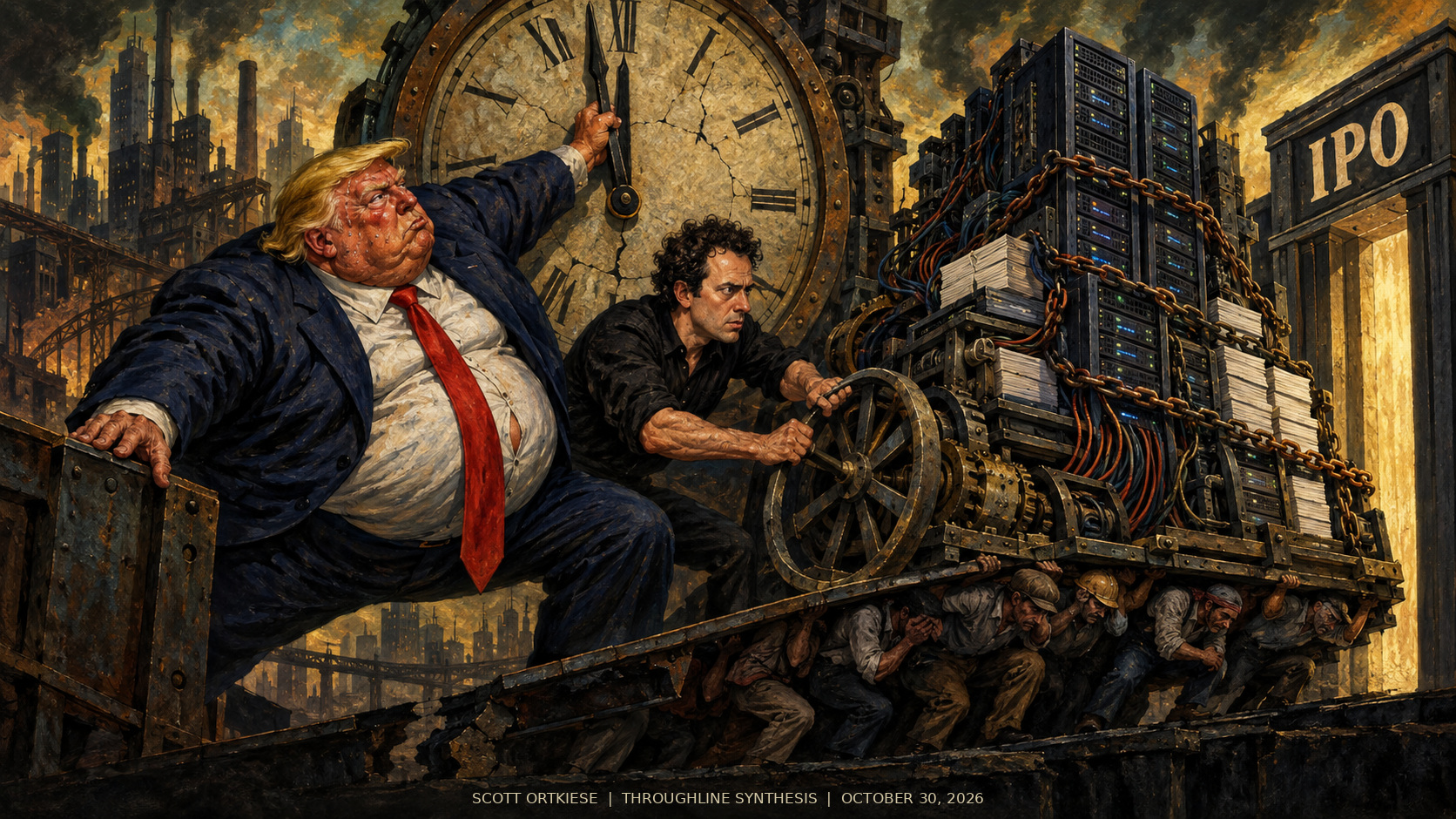
Cover: Beating the Clock. Original illustration, October 30, 2026.
Anthropic is preparing to ask public investors for money after committing to approximately $125.2 billion in rent, excluding interest, under its 2026 equipment arrangement with Broadcom, the semiconductor and infrastructure-software supplier (reported IPO plan; Anthropic’s draft registration statement, infrastructure risk discussion). Its associated $42 billion financing commitment does not deliver unrestricted cash: it lets Anthropic replace specified lease payments with interest-bearing notes under defined conditions (note agreement, Sections 2.1(a) and 2.1(c)). New equity can help meet those obligations. It cannot turn debt-financed payments into proof that the business earns enough to support them.
That is the test for Anthropic’s proposed initial public offering, or IPO: what cash reaches the company, what it must pay, and what new shareholders stand to lose. Reuters reported on October 22 that Anthropic planned to market its shares during the week of November 9 and list in mid-November; Anthropic declined to comment on the provisional schedule (Reuters). The accessible amended draft leaves offering quantities blank, so it does not establish how much usable IPO cash Anthropic will receive (SEC document index and draft). The financing defects must be examined before investors commit, not explained away after the shares are sold.
A conversation with 2 colleagues prompted this article: what happens if the midterms change investors’ willingness to finance the AI buildout just as Anthropic asks them for money? The consequence is financial before it is legislative. Investors do not need a new law to demand higher returns, reduce an allocation, or refuse a deal.
Follow that decision through the system. Less available financing means less money for equipment, computing contracts, and debt payments. The resulting losses belong to particular borrowers, guarantors, lenders, and investors, not to an abstraction called “the AI market.”
That is why the investigation must reach beyond Anthropic. Asset managers, banks, distributors, and political supporters help finance and sell the buildout. Their returns must be measured against what the investment produces, what it prevents others from building, and who pays when the promised income fails to arrive.
An election can change borrowing costs before it changes Congress
New congressional terms begin January 3, 2027, not on election night; the federal debt limit governs borrowing for existing obligations, not authorization of new spending (Twentieth Amendment; US Treasury). The immediate threat to an IPO is therefore not an automatic shutdown of federal borrowing. It is investors demanding more compensation, or withholding money, because they expect tighter permitting, less public support, or greater political conflict.
Watch the borrower’s total financing cost. Credit spreads are the extra return lenders demand above a benchmark such as Treasury debt. A falling Treasury yield does not help an AI borrower if its credit spread rises by more. The borrower still pays more, leaving less cash for operations and investment.
War presents a separate threat. The New York Times reported planning for renewed US and Israeli strikes on Iran after the election, without establishing Trump’s approval, and Iranian threats against regional data centers and underwater cables (New York Times). For an exposed project, the financial consequences run through interrupted service, energy costs, delayed construction, and insurance exclusions. Force majeure, outage, and cancellation clauses determine which payments continue when delivery stops.
A valuation does not pay the bills
Newly issued shares raise money for the company. Sales of existing shares pay the selling shareholders, not Anthropic’s electricity bill or equipment lease (SEC’s explanation of IPO proceeds). Anthropic’s draft expressly says it will receive no proceeds from selling stockholders’ shares, but leaves the offering quantities blank (draft cover). Fees and expenses further reduce the cash the company keeps.
Put usable cash beside dated payments: unrestricted cash, net new IPO proceeds, customer receipts, and financing actually available to draw versus operating costs, equipment purchases, leases, interest, and principal. A multiyear commitment is not all payable today. Forecast revenue is not money in the bank.
The offering documents must establish:
- New cash: Identify proceeds Anthropic keeps after fees, excluding money paid to selling shareholders. Only the company’s proceeds can help pay its bills.
- Independent customers: Separate outside customer receipts from financing supplied by the supplier-investor network. Supplier support is not proof that outside demand can repay the investment.
- Payment deadlines: Match obligations to cash available before another financing round. Acceleration clauses and borrowing restrictions can bring bills forward while closing the means to pay them.
- Cash after costs: Deduct operating expenses and equipment replacement before counting money available for debt service or shareholders. Revenue alone does not establish an investment return.
Anthropic’s success would not finance every weaker operator. Reuters reported that other issuers were reluctant to compete for investors’ attention and capital, while SEC comments contributed to AI infrastructure company Nscale’s delay (Reuters). Money attracted to the strongest offering can leave less for the rest.
The test is whether independent capital and operating cash cover enforceable payments without repeated emergency financing. If they do, the funding-break argument weakens. If they do not, a spectacular valuation has failed the test. An undersubscribed offering becomes a default only when an enforceable obligation goes unpaid or another contractual default occurs.
Anthropic has cash. The question is what the commitments consume.
Anthropic is not starting empty-handed: Figure 1 shows its June 30 cash and investment balances alongside the duration of its commitments (draft, liquidity and contractual obligations). The question is whether customer cash will ultimately pay for what investors’ money sets in motion.
First-half operating cash inflow was $3.929 billion, compared with $110.774 billion in financing inflow, principally from preferred-stock issuance (draft, cash flows). Anthropic attributes part of the operating improvement to working-capital timing (draft, cash-flow discussion). A large cash balance establishes that money was raised. It does not establish that the infrastructure will earn its cost.
The commitments differ in duration and enforceability:
| Arrangement | Disclosed spending and period | Payment terms |
|---|---|---|
| Microsoft cloud services | At least $31.4 billion, November 2026 through May 2033 | Minimum spending applies regardless of usage, with stated termination exceptions (draft, infrastructure services). |
| Google cloud services | At least approximately $111.1 billion, April 2026 through July 2033 | Spending shortfalls require true-up payments, subject to adjustments and exceptions (draft, infrastructure services). |
| Amazon cloud services | At least $110 billion, May 2026 through April 2036 | Minimum spending and true-up provisions expose Anthropic to unused capacity (draft, infrastructure services). |
| Broadcom equipment leases | Approximately $161.2 billion in rent excluding interest across the arrangements; individual leases run 5 years | The $125.2 billion 2026 arrangement is a component, not an additional amount (draft, equipment leases and infrastructure risk). |
| x.AI computing arrangements | Up to $84.5 billion over terms extending into 2029 | The SpaceX subsidiary supplies computing capacity; cancellation becomes available on 90 days’ notice after specified initial noncancelable periods (draft, infrastructure services). |
| AMD hardware arrangement | Expected spending above $20 billion if the full initial capacity is procured | Deployment-proposal conditions apply; the figure is not an unconditional cash payment due today (draft, infrastructure services). |
These are neither identical obligations nor an immediate cash shortfall. A cancellable maximum, a multiyear minimum, and rent on delivered equipment must be matched to their own payment dates.
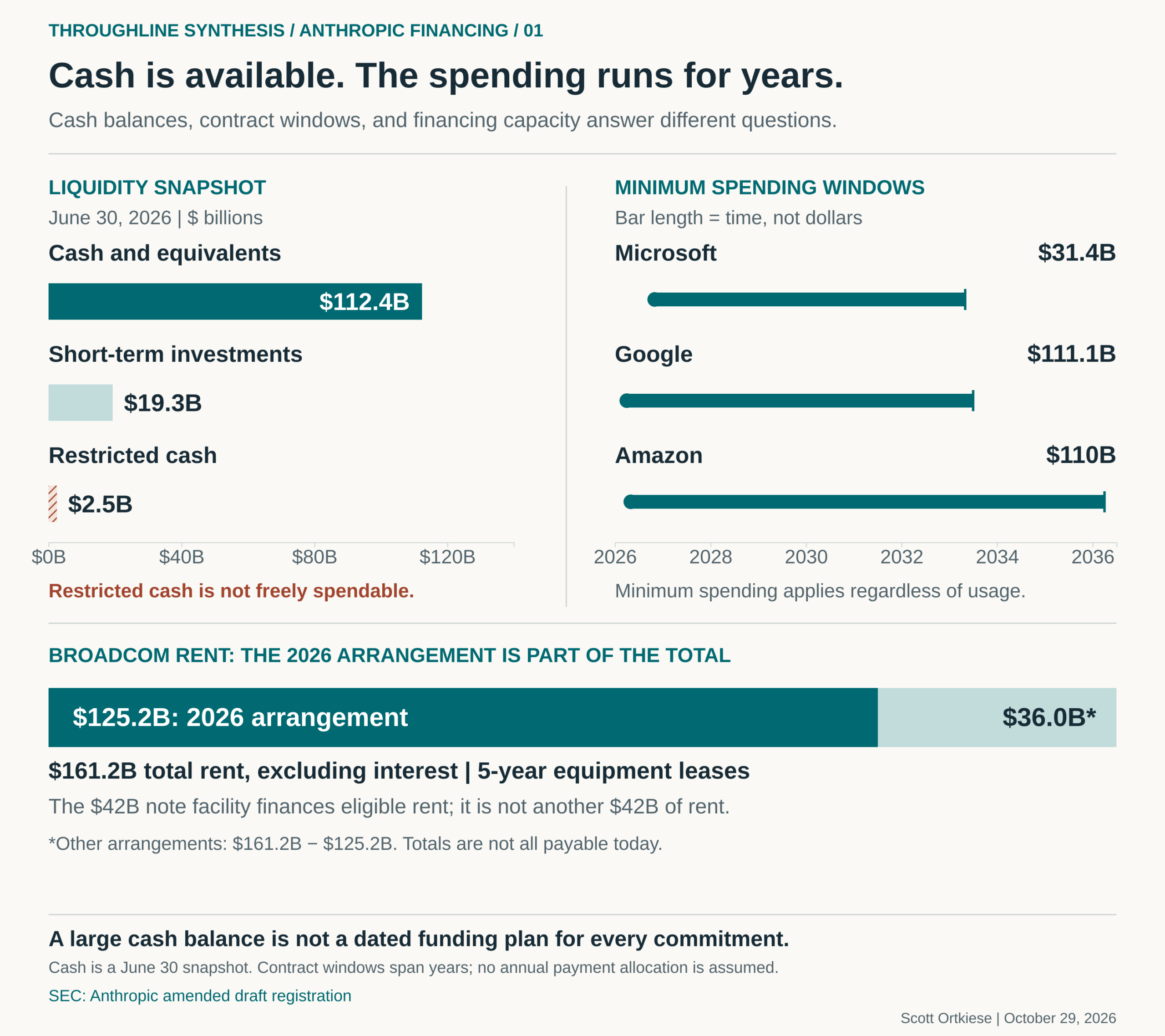
Figure 1. Cash is available. The spending runs for years.
The cash bars measure dollars; the contract bars measure time. The nested rent bar shows why the $125.2 billion 2026 equipment arrangement must not be added to the $161.2 billion total that already includes it (Anthropic’s draft, liquidity and equipment leases). Minimum-spending provisions have contractual exceptions; the timeline does not invent an annual payment schedule.
The most consequential admission concerns delivery. Anthropic says it can owe individual suppliers after they complete their part even when other suppliers’ failures prevent the inputs from becoming usable computing capacity (draft, infrastructure risk discussion). Some equipment rent can also begin when a data center’s readiness is delayed (draft, equipment leases). The company can pay for pieces of a system that is not yet earning revenue.
The $42 billion facility postpones cash payments and builds debt
The Broadcom note agreement states that notes satisfy specified quarterly lease fees on a cashless basis and that “in no event shall any amount drawn on a Note be paid in cash” (Sections 2.1(a) and 2.1(c)). Broadcom is the contractual investor; Anthropic issues the debt. This finances designated obligations, not a $42 billion checking account for payroll, power, or any other purpose.
The agreement charges 9% annual interest on notes issued before a defined Breach Period and 13% on notes issued during that period, with interest capitalized quarterly; the Breach Period definition is redacted (Section 2.1(h) and definitions). Capitalized interest increases the debt without using up the stated principal commitment (Section 2.1(h)). Deferring cash payment makes the later obligation larger.
Further note issuance depends on conditions including the absence of specified defaults, a Revenue Default Event, and a Material Adverse Effect; specified defaults also permit termination of commitments and acceleration (Sections 3.2 and 6.3). Anthropic’s draft warns that lease obligations can accelerate while access to this financing is restricted (infrastructure risk disclosure). The bill can come forward just as this payment option closes.
The repayment clock also matters. Scheduled maturities of 60, 63, or 57 months, depending on the tranche, run from a common defined start rather than giving every later draw a fresh 5-year term (Section 2.1(i)). Borrowing later can therefore leave less time to generate the repayment cash.
Conversion is another cost, not free money. The agreement specifies post-liquidity-event conversion prices of 90% or 85% of defined Market Price, depending on the applicable terms (definitions and Section 2.2). More shares issued per dollar converted means more dilution for existing holders. The draft reports no notes outstanding under this $42 billion arrangement at June 30, 2026, so the commitment must not be presented as debt already drawn on that date (financial statements, other note purchase agreements).
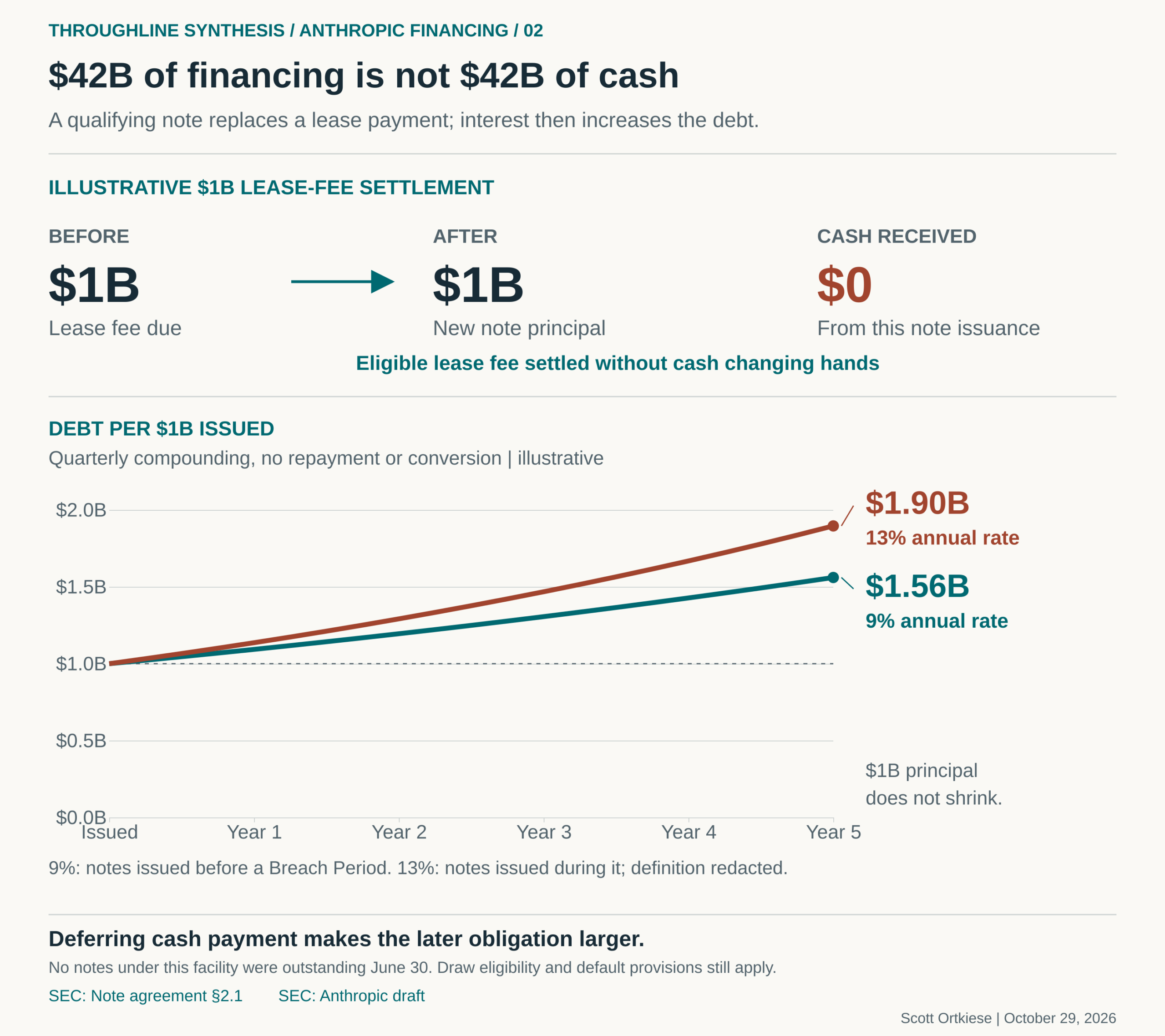
Figure 2. $42 billion of financing is not $42 billion of cash
The upper panel follows a qualifying lease fee into a note; the lower panel calculates how $1 billion grows with unpaid interest at the agreement’s 9% and 13% rates (note agreement, Section 2.1). The 5-year illustration assumes equal quarterly compounding and no repayment or conversion, simplifying the actual-day convention. It is not a forecast of borrowing or a claim that every note receives a fresh 5-year term.
Apollo, Athene, and Broadcom retain different obligations
Apollo is an investment manager. Athene Holding Ltd., its insurance-group holding company, guarantees 15% of the outstanding infrastructure purchase obligation of Apollo-managed WarehouseCo Intermediate Holdings LP under a $35 billion Broadcom arrangement supporting Anthropic; the trigger is WarehouseCo’s purchase default (Athene, June 30, 2026, Note 12). The vehicle’s name does not identify an independent source of repayment. Its committed financing still has to arrive.
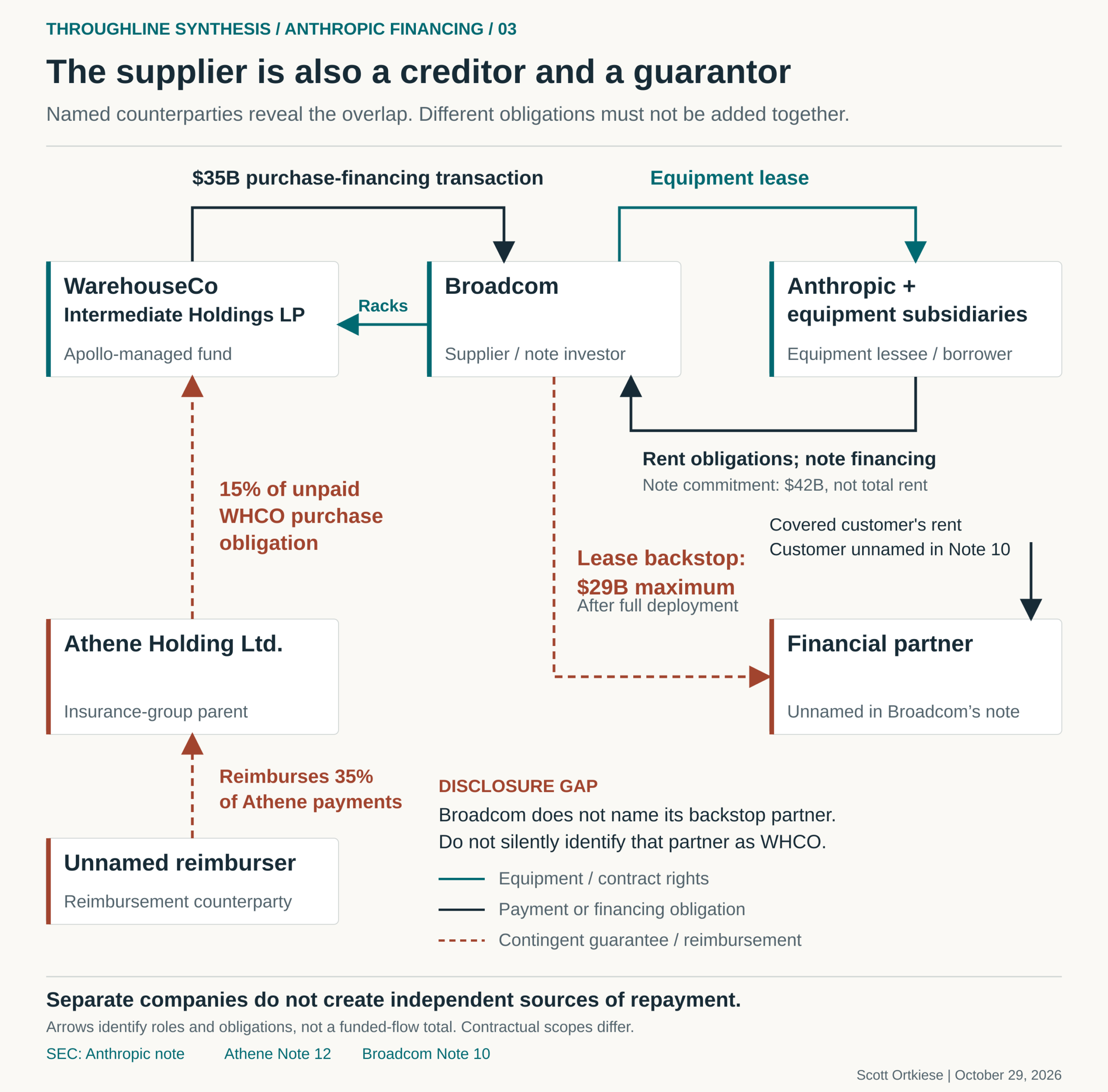
Figure 3. The supplier is also a creditor and a guarantor
The map separates purchase financing, rent, notes, guarantees, and reimbursement. The note agreement names Anthropic and Broadcom; Athene names WarehouseCo but not its reimburser; Broadcom’s backstop disclosure names neither its financial partner nor the covered customer (note agreement; Athene, Note 12; Broadcom, Note 10). Those unnamed parties remain unnamed rather than being silently merged with parties identified elsewhere.
Athene reports no liability because it considers payment not probable, and an unnamed third party promises to reimburse 35% of any guarantee payment (same disclosure). That accounting conclusion does not cancel the guarantee or provide cash to meet it. Figure 4 calculates a conditional full-base call; coverage declines as financing satisfies the purchase obligation (Athene). If reimbursement is not collected, Athene must fund more of the call itself.
Broadcom separately reports a customer-lease backstop with approximately $29 billion maximum potential liability upon full deployment (Broadcom, August 2, 2026, Note 10). On a covered lease default, the disclosed calculation compares 85% of outstanding covered obligations with equipment-sale proceeds, alongside alternative contractual remedies (same note). The supplier retains exposure after a financial partner takes over purchases and leases.
These are different obligations: WarehouseCo’s purchase payment, Anthropic’s equipment rent, Broadcom’s lease backstop, and Anthropic’s convertible notes. Adding the $35 billion transaction, $29 billion backstop, $42 billion financing commitment, and multiyear rent as independent losses would double-count interconnected obligations. Athene’s disclosure does not identify Broadcom as the unnamed reimburser (Athene, Note 12).
Athene Holding, not every Athene insurance subsidiary, is the named purchase guarantor (Athene). Its prospectus says it depends on subsidiary distributions subject to regulatory restrictions; subsidiary creditors, including policyholders, have priority over the holding company’s equity interest in those subsidiaries (Athene prospectus). An unrecovered holding-company loss reduces capital and affects Apollo as owner. Policyholder impairment requires a further path into the regulated insurer, not simply a guarantee call.
The danger is concentrated exposure to the same business outcome. If customer payments weaken, equipment resale values fall, and financing becomes unavailable together, more money is demanded from guarantors just as their ability to recover it deteriorates. Another participant’s promise transfers the obligation; it does not create an independent customer to pay for the equipment.
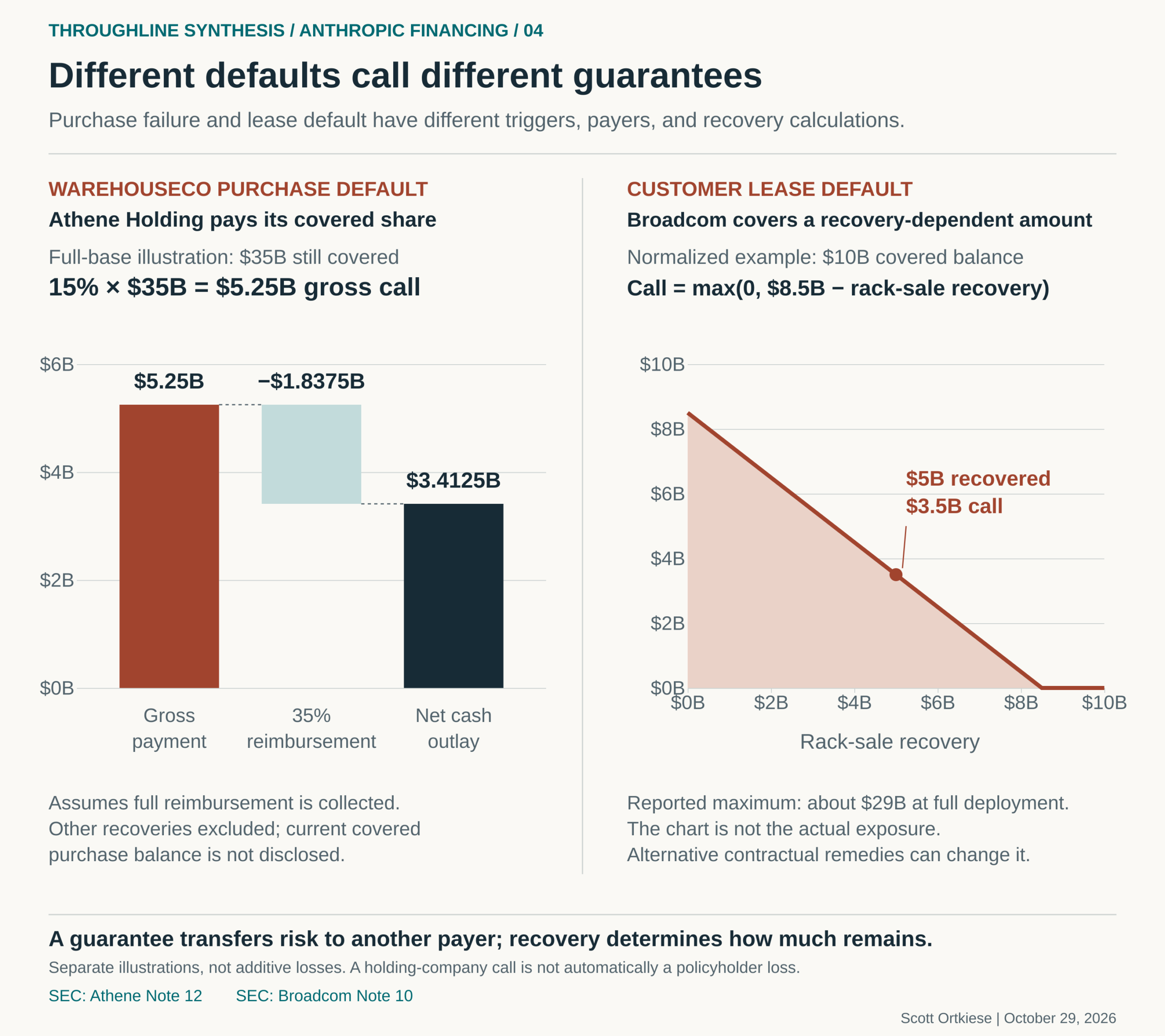
Figure 4. Different defaults call different guarantees
The left panel calculates Athene’s conditional payment and reimbursement if the full $35 billion purchase base remains covered; the right tests Broadcom’s disclosed recovery formula against a hypothetical $10 billion covered lease balance (Athene, Note 12; Broadcom, Note 10). Falling equipment resale proceeds increase the illustrated lease-backstop call. These are separate stress calculations, not additive losses or disclosed current calls.
Customers can use more AI while the financing earns less
Anthropic identifies open-weight and open-source alternatives as sources of price pressure, and competitors able to subsidize products, bundle them, or sell at zero or negative margins (draft, competition risk). NVIDIA separately identifies Chinese-origin models including DeepSeek, Qwen, and Kimi, and warns about competitors’ platforms and export restrictions encouraging alternatives (NVIDIA, July 26, 2026, Form 10-Q). The financial risk does not require a Chinese model to win every benchmark. It requires customers to obtain acceptable results at a lower price.
Figure 5 tests the difference between usage and repayment cash. A 30% price cut combined with 20% usage growth leaves revenue at 84% of its starting level. Unless unit costs fall, the extra usage also costs more to serve, while fixed obligations remain. Growth can therefore deepen a cash shortfall rather than cure it.
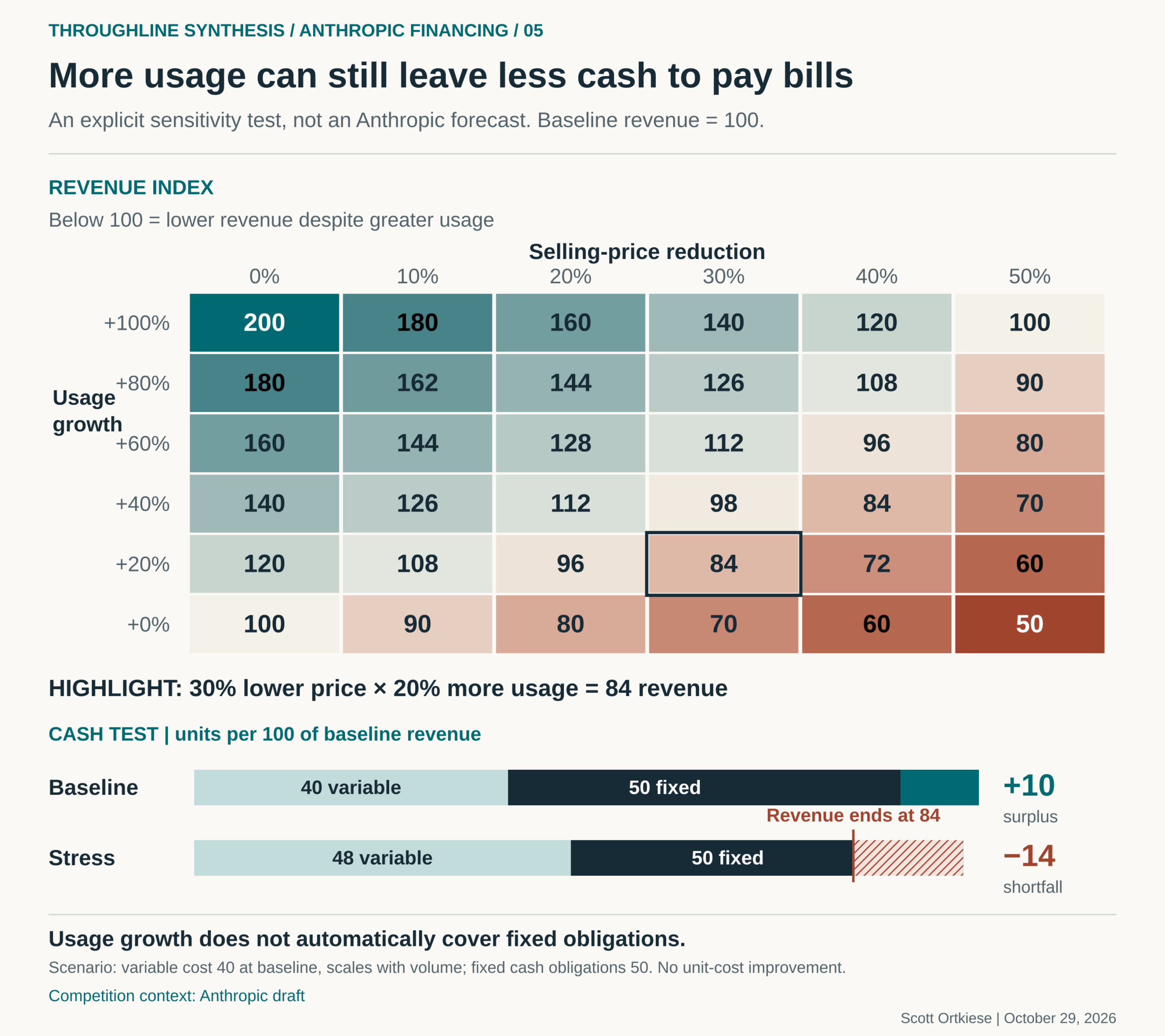
Figure 5. More usage can still leave less cash to pay bills
The heat map shows the price-volume combinations that preserve or destroy revenue. The cash test assumes baseline revenue of 100, variable costs of 40, and fixed cash obligations of 50: a surplus of 10 becomes a shortfall of 14 under the highlighted price and usage change. Costs per unit remain unchanged. These are explicit scenario assumptions, not Anthropic’s margins; its competition disclosure supplies the reason to test them (draft, competition risk).
Anthropic identifies Amazon, Google, and Microsoft as investors, customers, distributors, suppliers, and competitors, with conflicting incentives over pricing, capacity, and access (supplier-dependency risk factor). Their support is commercially valuable, but not independent of their own sales and strategic interests. The relationship that helps Anthropic expand can also limit its bargaining power.
Public investors supply money without equivalent control
The draft proposes a founder-controlled entity holding a Class F share with 50.1% of general stockholder voting power, while the Long-Term Benefit Trust generally elects and removes a majority of directors through Class T shares (draft cover and governance sections). These are distinct powers, neither handed to ordinary public shareholders. Buyers can supply cash and bear dilution or losses without gaining ordinary majority control over the people authorizing further commitments. They are financing decisions they cannot simply reverse by buying more publicly traded shares.
Gray is a participant, not a referee
Jon Gray, Blackstone’s president and chief operating officer, has a financial business to advance. In his October 22 Bloomberg interview, he described demand exceeding deliverable AI capacity while acknowledging the difficulty of assembling capital, power, chips, and data centers (Bloomberg interview). His confidence belongs inside the investigation, not above it.
Blackstone, an investment manager, joined Anthropic, investment firm Hellman & Friedman, and Goldman Sachs in announcing an enterprise AI-services venture for portfolio companies and independent customers (venture announcement). The commercial relationships matter: participants can benefit from the technology, the financing, and the customers they help bring to the service. Spending inside that network must be separated from independent customer demand.
Gray cited portfolio-company spending on models rising 20-fold year over year and prices for deliverable computing capacity rising 50% (Bloomberg). Without the starting amounts, customer populations, costs, and margins, those claims do not establish investment returns. Scarcity can support today’s price while encouraging construction that destroys tomorrow’s margin.
Gray also linked an Anthropic IPO and stronger credit standing to easier borrowing and less dependence on hyperscalers, the giant cloud companies supplying computing capacity (Bloomberg). That adds a financing benefit beyond the IPO proceeds: access to debt on Anthropic’s own credit. But a stock listing does not award an investment-grade rating; S&P evaluates business risk, cash flow, leverage, and liquidity (S&P’s corporate-rating framework).
The consequence is straightforward. Easier borrowing finances more commitments; it does not prove that those commitments earn their cost. Compare the fees and distributions financiers receive now with the capital they retain at risk after selling investments to others.
Banks sell access, financing, and credibility
Morgan Stanley, J.P. Morgan, and Goldman Sachs were joint lead bookrunners for CoreWeave’s March 2025 IPO, arranging and marketing the share offering (CoreWeave’s pricing announcement). Their names helped bring the issuer to investors. Those names do not establish that its future cash will support its valuation or debt.
Read the underwriting terms alongside the pitch. Fees, conflicts, retained securities, lending commitments, and distribution agreements show what a bank earns and what it can lose. A bank selling exposure to clients and a bank retaining that exposure are taking different risks.
JPMorgan Chase, Goldman Sachs, and Morgan Stanley are designated global systemically important banks, subject to additional capital, loss-absorption, and resolution requirements (Financial Stability Board). That designation is not an unconditional bailout guarantee, and it does not extend automatically to asset managers or their funds.
The political danger is the expectation that a sufficiently large failure will compel a rescue. That expectation deserves scrutiny wherever private profits depend on commitments the borrower cannot support. Identify the actual guarantee before describing taxpayers as the contractual backstop.
Backlog does not service debt
CoreWeave supplies specialized AI computing capacity. CNBC reported its 5-year credit default swap spread near 1,038 basis points on October 15, indicating expensive protection against its credit risk (CNBC). A lender seeking that protection faces a substantial additional cost. A credit default swap transfers specified credit risk; trading volume measures contracts, not realized losses or premiums paid (BIS’s explanation). Confusing those measures would misstate who has already lost money.
CoreWeave CEO Mike Intrator nevertheless said, “We are confident in our backlog which more than supports all of our debt obligations” (CNBC). Backlog counts future contracted business. Debt service requires cash on specified dates.
If delivery slips, a customer cannot pay, or a contract permits termination, the headline backlog can overstate the cash available to creditors. Operating costs must also be paid before revenue services debt. The comparison is collectible cash after costs versus the payment schedule, not multiyear sales versus a debt total.
CoreWeave’s June 30 filing makes the distinction measurable: $3.663 billion in operating cash inflow versus $14.117 billion in cash equipment and capitalized-software purchases during the first 6 months of 2026 (Form 10-Q, cash-flow statement). Equipment spending alone exceeded operating cash by $10.454 billion. That is not the company’s entire financing requirement, but it identifies spending operations did not cover.
The same filing reports $103.7 billion in remaining performance obligations, with 41% expected to become revenue during the first 24 months, and $35.6 billion in total indebtedness (revenue and liquidity disclosures). Remaining performance obligations are an accounting measure, not necessarily identical to management’s backlog. The filing’s 2 largest customers supplied 40% and 23% of first-half revenue, respectively (customer-concentration disclosure). A large order book can still depend heavily on a small number of payers.
Separate incorporation does not always protect the parent. CoreWeave’s August facility provides up to $2.6 billion to its financing subsidiary, with an unconditional parent guarantee and a term-SOFR borrowing rate plus 5.50 percentage points (August 7 Form 8-K). SOFR is a floating interest-rate benchmark; 5.50 percentage points is the margin above it, not the entire rate. Under the guarantee, the parent remains an obligor if its subsidiary cannot pay.
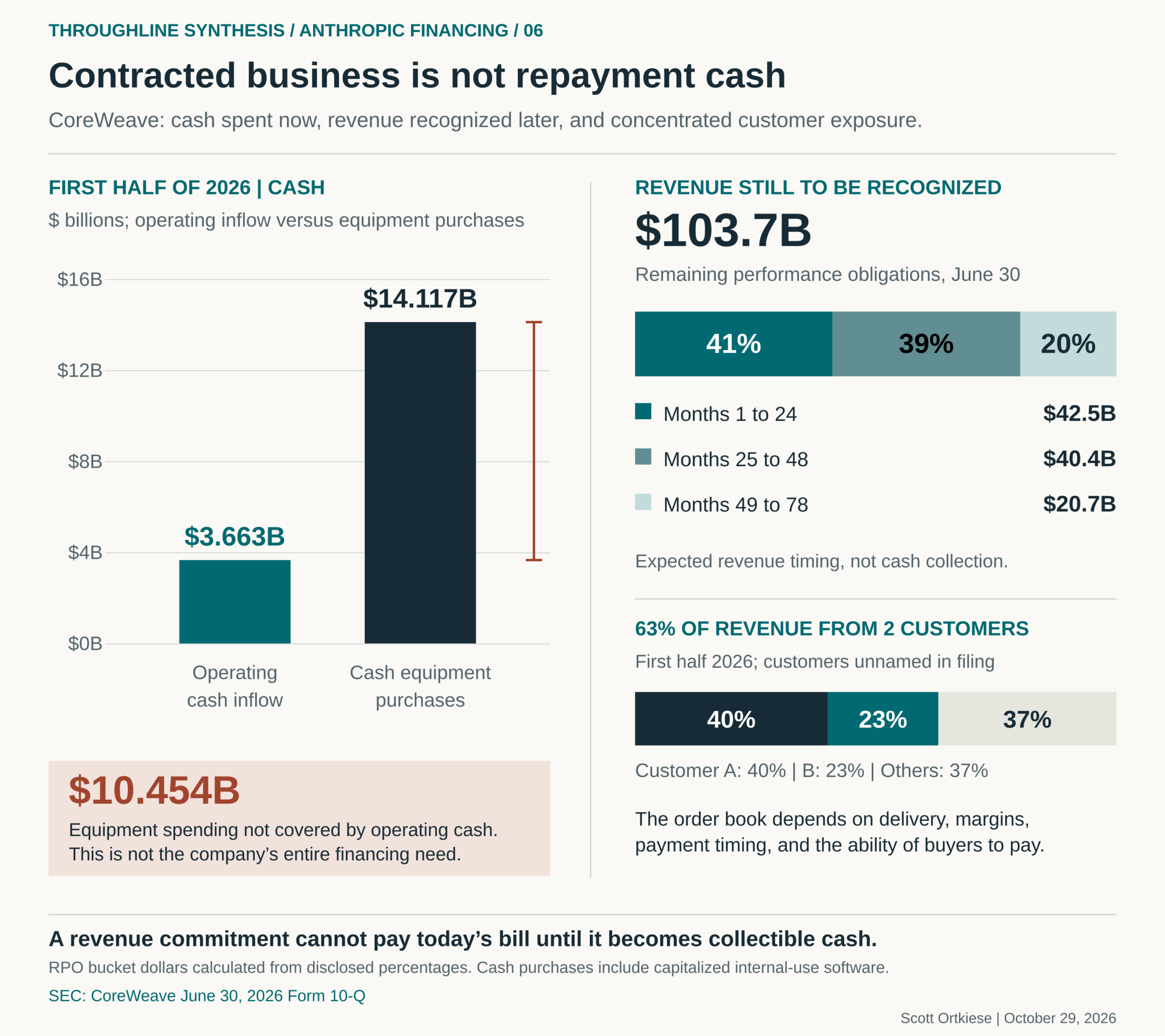
Figure 6. Contracted business is not repayment cash
CoreWeave’s current spending, future revenue recognition, and customer concentration sit beside one another rather than being collapsed into a comforting backlog total (June 30 Form 10-Q, cash flows, revenue, and concentration). The revenue-bucket amounts are calculated from the disclosed percentages and rounded. Revenue recognition is not cash collection, and the equipment-spending gap is not the company’s entire financing requirement.
Supplier financing adds another dependency. The IMF documents connections among equity investment, debt, and future revenue commitments across AI companies; it describes current financial-stability risks as manageable but warns that increasing leverage and interconnectedness can increase them (IMF’s AI ecosystem study). The critical test is whether the customer can keep paying after the supplier stops supplying financing or guarantees.
NVIDIA, the AI chip supplier, discloses the mechanism directly: certain AI clouds buy its infrastructure, while NVIDIA commits to purchase capacity they cannot sell to other customers; the commitments totaled $36 billion at July 26, 2026 and generally run 6 years (NVIDIA Form 10-Q, AI-cloud agreements). NVIDIA warns that it may lack sufficient demand or the ability to use or resell all that capacity (same filing, risk factors). That is a disclosed sector example, not an identified $36 billion guarantee of Anthropic. A supplier can book equipment business while retaining exposure to whether the customer finds enough paying users.
A real product can generate real revenue and still depend on financially weak customers. Moving their commitments among companies does not create independent repayment cash. Anthropic’s offering and CoreWeave’s credit pricing test different parts of this problem; neither establishes an automatic contractual default at the other.
A delayed permit can leave the interest bill running
Public opposition threatens projects whose financing assumes approvals that have not been secured. An October 9 through 13 ABC News/Washington Post/Ipsos survey found 66% of US adults opposed new data centers nationally and 72% opposed one in their own community; its 2,545-person overall sample included questions asked of half-samples (poll results and methodology). Those are separate measures of opinion, not permit decisions.
The financial exposure starts when a delay postpones customer billing while interest, land, staffing, or construction costs continue. If a customer owes nothing until service begins, the developer must fund that gap. If a lender’s next advance requires an approval, the same delay can stop financing as well as revenue. The contracts assign those obligations.
AI competes with homes, factories, and other investments
The capital committed to AI must earn a return relative to its alternatives: housing, automobile production, industrial expansion, transport, and other infrastructure. The same applies to power, land, equipment, and skilled labor. Useful AI does not justify every expenditure made in its name.
The competition is concrete where lenders face exposure limits or projects need the same land and workers. Urban Institute researchers identify these local channels while noting that the nationwide effect on housing remains unquantified (Urban Institute). The cost to another business can be a smaller credit line, higher borrowing cost, or delayed construction, not merely a rejected loan.
Measure those effects against other credit and resource pressures rather than attributing every price increase to AI. But do not exclude them from the investment calculation. A project that earns a private return by shifting costs to neighboring businesses and households has not demonstrated an equivalent public benefit.
Thomas Piketty explains how the gap between returns on capital and economic growth can reinforce wealth concentration (“Property, Inequality, and Taxation,” pages 632 through 638). That makes ownership and cost allocation central to the public investment case. If owners collect returns while workers and neighboring businesses absorb higher bills or taxes, private enrichment has been mistaken for a shared productivity gain.
The financiers face operating risks as well as loan losses
On October 21, the PHP Foundation reported fixes for 2 critical vulnerabilities in PHP, software used to run web services, and described AI-assisted security research alongside human engineering (PHP Foundation). It called the delay in fixing a vulnerability “a structural failure,” involving its decision process and resources (foundation’s account). Faster discovery does not pay engineers or authorize repairs. Until fixes are deployed, service providers and customers remain exposed to outages, contractual claims, and uninsured costs.
Banks face funding pressure as well. On October 20, Federal Deposit Insurance Corp. Chair Travis Hill identified AI agents moving deposits as an issue under review, while noting uncertain adoption and customers’ reasons for retaining banking relationships (Banking Dive). If automated switching makes deposits more expensive to retain, a bank’s funding costs rise. If that bank also loses money on AI loans, both sides of its business deteriorate.
Private-credit lenders face another combination. BIS researchers document software lending alongside AI exposure and investor concern about AI disrupting existing software businesses (BIS). A fund can lose on expensive AI infrastructure and on software borrowers damaged by cheaper AI products. Owning both is not necessarily diversification.
Moving debt does not erase the payment obligation
The BIS describes AI infrastructure’s increasing reliance on debt and private credit, while the IMF identifies growing connections and liquidity vulnerabilities among banks, insurers, pensions, and private-credit providers (BIS; IMF). Those connections determine where losses travel.
- Separate companies: A special purpose vehicle holds specified assets and obligations. Its creditors claim against that vehicle unless guarantees or other contractual rights reach a sponsor. Separate incorporation changes the legal claim; it does not create repayment cash.
- Equipment collateral: Graphics processing units, or GPUs, may still operate after their rental income or resale value falls. Creditors recover sale proceeds, not the accounting value printed in a balance sheet.
- Guarantees: A promise to use capacity is not a promise to repay its financing. Identify the guarantor, beneficiary, trigger, payment limit, expiration, and exclusions before treating an obligation as protected.
- Accounting earnings: Capitalized costs and longer depreciation periods change when expenses appear. Payment-in-kind interest adds interest to debt instead of paying cash. None supplies the cash needed for the next bill.
- Investor withdrawals: A fund cannot promise immediate cash from assets it cannot sell or refinance. Limited repurchase windows leave some investors exposed while they wait to exit.
Losses reach households through the assets their funds, pensions, and insurers own, and through employment and financing conditions. An insurer’s investment loss is not an automatic, equal reduction in policy benefits; applicable protections depend on the product, jurisdiction, and coverage limits (NOLHGA). Trace the actual exposure rather than assigning every loss directly to policyholders.
Cancellation creates other bills. Contractors lose work; investors lose asset value; utility customers bear unrecovered infrastructure costs where contracts or regulators assign those costs to them. Fees earned before failure and obligations retained after failure must be examined separately.
Europe is exposed to the same financing test. Its AI Gigafactories initiative targets more than €30 billion in investment, including up to €10 billion public and at least €20 billion private funding, with a November 12 application deadline (European Commission). Public participation does not remove the need to obtain private capital or establish who pays if project income falls short.
Political spending seeks decisions that improve private returns
Leading the Future says it supports pro-AI candidates and an innovation-policy agenda (its stated purpose). Cronkite News reported $34.7 million spent through September by its network in congressional races through American Mission and Think Big, backed by Greg and Anna Brockman, Marc Andreessen, and Ben Horowitz (Cronkite News). The financial stakes are permitting, public purchases, tax treatment, energy allocations, and guarantees. Each can improve private returns by changing project costs or revenues.
Super PACs fund independent political activity, not lawful direct or coordinated candidate contributions (Federal Election Commission). Spending to influence policy does not require an illegal bargain to have financial consequences. Where the resulting policy shifts costs to taxpayers or ratepayers, those public contributions must be deducted before calling a private investor’s gain a public benefit.
The same argument can reappear after failure: an industry promoted as indispensable asks the public to protect its financing. A rescue request is not an existing guarantee. But the public should see who received the gains before being asked to absorb the losses.
Voters can challenge that arrangement. An electoral reversal threatens the policy assumptions sold to investors even where private contracts remain enforceable. That is the financial significance of political opposition, not the claim that an election cancels debt.
AI’s opponents also have money and interests
Axios reported $48 million in election-cycle spending by AI-safety groups and individual donors, and $11.7 million raised by Guardrails Alliance across a super PAC and affiliated advocacy nonprofit (Axios). Those figures describe different populations and measures. They cannot be added or compared as matching budgets versus Leading the Future’s spending.
Guardrails Alliance supports beneficial AI with stronger rules and accountability; its coalition includes workers, organizers, policy experts, parents, and AI-safety researchers (Guardrails Alliance). Political giving by AI researchers also places part of the dispute inside the industry (Axios). Those industry ties belong in the same conflict-of-interest examination applied to pro-AI donors; a safety label does not establish financial independence.
Other affected businesses need not oppose AI itself. Home builders, manufacturers, transport companies, utilities, and unions can use AI while contesting subsidies and resource allocations that favor its suppliers. Their concern is what those policies cost their own businesses, workers, and customers.
PACs, parties, donors, and advisers therefore need more than persuasive messages. They need to know whose investment a policy protects, what it costs, and whether its promised benefits survive financial scrutiny. Opposition deserves the same examination as promotion. Independent analysis must be willing to contradict whoever pays for it.
Match the sales pitch to the obligation
Forensic Statement and Linguistic Analysis, or FSLA, examines how claims are expressed and qualified. Its financial value comes from matching those words to contracts, cash, and retained risk. “Funded” should identify available money; “guaranteed” should identify someone legally required and financially able to pay.
Preserve the original quotation, date, audience, and conditions. Then, compare the claim with the obligation it describes. A manager’s pitch, a fund valuation, a product’s withdrawal promise, and a politician’s jobs claim all require that test. When a qualification disappears between the original analysis and the sales presentation, investors can receive a materially different story.
OpenAI’s September 2025 infrastructure blueprint supported expanding US loan guarantees for purchases of US-made chips (blueprint). In November 2025, Sam Altman distinguished chip-factory guarantees from guarantees for OpenAI’s data centers and said the company had not formally applied for financing (Reuters). The blueprint nevertheless identifies lower financing costs for AI companies as a benefit of the proposed guarantees (OpenAI). An AI company can benefit from a public guarantee elsewhere in its supply chain without being its named recipient. Taxpayers need to know both who owes the guaranteed debt and whose business the guarantee makes cheaper to finance.
Identify the recipient, the beneficiary, and the public obligation separately. That exposes the financial consequence without inventing a contradiction. Linguistic scrutiny earns its place by finding the difference between what was sold and what was signed, not by treating confident language as proof of fraud.
The test is cash before the next payment falls due
Before buying the IPO, investors need the final allocation of proceeds, dated payment obligations, conditions on further borrowing, and enforceable guarantees. Without them, they cannot determine how long new cash will last or how much more financing the commitments require. A headline valuation, prestigious underwriter, or political endorsement cannot supply that calculation.
Useful technology and destructive financing can coexist. An IPO supplies capital, not proof that customers will pay enough to cover rent, debt, and equipment replacement. If available cash and receipts fall short, Anthropic must raise more money, renegotiate, sell assets, or default. Shareholders face dilution or loss; lenders risk unpaid balances; guarantors owe what their contracts require when the specified triggers occur. That is what the IPO sales pitch must answer before new investors pay for decisions already made.