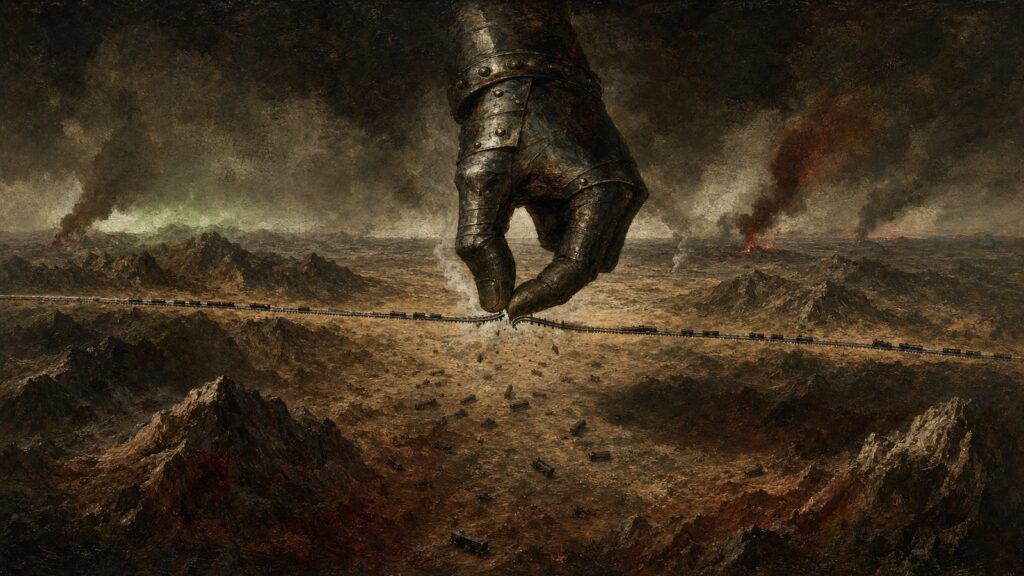
The Western intervention in Iran is not primarily about nuclear weapons, regime change, or even oil. It is about a railroad, maintaining its free ride, and avoiding competition.
APR 10, 2026
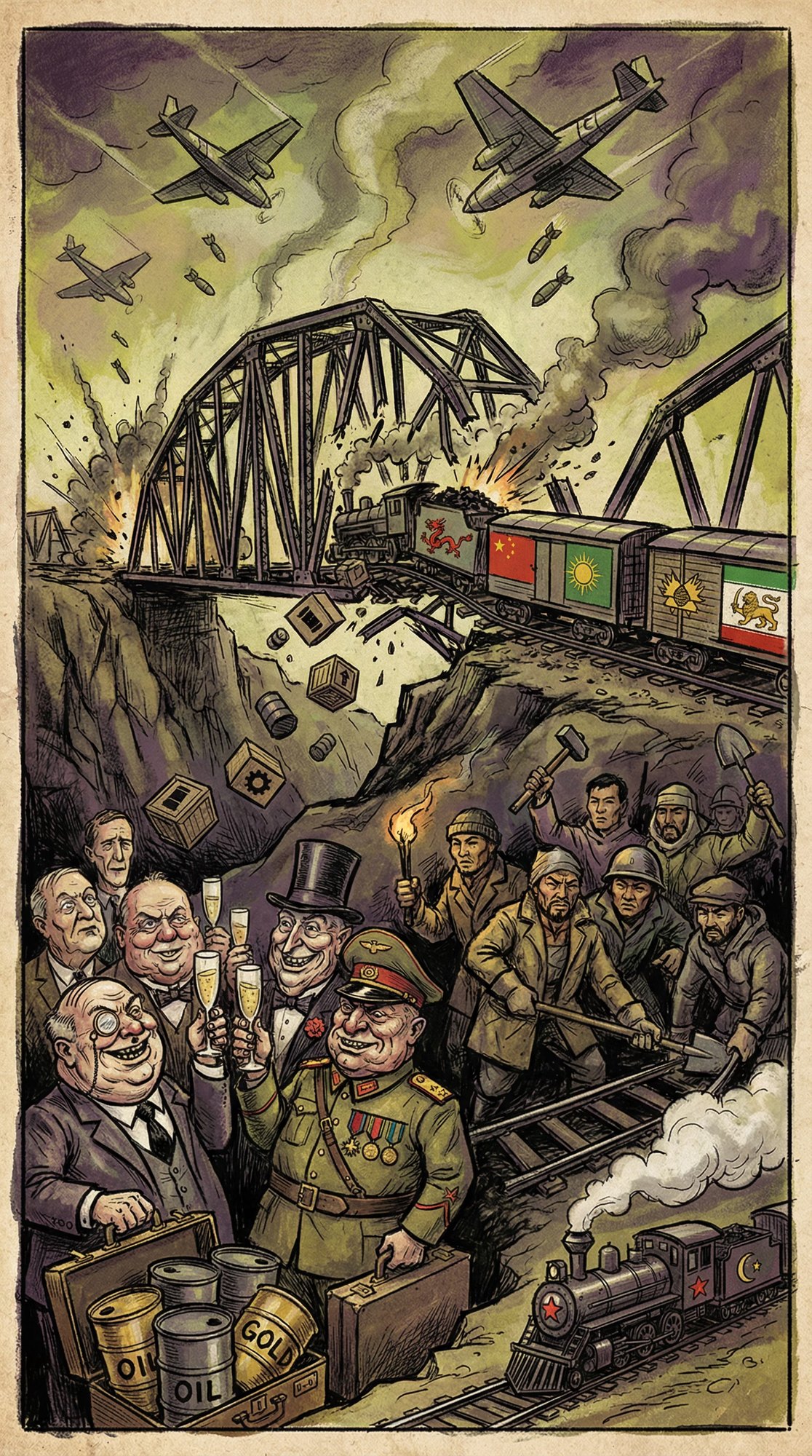
The China-Iran Railway, the Xi’an-to-Tehran overland freight corridor, opened in June 2025. It was designed to move 40% of global commerce off the seas, where American naval power has been the unchallengeable enforcement mechanism for eight decades, and onto land, where it cannot be controlled. Colonel Lawrence Wilkerson, Colin Powell’s Chief of Staff, said it plainly in April 2026: “We don’t want that. We don’t want that at all.”
This is Mackinder’s doctrine, still operational in 2026. Halford Mackinder warned in 1904 that if the Eurasian landmass ever developed internal connectivity (railways, pipelines, overland trade corridors) the maritime supremacy that underpins Western imperial power would become strategically irrelevant. Brzezinski restated it in 1997: Eurasia is the prize. Everything else is a pretext.
Iran is not incidental to this architecture. It is the pivot, the land bridge between the Caspian and the Gulf, between Russia and India, between Central Asia and the Mediterranean. That is why it is being bombed. Not to liberate its people. Not to prevent a nuclear weapon. To sever the corridor.
Here is what the bombers cannot change: Iran will emerge from this war. It will emerge with a sovereign debt position reset by war necessity, with frozen assets potentially worth $100 billion or more, and with the third-largest proven natural gas reserves on the planet. China and Russia have every economic and strategic incentive to rebuild what the strikes destroyed, faster and with more redundancy than before. The political will to complete and protect the overland corridor will be stronger after this war than before it, because the war has demonstrated conclusively that Western maritime chokepoints cannot be trusted as the default channel for World Majority commerce.
Russia, China, and India understand what is actually at stake. So does Iran. The West’s strategic bet is that it can destroy the infrastructure fast enough to delay the transition indefinitely. The World Majority’s bet is that the transition is structurally inevitable, and that every strike on a railway bridge accelerates the political commitment to finish the job.
The walls are still coming down in Kabul. The railroad will be rebuilt. Faith in the US is gone forever.
Related reading
- American Empire in Ruins: The Unprovoked, Unconstitutional, and Catastrophic US-Israeli War on Iran
- What American Media Won’t Tell You About the Iran War and the End of the American Century in Asia
- Trump’s Iran War, China Trip and the Vanishing Empire
- The Foundation for War Crimes: A Factual Record of Trump’s Iran War and Where It’s Going Part 2